Dawn
Dawn··6 min read
SHC seeks Sindh health secretary, police chief's response on reports of HIV outbreak at Karachi hospital
KARACHI: The Sindh High Court (SHC) sought on Thursday a detailed report from the provincial health secretary and police chief after a citizen filed a petition, citing reports of an HIV outbreak allegedly resulting from the reuse of contaminated syringes and medical negligence at a Karachi hospital.
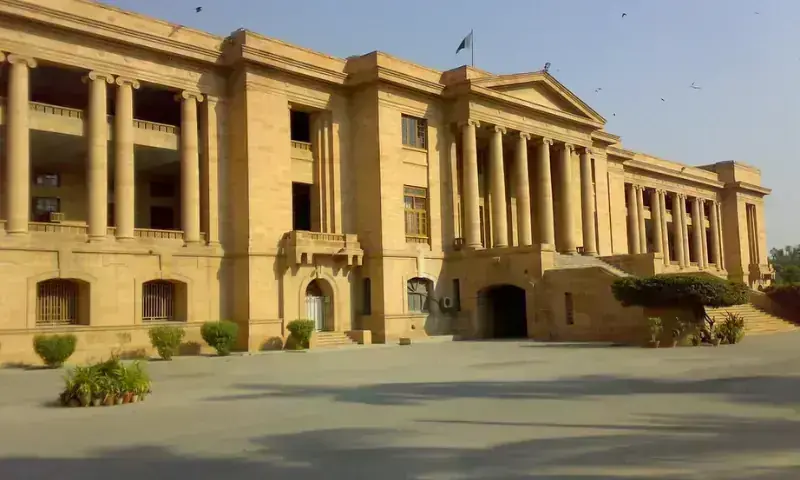
The petition, filed by Tariq Mansoor, was taken up by a two-member SHC bench comprising Justice Adnanul Karim Memon and Justice Adnan Iqbal Chaudhry.
In its written order, seen by Dawn, the bench noted that the plea arose from “the reported HIV outbreak at Kulsum Bai Valika SESSI Hospital, SITE, Karachi, allegedly caused by the reuse of contaminated syringes and gross medical negligence, resulting in the infection of approximately 84 to over 200 children, with several reported fatalities”.
The order noted that the medical facility was a “public hospital functioning under the Sindh Employees Social Security Institution (SESSI) and was “responsible for providing medical facilities to insured workers and their dependents”.
“The hospital caters to a large number of patients daily and owes a statutory duty to provide safe and adequate medical treatment,” the SHC bench stressed.
The petitioner contended that “despite repeated reports in the national media regarding the HIV outbreak, no transparent, independent or time-bound inquiry has been conducted to fix responsibility upon the officials and medical staff allegedly involved”, according to the order.
It added that the petitioner had served a “legal notice upon the concerned authorities demanding an independent inquiry, registration of criminal proceedings, disclosure of the inquiry report, screening and treatment of affected children, and compensation to the victims”.
However, “no effective action has been taken except for a communication” by the provincial secretary of the Labour and Human Resources Department that sought a report from SESSI.
The order said the petitioner had informed the court that a “preliminary list of the children allegedly affected by HIV due to the reported reuse of contaminated syringes” at Kulsum Bai Valika SESSI Hospital had been placed on record along with their particulars.
The petitioner claimed that the actual number of affected children was reported to exceed 200.
He contended that the seriousness of reusing contaminated syringes also got international attention, including a BBC report about a government hospital in Punjab’s Taunsa.
During the hearing, a Sindh assistant advocate general sought further time to “file comments”. Therefore, two weeks were granted.
The hearing was adjourned till 11:30am on July 20.
The plea
The petition was filed in the nature of Public Interest Litigation for the enforcement of fundamental rights provided under Articles 4 (right of individuals to be dealt with in accordance with law, etc), 9 (security of person), 10-A (right to fair trial), 14 (inviolability of dignity), 19-A (right to information), 25 (equality of citizens), 37 (promotion of social justice) and 38 (promotion of social and economic well-being of the people) of the Constitution.
The petitioner contended that the alleged reuse of disposable syringes constituted a “blatant violation of the Sindh Regulation and Control of Disposable Syringes Act 2010, besides amounting to criminal negligence punishable under the Pakistan Penal Code” (PPC).
“The continued failure of the respondents to enforce the statutory provisions regulating disposable syringes has endangered public health and violated the constitutional guarantee of the right to life and human dignity,” the order quoted the petitioner as saying.
“It is contended that the respondents have failed to discharge their statutory and constitutional obligations by not conducting an independent inquiry, not registering criminal cases against those responsible, not ensuring comprehensive screening and treatment of affected patients, and not framing the rules contemplated under” the 2010 Act, the order added.
The petitioner requested the court to conduct an independent and transparent inquiry, register criminal proceedings against all responsible persons, and ensure lifelong medical treatment and appropriate compensation for the affected children.
He also urged the court to ensure the provisions of the 2010 Sindh Regulation and Control of Disposable Syringes Act throughout the province and frame the requisite rules under the Act.
History of outbreaks
The HIV outbreak in SITE Town was initially reported in November last year, when more than 15 children were diagnosed with HIV in the densely populated neighbourhood.
At the centre of the crisis was the Kulsum Bai Valika Social Security SITE Hospital, commonly known as Valika Hospital, where the children treated for different health complaints were diagnosed with HIV.
Responding to Dawn queries at the time, an official at the Valika Hospital had confirmed that screening for AIDS was under way at the facility, while some children had been found HIV-positive. However, the officer had not disclosed the exact number of affected children.
The government authorities, on the other hand, had rejected reports of the outbreak.
On Sunday, scores of families whose children contracted HIV infection amid the reported outbreak, leading to at least nine deaths, gathered at the Karachi Press Club to demand the registration of an FIR against the hospital staff concerned.
They also demanded proper treatment for their children and financial compensation.
The parents said the total number of affected HIV children was 200, some of whom were born at Valika Hospital while the rest were admitted there for some other illness. According to them, at least nine children had also died.
From September to November last year, they said, families had been running from pillar to post in search of justice, but the government had offered them no hope.
It was reported in April that three hospitals in Karachi recorded a dramatic increase in the number of paediatric HIV cases over the last nine months.
Sources told Dawn that 10 HIV positive children were admitted to the Sindh Infectious Diseases Hospital and Research Centre (SIDH&RC) in 2024 and their number rose to over 70 in 2025. This year, 30 children with HIV positive status were admitted to the hospital.
At the Indus Hospital, 144 HIV positive patients were reported in 2024, whose number rose to 176 in 2025.
The third hospital in Karachi that recorded an increase in the number of paediatric HIV cases was not named in the report but described as a major tertiary care children’s hospital.
Information gathered from there indicated that over 60 children — the majority of them from Thatta and other parts of rural Sindh — had tested positive for HIV during a screening test, the report said.
Sources at the SIDH&RC said the majority of children who were reported at the facility with a positive HIV status had been previously treated at Valika Hospital.
Over the years, HIV outbreaks linked to healthcare facilities have surfaced in various cities of Pakistan.
In April, an expose by the BBC revealed that “serious malpractices” in the children’s ward of a government hospital in Punjab’s Taunsa continued months after the facility was linked to an outbreak of HIV among children.
A surge in HIV cases at Taunsa Tehsil Headquarters Hospital was reported in late 2024.
“Punjab authorities promised a crackdown – but months later, secret filming by BBC Eye Investigations found that children’s lives were still being put at risk,” the British broadcaster said.
According to the BBC investigation, at least 331 children tested positive for HIV between November 2024 and October 2025, with infections continuing even after official intervention.
In 2019, an outbreak in Sindh’s Ratodero resulted in hundreds of children getting infected.
As the matter was of great concern, the government requested the World Health Organisation (WHO) to investigate it.
A WHO-led team then reached Pakistan, whose key tasks included ascertaining the source of the outbreak and controlling it, providing technical expertise, particularly in areas of HIV testing, paediatric HIV treatment and family counselling, and ensuring adequate supplies of rapid diagnostic tests and anti-retroviral medicines for both adults and children.
It was later revealed that the repeated use of injections was the main reason for the outbreak.
Related stories

ESPN
SportsJul 2, 2026 · 1 min
Ranking the 50 best players in the WNBA
ESPN

The Punch
NewsJul 2, 2026 · 1 min
Court affirms David Mark-led ADC leadership, dismisses Abejide’s suit
The Punch
ESPN
SportsJul 2, 2026 · 1 min
Taylor Swift and Travis Kelce's wedding (FAQ versi...
ESPN

ESPN
SportsJul 2, 2026 · 1 min
All of the special MLB July 4 uniforms and caps
ESPN