Times of Israel
Far-right minister says IDF hostage point man ‘to blame’ for Oct. 7 abductions, killings
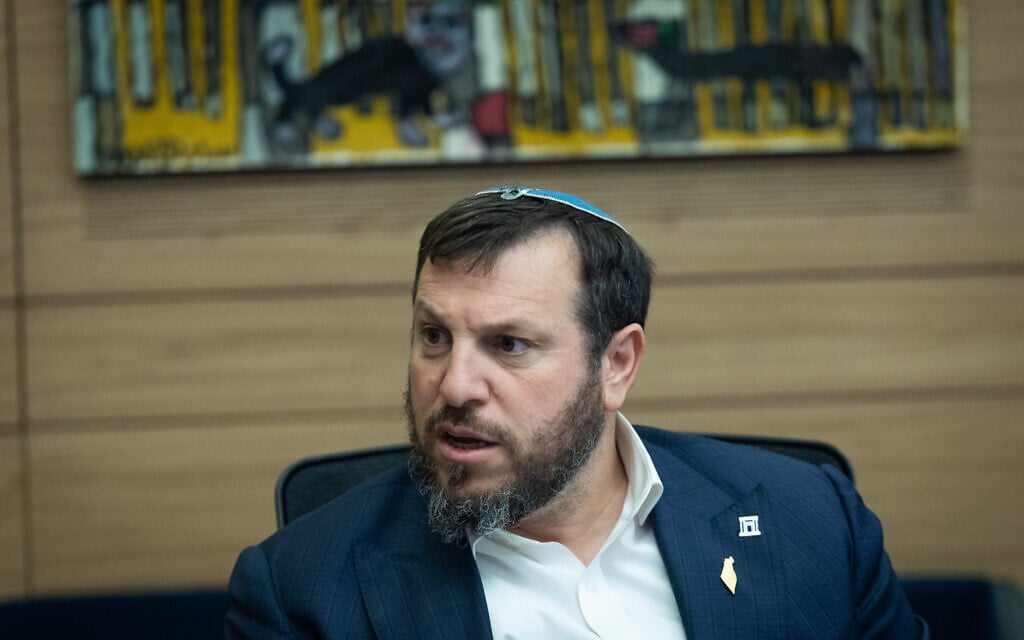
Far-right Heritage Minister Amichay Eliyahu (Otzma Yehudit) said Thursday that IDF hostage negotiator Nitzan Alon was to blame for the October 7, 2023, Hamas assault on southern Israel, as other members of the governing coalition also lashed the top general for claiming they had delayed bringing captives home.
Speaking to Army Radio as the nation marked 1,000 days since the worst massacre in its history, during which some 1,200 people were killed and 251 were abducted into Gaza, Eliyahu said Maj. Gen. (res.) Nitzan Alon was “to blame for people being kidnapped.”
“They were murdered because of Nitzan Alon and this approach that placed terrorists on the fence,” Eliyahu said, referencing the so-called military “conception” that saw Hamas and other terror groups build military strength inside Gaza, in close proximity to Israeli communities.
The minister, who has called for the wholesale annihilation of Gaza, was reacting to comments by Alon the previous day in which the general said Israel could have ended the war in Gaza sooner and gotten more hostages back home alive.
“If we went along with Nitzan Alon, we’d now… have Hamas back on the fences again, opposite [Israeli] towns, and then what would be? Who would be to blame?” Eliyahu charged after being asked about Alon’s comments.
Get The Times of Israel's Daily Edition
by email and never miss our top stories
By signing up, you agree to the terms
Alon, a former head of Central Command, served as the IDF’s point man on hostage negotiations after being appointed by then-IDF chief of staff Herzi Halevi to head the Hostages and Missing Persons Headquarters. He left the position in November 2025.
On Wednesday, Alon hit out at Finance Minister Bezalel Smotrich, who claimed credit days earlier for the return of all the captives held by terror groups in the Strip.
In fact, Alon said, Smotrich and others in the government had torpedoed ceasefire deals that would have brought back hostages before they died in captivity, as they sought more war gains.
“In Gaza, we fought a long war that could have been ended at least a year earlier,” Alon said at the Herzliya Conference at Reichman University. “When talking about the return of all the hostages, it should be remembered that around 40 hostages who were abducted alive were killed in captivity, and I do not forget that.”
“In certain cases, with different conduct and decisions, or different negotiations, we might have been able to bring them back alive,” he said.
Smotrich voted repeatedly throughout the two-year war against deals that would have seen the hostages released earlier than they ultimately were. Eliyahu’s Otzma Yehudit party did likewise. Meanwhile, Alon consistently pushed for hostage deals during his time in the role, often vocally, and was repeatedly blamed for leaking his opposition to the government’s handling of the hostage situation to the press.
Under the ceasefire agreement that brought back the final remaining hostages signed in October, the IDF continues to control large parts of Gaza, creating a buffer between Israel and the part of the Strip where Hamas has regained power.
Smotrich’s Religious Zionism party also attacked Alon on Thursday, stating that “throughout two years of war, Nitzan Alon pushed for complete surrender to Hamas.”
“If, God forbid, we had accepted his opinion, Hamas would have regained control of territory near our border communities, with an international commitment to reconstruct the Strip without demilitarization,” the far-right party added. “It’s fortunate that we didn’t surrender to Nitzan Alon and the irresponsible campaign that called for the State of Israel to surrender to a terrorist organization, which would have increased their motivation to kidnap Jews as a tool to subdue the State of Israel.”
Prime Minister Benjamin Netanyahu’s Likud party said Thursday that Alon “asked to surrender to Hamas’s conditions, to withdraw from Gaza, to stop the war, and all this while he was leaking briefings from the most secret discussions and harming the negotiations.”
The party claimed that had Alon’s counsel been followed, Israel would not have been able to return all 251 hostages, though it provided no evidence for the claim.
In total, of the 207 hostages abducted alive by Hamas and other terror groups during the October 7 attack, 166 survived captivity, and 41 were killed while being held in Gaza. Another 44 hostages killed during the massacre had their bodies abducted into Gaza.
On Sunday, Smotrich drew outrage on Sunday after saying on a podcast that it was “thanks to me that all the hostages are here.”
Former hostage Or Levy accused him of spreading “gaslighting propaganda” with his claim.
Smotrich and other government hardliners consistently opposed, or gave only conditional support to, various proposals for hostage deals throughout the two-year war in Gaza, arguing that continuing the military offensive and overthrowing Hamas was more important.
He threatened on multiple occasions to pull his far-right Religious Zionism party from the government if a deal was signed that he disapproved of. Eliyahu’s Otzma Yehudit party did leave the government for two months to protest a ceasefire that saw many of the hostages returned.
View original source — Times of Israel ↗
Related stories

The Punch
PoliticsJul 2, 2026 · 1 min
Labour Party unveils ₦2.8m essay competition in Abia
The Punch

Straits Times
PoliticsJul 2, 2026 · 1 min
Liberal Russian politician is detained in Moscow
Straits Times

Straits Times
PoliticsJul 2, 2026 · 1 min
Albanian police use teargas to disperse anti-graft demonstrators
Straits Times

The Guardian
PoliticsJul 2, 2026 · 1 min
MPs seek to end UK broadcast of Russian cartoon Masha and the Bear
The Guardian