South China Morning Post
South China Morning Post··1 min read
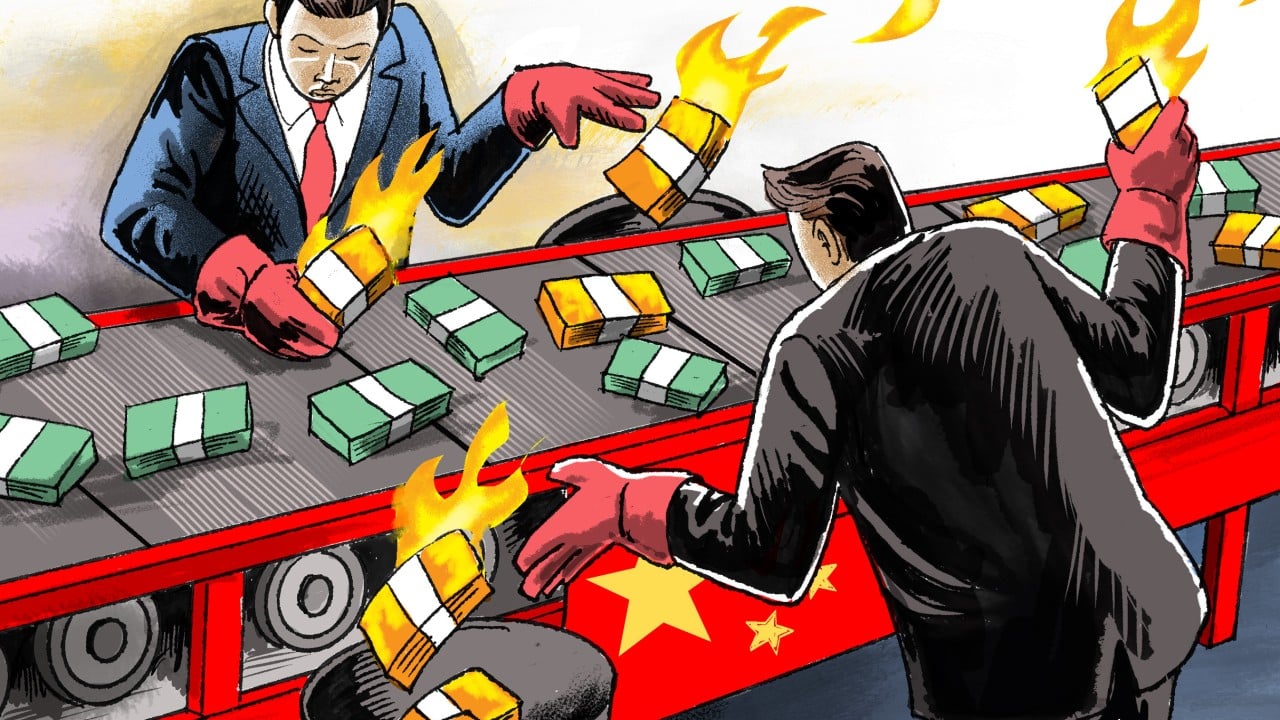
When and how will China ease capital controls?
Lawrence J. Lau is the Ralph and Claire Landau Professor of Economics at the Chinese University of Hong Kong, and the Kwoh-Ting Li Professor in Economic Development, emeritus, at Stanford University.
The China Securities Regulatory Commission recently fined three Hong Kong brokerages – Tiger Brokers, Futu Securities International and Longbridge Securities – over US$330 million for offering mainland investors access to overseas stocks without authorisation. This should not be misconstrued as a move to discourage overseas investment.
It is merely an attempt to discourage mainland investors from illegal channels that violate China’s capital controls. This is evidenced by the fact that the investors were not penalised and instead given two years to unwind their positions.
In principle, legal channels to buy overseas securities consist of the Hong Kong Stock Connect scheme, Qualified Domestic Institutional Investor (QDII) funds and the Cross-boundary Wealth Management Connect scheme for Greater Bay Area residents. Long-term capital inflows and outflows, including direct investment, long-term loans and portfolio investments, have also been encouraged and, subject to prior approval, permitted in recent years.
While the offshore yuan is essentially fully convertible into all other major currencies in Hong Kong, control remains on certain capital flow items.
In the 1980s and 1990s, foreign exchange was a scarce resource, and capital flight was a real concern. After generous annual trade surpluses for the past decade or so, however, foreign exchange is no longer scarce. Today, China has the world’s largest official foreign exchange reserves, at US$3.4 trillion, and the yuan’s share in international clearing and settlement has risen steadily.
Moreover, over time, the yuan has been holding steady against the US dollar, and is widely expected to appreciate in the long run. What then is the purpose of this form of capital control?
View original source — South China Morning Post ↗
Related stories

ESPN
SportsJul 2, 2026 · 1 min
Rays have two top-10 hitters? Skubal surges? Don't...
ESPN

The Punch
NewsJul 2, 2026 · 1 min
AbdulRazaq pledges better working environment for Kwara judiciary
The Punch
The Punch
PoliticsJul 2, 2026 · 1 min
Oyo APC gov candidate gets INEC nomination form, unveils running mate
The Punch
The Punch
NewsJul 2, 2026 · 1 min
Two policemen die in Imo road crash, CP mourns
The Punch