Indian Express
Indian Express··6 min read
With 7 million alerts each night, Rubin Observatory begins 10-year mission to map Universe
4 min readPuneJul 2, 2026 06:04 PM IST
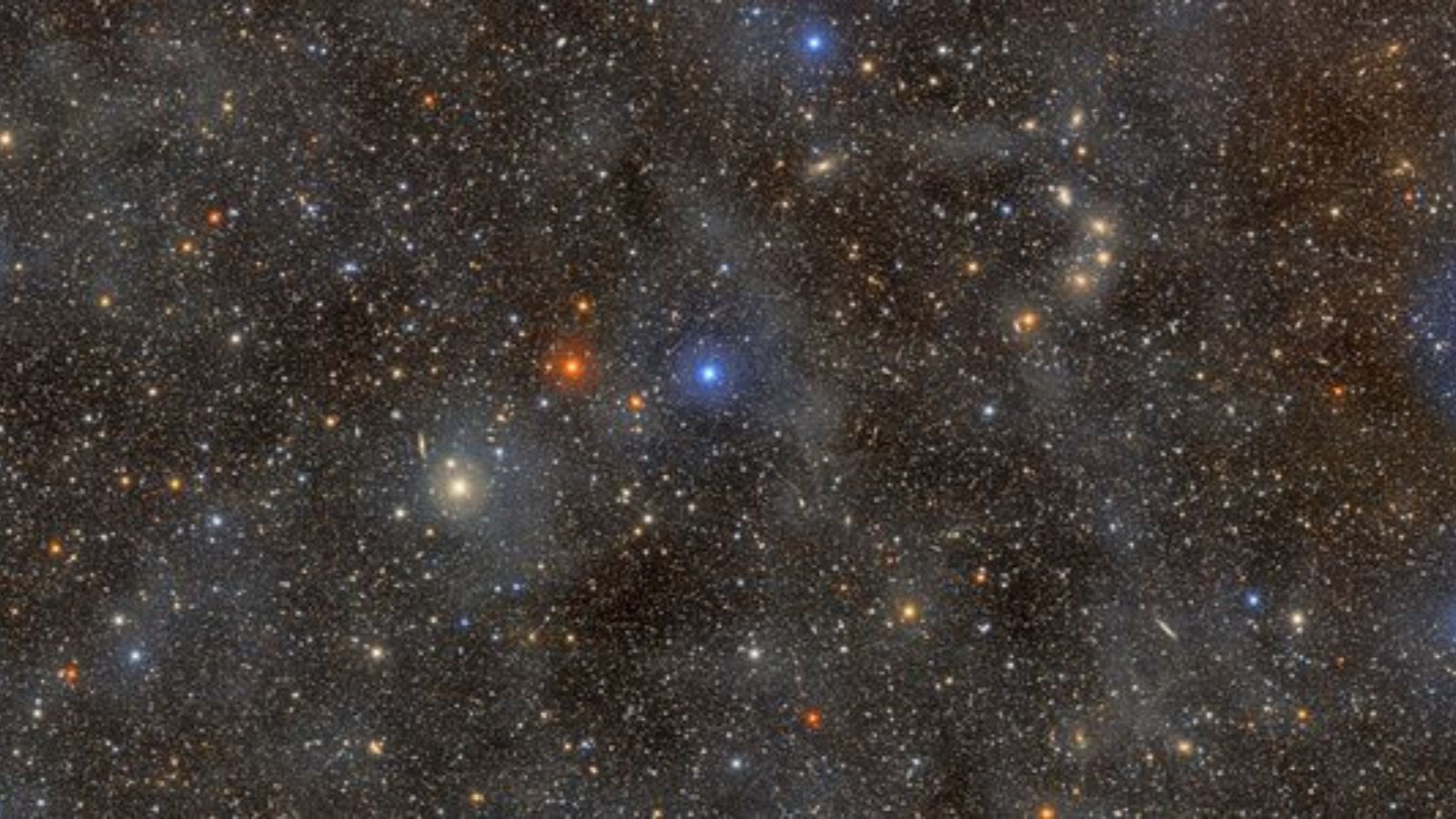
Rubin Observatory, funded by the US National Science Foundation and the US Department of Energy’s Office of Science, is now capturing the cosmos in unprecedented detail, transforming the way we study the dynamic Universe (Photo: NSF–DOE).
A revolutionary ten-year odyssey into the depths of space and time has officially begun. The NSF–DOE Vera C. Rubin Observatory, located in Chile, has formally commenced its highly anticipated Legacy Survey of Space and Time (LSST). Utilising the largest digital camera ever constructed, this decade-long mapping mission will allow astronomers to explore a dynamic, changing Universe in unprecedented detail.
Indian scientists collaborating on the international project emphasise that the survey marks the dawn of a new epoch in observational astrophysics.
Professor Surhud More from the Inter-University Centre for Astronomy and Astrophysics (IUCAA), who serves as the Rubin IUCAA programme manager, explained that the mission’s scope is staggeringly broad.
“Whether your interests lie in understanding the formation of the Solar System, discovering exploding stars, finding black holes that rip stars apart, mapping dark matter across half the sky, or understanding how the Universe will evolve in the future—Rubin has you covered,” Prof More said.
Professor Yogesh Wadadekar from the National Centre for Radio Astrophysics (NCRA-TIFR), a member of the LSST Galaxies Science Collaboration, told The Indian Express that he is particularly looking forward to the deep-field imaging.
“Rubin/LSST will allow us to study as many as 20 billion galaxies of every shape and size, each with its own history of formation and evolution spanning billions of years,” Prof. Wadadekar said. “This unprecedented dataset will allow thousands of questions on galaxy evolution to be asked, and answered.”
Einstein’s vision
The observatory is also expected to break records in detecting rare cosmic alignments. Dr Anupreeta More, co-chair of the LSST Strong Lensing Science Collaboration, noted that Rubin will discover over 10,000 gravitational lenses, a phenomenon in which a massive foreground object bends light, producing multiple copies of a distant source.
Story continues below this ad
“This is a phenomenon predicted by Albert Einstein, though he never believed our telescopes would advance enough to actually detect them,” Dr More said.
“Due to lensing, some of the rare transients like Supernovae or Kilonovae can appear unusually brighter (lensing magnification) but will also seem to occur more than once, giving us the deja vu experience. Such gravitationally lensed transients are not just some magnificent spectacle; they help us in measuring the age and the expansion rate of the Universe,” Dr More added.
Largest digital camera
Rubin Observatory’s unique design combines enormous light-collecting power, the ability to move rapidly across the sky and a wide field of view. Its 3,200-megapixel camera, the largest digital camera in the world, is now capturing a new, detailed image approximately every 40 seconds./strong>
Each night, Rubin collects approximately 10 terabytes of data and produces as many as 7 million alerts of changes in the night sky. These alerts stream to alert brokers: automated systems that sort and classify these changes so scientists can act quickly.
Story continues below this ad
Named after the pioneering astronomer Vera Rubin, who provided the first convincing observational evidence for the existence of dark matter, the state-of-the-art facility is jointly funded by the US National Science Foundation (NSF) and the US Department of Energy’s Office (DEO) of Science. NSF’s NOIRLab manages the facility’s operations.
According to an official statement by NOIRLab, the observatory’s unique engineering combines massive light-collecting power with the ability to sweep rapidly across the sky. Every few nights, Rubin will relentlessly scan the entire southern sky, effectively creating an ultra-wide, ultra-high-definition time-lapse video of our evolving cosmos.
“Not only is Rubin helping to unlock the mysteries of the distant dark Universe,” project contributors noted, “it is also officially the most powerful Solar System discovery machine ever built.”
© The Indian Express Pvt Ltd
Anuradha Mascarenhas is a Senior Editor at The Indian Express, based in Pune. With a career spanning three decades, she is one of the most respected voices in Indian journalism regarding healthcare, science and environment and research developments. She also takes a keen interest in covering women's issues .
Professional Background
Education: A gold medalist in Communication and Journalism from Savitribai Phule Pune University and a Master’s degree in Literature.
Author: She authored the biography At The Wheel Of Research, which chronicles the life and work of Dr. Soumya Swaminathan, the former Chief Scientist at the WHO.
Key Focus: She combines scientific accuracy with storytelling, translating complex medical research into compelling public and human-interest narratives.
Awards and Recognition
Anuradha has won several awards including the Press Council of India's national award for excellence in journalism under the gender based reporting category in 2019 and the Laadli Media award (gender sensitivity -2024). A recipient of the Lokmat journalism award (gender category-2022), she was also shortlisted for the RedInk awards for excellence in journalism-2021. Her debut book At The Wheel Of Research, an exclusive biography of Dr Soumya Swaminathan the inaugural chief scientist of World Health Organisation was also nominated in the Popular Choice Category of JK Paper AUTHER awards. She has also secured competitive fellowships including the Laadli Media Fellowship (2022), the Survivors Against TB – New Research in TB Media Fellowship (2023) and is part of the prestigious 2025 India Cohort of the WomenLift Health Leadership Journey.”
Recent Notable Articles (Late 2025)
1. Cancer & Specialized Medical Care
"Tata Memorial finds way to kill drug-resistant cancer cells" (Nov 26, 2025): Reporting on a breakthrough for triple-negative breast cancer, one of the most aggressive forms of the disease.
Discipline, diet and purpose; How a 97-year-old professor defies ageing'' (Nov 15, 2025) Report about Prof Gururaj Mutalik, the first Head of Department at Pune's B J Government Medical College who at 97 credits his longevity to healthy habits and a strong sense of purpose.
2. Environmental Health (The "Breathless Pune" Series)
Long-term exposure even to 'moderate' air leads to chronic heart, lung, kidney issues" (Nov 26, 2025): Part of an investigative series highlighting that even "safe" pollution levels are damaging to vital organs.
"For every 10 µg/m3 increase in PM2.5 level, there was 6-8% jump in medicine sales" (Nov 23, 2025): Using commercial data to prove the direct link between air quality and respiratory illnesses in Pune.
3. Lifestyle & Wellness News
"They didn't let cancer, diabetes and heart disease stop them from travelling" (Dec 22, 2025): A collaborative piece featuring survivors who share practical tips for traveling with chronic conditions.
At 17, his BP shot up to 200/120 mmHG; Lancet study flags why child and teen hypertension doubled between 2000 and 2020'' (Nov 12,2025)--A report that focusses on 17-year-old-boy's hypertensive crisis and reflects the rising global trend of high blood pressure among children and adolescents.
4. Scientific Recognition & Infrastructure
For promoting sci-comm, gender diversity: IUCAA woman prof highlighted in Nature" (Nov 25, 2025): Covering the global recognition of Indian women scientists in gender studies and physics.
Pune researchers find a spiral galaxy like the Milky Way from early universe'' (December 3, 2025)- A report on how Indian researchers discovered a massive galaxy that existed when the universe was just 1.5 billion years old , one of the earliest to have been observed so far.
Signature Beat: Health, Science & Women in Leadership
Anuradha is known for her COVID-19 reportage, where she was one of the first journalists to provide detailed insights into the Covishield and Covaxin trials. She has a dedicated interest in gender diversity in health and science, often profiling women researchers who are breaking the "leaky pipeline" in STEM fields. Her writing style is scrupulous, often featuring interviews with top-tier scientists and health experts from various institutions.
... Read More
Click here to join Express Pune WhatsApp channel and get a curated list of our stories
Tags:
albert einstein
chile
Science
space
View original source — Indian Express ↗
Related stories

ESPN
SportsJul 2, 2026 · 1 min
Rays have two top-10 hitters? Skubal surges? Don't...
ESPN

The Punch
NewsJul 2, 2026 · 1 min
AbdulRazaq pledges better working environment for Kwara judiciary
The Punch
The Punch
PoliticsJul 2, 2026 · 1 min
Oyo APC gov candidate gets INEC nomination form, unveils running mate
The Punch
The Punch
NewsJul 2, 2026 · 1 min
Two policemen die in Imo road crash, CP mourns
The Punch