Indian Express
How technological innovations help India build safe, sustainable road network
As India rapidly scales its highway infrastructure to achieve its goal of becoming a developed nation by 2047, the definition of infrastructure modernisation has also evolved beyond basic expansion of roads and highways.
Modernisation is no longer seen as constructing multi-lane roads or improved connectivity, but it also includes ensuring the safety and sustainability of the road network so that it protects both human life and the environment.
Accordingly, India’s road infrastructure modernisation is increasingly focused on these important aspects.
As India’s road network expanded significantly, concerns around commuter convenience and safety grew alongside it. The lack of road safety has become a silent national emergency. India accounts for 11 per cent of global road accident fatalities, despite having only about 1 per cent of the world’s vehicles, according to a report by the World Bank. The high mortality rate is driven by a combination of structural design flaws and human behavioural factors.
Weak enforcement of the Motor Vehicles Act, 1988 allows speeding, lane indiscipline, and overloaded commercial vehicles to go unchecked, causing safety risks across the country. Furthermore, the infrastructure itself often introduces hazards. Sub-optimal road engineering, geometric design flaws, and poorly marked merging lanes often create predictable collision zones known as “black spots”.
While policy focuses heavily on rapid deployment of asphalt (laying bitumen-based mixtures for road construction), the systematic identification and engineering rectification of these black spots has apparently lagged behind. This has turned high-speed expressways into high-risk corridors.
Story continues below this ad
The imbalance reflects a structural issue in planning wherein the system is designed to build and expand roads but not equipped to audit, maintain, and regulate roads and traffic effectively.
Technological interventions: Moving to “talking cars” via V2V
To address the limits of physical enforcement and driver reaction times (time a driver takes to spot a hazard and act), the National Highways Authority of India (NHAI) under the Ministry of Road Transport and Highways (MoRTH) is introducing major technological upgrades through the integration of Intelligent Transport Systems (ITS).
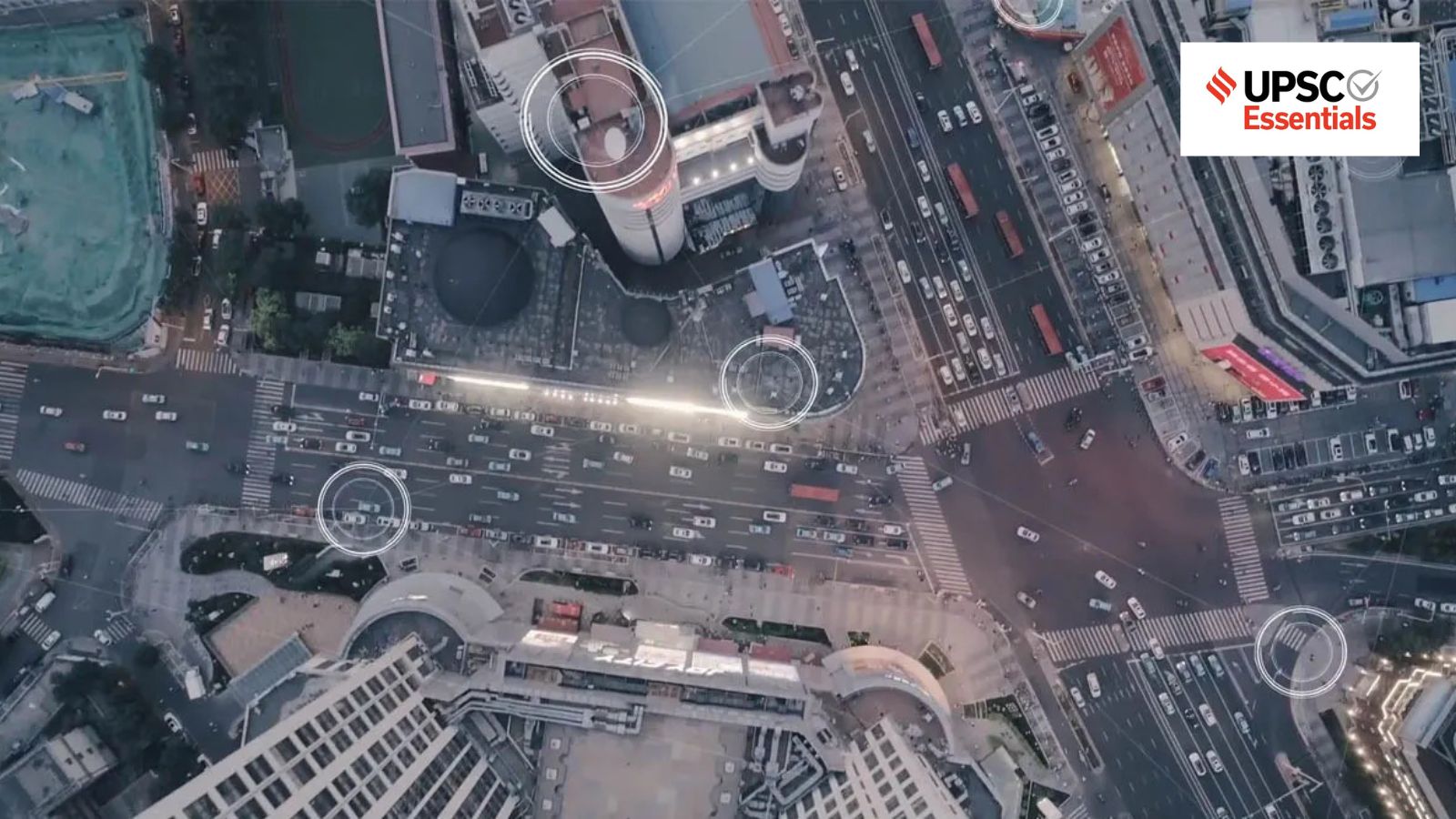
As part of this initiative, Advanced Traffic Management Systems (ATMS) are being deployed across major expressways to cut down response times and improve safety. These systems use AI-driven CCTV cameras, vehicle speed detection systems, dynamic Variable Message Signs (VMS), and automated incident detection technologies.
Furthermore, Vehicle-to-Vehicle (V2V) communication technology, a key innovation that enables vehicles to actively ‘talk’ to one another in real time, is also in the pipeline. V2V uses dedicated on-board wireless units that continuously exchange critical data, including speed, exact location, and braking status, independently of commercial cellular mobile networks. It thus creates a layer of ‘cooperative awareness’ on high-speed expressways.
Story continues below this ad
This technology has the potential to drastically reduce human error accidents. In fog-prone regions or during heavy rainfall, V2V can provide 360-degree blind-spot awareness by warning drivers of hidden roadside hazards or sudden hard braking by vehicles ahead.
By providing seconds of advance warning, V2V can actively prevent high-speed rear-end collisions and multi-vehicle pile-ups, transforming vehicles from passive machines into responsive, interconnected safety networks. The deployment of this technology marks a policy shift in the role of the government from a reactive stance of post-facto policing and fines to proactive interventions that prevent human error.
Judicial recognition of road safety
Alongside technological innovation, judicial intervention has played a pivotal role in strengthening road safety governance. Recognising the challenges persisting in the road transport sector, the judiciary has intervened multiple times to frame road safety as a matter of constitutional governance. The Supreme Court of India in the Parmanand Katara v Union of India case (1989) observed that ‘right to safe travel’ falls under Right to Life (Article 21).
The apex court’s interventions led to measures like the guarantee of immediate medical aid to accident victims and the establishment of state road safety committees. In 2025, the Supreme Court elevated the right to safe footpaths and public roads to a constitutional baseline under Sections 138(1A) and 210-D of the Motor Vehicles Act.
Story continues below this ad
While Section 138(1A) authorises state governments to regulate the movement of pedestrians and non-mechanically propelled vehicles on public roads and national highways, Section 210-D mandates the prescription of standards for the design, construction, and maintenance of roads other than national highways.
In April 2026, the Supreme Court also stated that the safety of commuters against road accidents and the right to safe passage on highways are part of the fundamental right to life under Article 21 of the Constitution.
Judicial interventions and road safety governance
The apex court has repeatedly deployed its extraordinary powers under Article 142 of the Constitution to issue binding directives on matters of highway management, including deadlines to the NHAI to fix specific engineering black spots.
Judicial interventions have resulted in the creation of specialised road safety councils, mandated the installation of speed-enforcement technologies, and established strict accountability mechanisms for regional transport authorities.
Story continues below this ad
These interventions have also expanded the scope of Article 21 beyond the protection of life or personal liberty. It now includes the right to safe, hazard-free travel. As a result, issues within the road networks (like design, maintenance, traffic, commuter convenience) are increasingly viewed not only as construction or maintenance failures but also as direct violations of citizens’ constitutional rights to life and safety.
Green and sustainable engineering
Another important dimension of modern highway expansion is the transition from resource-intensive ‘grey infrastructure’ (human-made structures using hard building materials) to sustainable ‘Green Roads’.
This shift is no longer merely aspirational but a necessity driven by climate change and the need to reduce the environmental footprint of road infrastructure. Accordingly, India has begun integrating the principles of circular economy (a system that eliminates waste and regenerates natural ecosystems) into road construction.
MoRTH has mandated the use of recycled materials, like waste plastic in bitumen mixes, industrial slag, and fly ash from thermal power plants, in highway construction to reduce the consumption of virgin natural aggregates, such as quarried stone and river sand.
Story continues below this ad
This is also expected to prevent millions of tons of industrial waste from entering landfills, improve the water resistance, and upgrade the durability of the road surface.
Global innovations in highway sustainability
To accelerate this green transition, MoRTH is looking at global benchmarks that reimagine how highways interact with energy grids and ecosystems. Some of the notable examples include:
1. The solar roads initiative of the Netherlands that integrates photovoltaic cells directly into road surfaces to generate renewable energy for nearby grids.
2. The eHighway system of Germany that installs overhead catenary (power) lines to supply continuous electricity to heavy commercial vehicles via roof-mounted pantographs, bypassing diesel reliance on high-density transit corridors.
Story continues below this ad
3. The dynamic-charging lanes of Sweden have electrified roads that charge commercial electric vehicles wirelessly as they drive, reducing the need for massive vehicle batteries.
4. EV highway ecosystems of Norway that have high-capacity charging networks integrated into major highways and rest areas every few kilometres to eliminate range anxiety for electric vehicles.
These examples offer valuable insights into sustainable highway infrastructure and underline the significance of a holistic framework.
The road ahead
To bridge the gap between ambitious infrastructure targets and sustainable, safe outcomes, India needs to adopt an effective holistic framework that integrates climate-resilient engineering with strict public safety enforcement.
Story continues below this ad
This can be achieved by effective implementation of the 4 Es of road safety, which form the foundational pillars of MoRTH’s national strategy:
1. Engineering: Designing roads to reduce human error by correcting geometric flaws before construction, and expanding the use of green materials.
2. Enforcing: Digitising traffic policing through automated speed cameras, weigh-in-motion sensors for freight, and strict penalties for structural or traffic violations.
3. Educating: Upgrading driver licensing systems from administrative formalities to rigorous, safety-oriented training programmes.
4. Emergency Care: Establishing decentralised first aid and medical care systems along major corridors to guarantee medical attention within the critical ‘golden hour’ after an accident
There is also a need to transition from a fragmented, project-based model to an integrated lifecycle governance framework that shifts procurement from restrictive Least-Cost (L1) bidding to a Quality and Cost-Based Selection (QCBS) system that prioritises long-term durability over low-cost capital expenditure.
Thus, through the effective use of technology and engineering in safety and ecology, India can build a road network that truly drives national development sustainably.
Post read questions
1. Road safety remains the biggest challenge despite rapid expansion of India’s highway network. Examine the causes and suggest policy measures.
2. What are ‘black spots’ on highways? Examine the institutional challenges in their identification and rectification.
3. Discuss the role of constitutional jurisprudence in promoting public safety through transport governance.
4. Analyse the role of green highway engineering in achieving India’s climate commitments. How can circular economy principles contribute to sustainable road infrastructure in India?
5. Discuss the role of Intelligent Transport Systems (ITS) in improving road safety and highway efficiency in India.
(Kannan K is a Doctoral candidate at the Centre for Economic and Social Studies, Hyderabad.)
Share your thoughts and ideas on UPSC Special articles with [email protected].
Click Here to read the UPSC Essentials magazine for June 2026. Subscribe to our UPSC newsletter and stay updated with the news cues from the past week.
Stay updated with the latest UPSC articles by joining our Telegram channel – IndianExpress UPSC Hub, and follow us on Instagram and X.
View original source — Indian Express ↗
Related stories

BBC
TechnologyJul 2, 2026 · 1 min
Could a heatwave hit Taylor Swift's wedding?
BBC

The Guardian
TechnologyJul 2, 2026 · 1 min
Defra breached law when it let farmers use bee-killing pesticide, watchdog says
The Guardian

Ars Technica
TechnologyJul 2, 2026 · 1 min
Ars Live recap: When are the big rockets NASA desperately needs going to be ready?
Ars Technica

Indian Express
TechnologyJul 2, 2026 · 1 min
Wanted in Salman Khan house firing case, Anmol Bishnoi moves court to surrender
Indian Express