CNA
Analysis:Lamine effect restores Spain's bite as teenager bends Austria to his rhythm
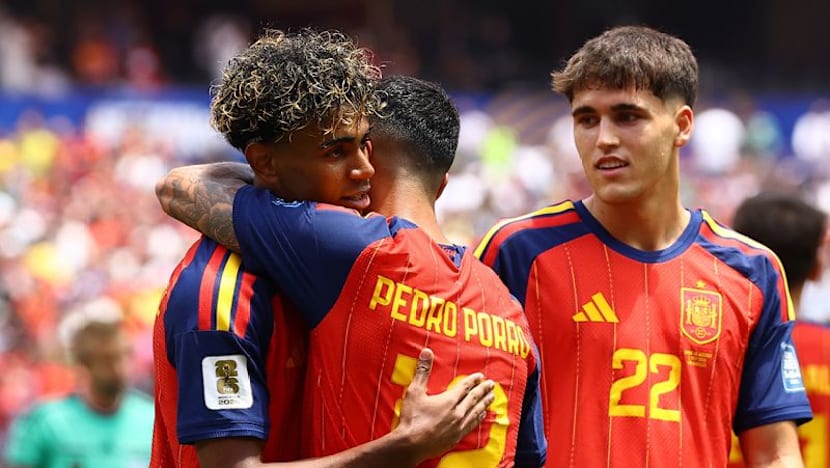
July 2 : For a country that has long worshipped the collective, Spain are discovering the delicious awkwardness of having an 18-year-old who keeps making individual brilliance look like a team principle, with Lamine Yamal shining as they beat Austria 3-0.
Lamine arrived at the World Cup with a troublesome hamstring injury and began Spain's campaign on the bench as Luis de la Fuente's side stumbled to a goalless draw against Cape Verde, a performance short on spark, bite and anything resembling the swagger that made them European champions in 2024.
Since that disappointing start, as Lamine has gathered minutes and rhythm, Spain have looked increasingly like Spain again — only with a twist. The old machinery of midfield control remains, but now it has a teenage lightning rod on the right wing, a player opponents know is coming and still cannot quite stop.
His return to sharper condition has coincided with Spain's performances growing in authority. That is hardly a coincidence. Since breaking through from Barcelona's La Masia academy as a 16-year-old, Lamine has shown the rare ability to make structured football feel spontaneous.
He was central to Spain's European Championship triumph in Germany, when they won every match, played vibrant attacking football and broke the tournament scoring record. In North America, the ride has been bumpier, with fitness issues disrupting De la Fuente's plans, including problems for Nico Williams, whose speed on the opposite flank had been a key part of Spain's balance.
Against Cape Verde, with Gavi and Ferran Torres wide, Spain looked blunt. But with Alex Baena introduced on the left and Lamine growing into the tournament on the right, the side have begun to rediscover their shape, speed and menace.
CONSTANT PROBLEM
Baena was a constant problem for Austria, stretching the pitch and giving Spain a second route of attack, while Lamine repeatedly drew defenders towards him like a magnet with boots.
Spain spent long spells trying to isolate Lamine wide, trusting him to win one-on-one duels. It worked often enough to tilt the game. Yet their best moments came when he drifted inside, the gaps narrowed and Rodri and Pedri became more involved, allowing Spain to move the ball with the old familiar tempo.
There is still work to do. Spain need to maintain midfield control for longer periods and reduce the spaces between their lines. But this was a performance that suggested the gears are beginning to mesh.
Marc Cucurella and Pedro Porro were excellent at full back, Rodri grew impressively after halftime and Mikel Oyarzabal was decisive again. Perhaps the most encouraging detail for Spain was that Lamine was named player of the match despite neither scoring nor providing an assist.
That matters. While title contenders lean heavily on their leading attackers for goals, Spain were able to win comfortably with Lamine influencing the match in subtler ways — by attracting pressure, unsettling Austria's defensive shape and creating the conditions for others to thrive.
Spain's authority was not limited to attack. They did not allow Austria a shot on target, the first time a team had achieved the feat in a World Cup knockout match since Germany against Argentina in the 2014 final.
They have also not conceded a World Cup goal since their defeat by Japan in 2022 and are on a 34-match unbeaten run.
After early doubts, Spain look dangerous again with Lamine fit, fearless and increasingly central to everything they do.
Related stories

ESPN
SportsJul 3, 2026 · 1 min
New team, new number: Ja Morant to wear No. 1 with...
ESPN

ESPN
SportsJul 3, 2026 · 1 min
Sources: Donovan to be lead assistant for Spurs
ESPN

ESPN
SportsJul 3, 2026 · 1 min
Messi, Balogun and why two tackles have sparked Wo...
ESPN
ESPN
SportsJul 3, 2026 · 1 min
Iga Swiatek's mental strategy at Wimbledon: clear ...
ESPN