The Guardian
‘They sing mostly about cows … and peace’: how social media is driving a Maasai music revival
As the sun sets, a goat’s leg sizzles on the fire in Kenya’s Mau Forest, a bumpy three-hour drive from the nearest Tarmac road. “Nowadays, Maasai shoot with cameras, not spears,” the manager says as he watches a Maasai musician looking at himself on a smartphone screen.
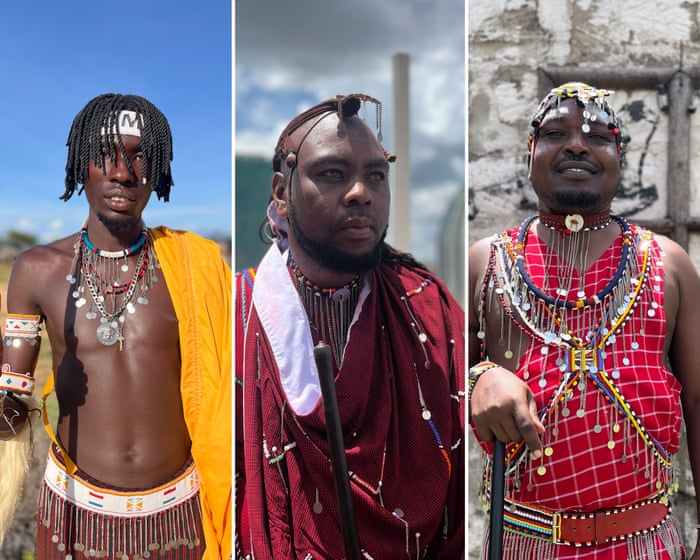
Julius Kesier, alias Kamurar Maasai, a musician and influential community mentor, is being filmed at his manyatta settlement. The spear he carries is purely for show.
In recent years, Maa-speaking peoples such as the Maasai and Samburu, boosted by improved internet access in remote areas and more affordable smartphones, have been bringing their music to social media. A new generation of musicians is wielding unprecedented cultural power, updating traditional patterns and reclaiming a sense of pride in symbolic spaces.
Safeguarding identity is essential for Indigenous groups leading a pastoralist way of life and struggling for survival, as their livelihood is threatened by droughts worsened by the climate crisis and the dwindling of grazing lands.
Technology has been used for activism – such as AI and satellite imagery to document illegal evictions via the Maasai Skywatch platform – and for pastoralism, with apps such as Afriscout, which helps to coordinate herd mobility across changing landscapes. Now, it is being used to craft, share and archive contemporary traditional music, tying together isolated Maa-speaking communities spread between the Tanzanian border in the south and Lake Turkana in the north.
“Music always played a central role in retaining Maasai history,” says Meitamei Ole Dapash, a Maasai leader and activist. “Not only as expression, but as a living archive of identity, memory and social relations. In school, we are taught everything but our own culture. Thanks to the rise of our local artists, we now witness a true cultural renaissance.”
Drawn to songs in their native tongue, Maa speakers who have moved to the cities to study are now celebrating a heritage long deemed old-fashioned and even shameful by some.
“University students have been instrumental in this revival since the mid-2010s, spreading songs from back home in WhatsApp groups and playing them at parties,” says Kahindi Imana, a lawyer and director of Nomad Creatives, a music consulting agency operating in Maralal, a bustling market town and the administrative capital of Samburu county. “The new generation is more in touch with their tradition, sometimes even choosing to move back to their home regions to help develop them, like me in Maralal.”
Imana founded Nomad Creatives in 2020 to help Samburu artists grow and transition to the mainstream, setting up collaborations with leading Kenyan artists or blending music with popular genres such as Konpa, Amapiano or Bongo Flava.
Most artists Imana works with are educated and have day jobs and side hustles, though one still retains his herdsman lifestyle: Wisekid Samburudollar. “He lives in one of the areas of Samburu county still plagued by banditry and has lost seven friends to gunfire in the span of two weeks,” says Imana. “Banditry forces him to regularly slip back into his guardian role of the moran [warrior] to retrieve stolen cattle.”
Many of the songs produced by this new generation promote unity and denounce intertribal conflict. Others set out to convince estranged members of the community of the benefits of semi-nomadic rural life, like Kamurar Maasai in his song Osingolio Loongishu.
“Since I started singing songs on modern beats concerning cows, a lot of Maasai are coming back to their culture. The song compels them to find their way home and get their own cows,” he says.
The spiritual meaning of cattle is rooted in the Maasai origin story, as the animals are said to have arrived on Earth from the heavens alongside the first humans.
Jeyster Aindera, known as Jeyster Music, who works out of his in-demand studio in Narok, a cosmopolitan city in the heart of Maasailand, says: “Maasai sing mostly about cows … and peace. They praise their cows like others praise God.”
Commercially successful Maasai music is predominantly rooted in Christian gospel expression, despite Maasai spirituality revolving around the supreme creator deity Enkai. The Maasai singer Nkaiwuatei Superpower says: “It is a fight to keep secular music alive, since the church funds and mentors people to sing gospel only, and there’s a church on every corner. Gospel event promoters sometimes even sabotage our efforts to find gigs.”
Dapash adds: “The entry of the church in Maasailand has brought some good with education, but it has contributed to the near destruction of our culture by brainwashing us into thinking that we were primitives who needed to be rescued. Secular music reaches out to young people and educates them about their own culture.”
The Maasai singer Ng’otiek Nelson convinced community elders that modern production would enhance the music without affecting authenticity. “Despite an initial backlash, I insisted on using digital beats so that we wouldn’t lose our music.
“If we don’t update our roots, our songs will be forgotten and the community will forget about their customs. I wanted to close the gap between younger and older generations by modernising the sound.”
Bridgeton Munene, a music producer known as Shen Vibes, with a mobile recording studio in Maralal says: “Up-and-coming artists usually want to do the copy-paste thing, I stopped humouring this approach. Samburu music hasn’t really been tapped into yet, there is still so much to explore.”
Jeyster livestreams his Guardian interview on TikTok. “I make sure that all the artists who have talent get their voices recorded, regardless of their financial situation,” he says.
With so many artists wanting to record, efficiency is key in the studio. Emmanuel Oduor, known as LakeMan in the central town of Isiolo, is credited with producing 8,000 songs in 10 years. Most producers are self-taught thanks to YouTube tutorials and versions of digital audio workstations such as Ableton or Fruity Loops. LakeMan uses a range of tools. “I have no qualms using AI software like Suno once in a while. Their database has really nice virtual ladies when I need back-up singers on a chorus,” he laughs.
When artists leave the studio with their MP3 in hand, most look for a way to combine video with the songs. They use dancing, fashion, and comment on major events faced by their community such as droughts, crime and elections, to stand out from the competition. With the help of drone footage, video clips showcase natural beauty, traditional dances, dresses and ornaments and inevitably … cattle. Some videos feature subtitles in Maa or English in an effort to reach wider audiences.
Despite growing numbers of clicks, hearts and likes, videos don’t generate much money for artists. YouTube monetisation is limited since ad revenue is dictated by the viewer’s location rather than the content creator’s, with brands adjusting their willingness to pay based on the local market’s profitability. This means musicians in developing countries whose videos are watched mostly by users in their own country earn lower-tier ad rates.
Social media platforms such as Facebook and TikTok are not lucrative either, but they foster a more direct connection between artists and their fans, as Samburu singer Jaloul John Ienaigwanae, or Jalven Brave, says: “You don’t need to bribe a radio presenter to beg for airplay any more, you can share and promote your music yourself on TikTok, it does marketing by itself.”
Live performances remain the main reliable source of income, either at ceremonial occasions such as weddings or circumcisions, or public events such as campaign rallies or supermarket openings.
The rise in the use of smartphones has, however, led to many of the same problems faced elsewhere.
“Some people spend the whole day staring at their phones and get so distracted that they’ll find cows eating their maize,” laughs Nelson. “It’s overwhelming for me too, I received 2,000 reaction videos to my last TikTok dance challenge, reviewing them takes for ever.”
While dealing with the issues that come with owning a smartphone, Maa speakers use these tools to take community storytelling into their own hands, shooting and sharing videos of songs of joy, pride and unity.
Dapash praises the power of music. “Because of low levels of literacy in our community, we can only advance Maasai culture through music. It has been the most amazing medium throughout our history. It’s not just entertainment for us, it brings our people together,” he says.
View original source — The Guardian ↗
Related stories

Lovin Malta
EntertainmentJul 3, 2026 · 1 min
Gozo Channel Names New CEO And First-Ever Female Chairperson
Lovin Malta

The Hollywood Reporter
EntertainmentJul 3, 2026 · 1 min
Venice Classics Line-Up Includes Cassavetes, Buñuel, Rossellini and Roger Corman
The Hollywood Reporter

Deadline
EntertainmentJul 3, 2026 · 1 min
Ludovica Francesconi-Led Italian Drama ‘The Fate Of The Bee’, Shot On iPhone, Wraps Post-Production; First Looks…
Deadline

Euronews
EntertainmentJul 3, 2026 · 1 min
Madonna takes us to Danceteria with her 'Confessions II' album: Euronews Culture's verdict
Euronews