CNA
Healthcare and social sectors say technology should ease workloads, not replace human touch
SINGAPORE: Artificial intelligence and other emerging technologies are reshaping Singapore's healthcare and social service sectors, but observers stressed that these are intended to give professionals more time to focus on people, not replace human interaction.
From helping hospitals manage staff rosters to assisting social workers with documenting children's developmental progress, technology is increasingly taking over routine administrative tasks.
But industry leaders told CNA that adopting technology in sectors built on trust and empathy requires a measured approach.
RESHAPING HEALTHCARE JOBS
On Thursday (Jul 2), public healthcare provider NHG Health launched a workforce accelerator programme to support the transformation of healthcare jobs and skills.
The programme will explore how patients' needs may evolve in the future, to determine whether existing roles can be redesigned or if new roles are needed to fill the gaps.
NHG Health said job redesign has become increasingly urgent as healthcare needs evolve rapidly and technology becomes more embedded in the workplace.
At the launch, Senior Minister of State for Health Tan Kiat How said technology should strengthen professional expertise, not replace it.
“Our challenge is not simply responsible AI. It is responsible professional development in the age of AI,” he added.
“We have long understood the risks of deskilling. Today, we must also guard against mis-skilling – people becoming highly proficient at using technology, but less confident exercising their own judgement.
“Patients deserve better than that. Our healthcare professionals deserve better than that too.”
Observers said technology should enable healthcare professionals to spend more time with patients while supporting their judgement.
Healthcare Services Employees' Union executive secretary Steven Goh said automating tasks such as documentation and scheduling could reduce administrative burdens that contribute to staff burnout.
"All these will alleviate a lot of their time, and with that, I think the nurses will have better job satisfaction, and therefore be able to have greater staff retention," he said.
TECHNOLOGY FOR SOCIAL GOOD
Meanwhile, in the social service sector, the Ministry of Social and Family Development (MSF) is setting aside S$15 million (US$12 million) over three years to tap emerging technologies such as AI.
Minister for Social and Family Development Masagos Zulkifli said on Thursday that the government would lead efforts to bridge innovation with frontline expertise.
One priority is making better use of data to identify people at risk and reach out with support earlier, he added.
But Mr Masagos noted that any new tools must remain human-centred, with professional oversight and safeguards.
In his speech, he said: “AI is not a silver bullet, nor can it replace the care professional. But used well, AI can help us reach further, respond faster, and support families more effectively than ever before.”
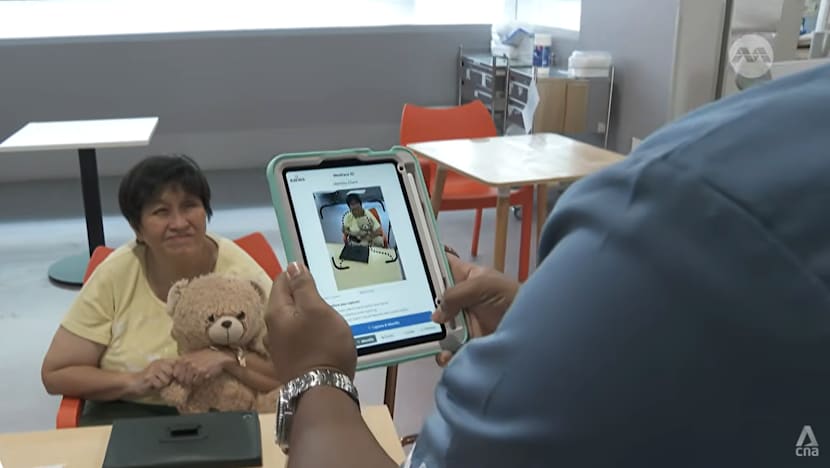
AI is already being put to practical use across the social service sector, from facial recognition tools that help ensure clients receive the correct medication to platforms that support case workers handling complex family cases.
Social service agencies told CNA that a fresh tranche of funding will help expand these efforts and scale successful solutions.
Care Corner Singapore, for instance, has deployed an AI-powered transcription tool that has cut the time staff spend on administrative tasks by at least half.
It is also trialling an AI-enabled case management platform designed to surface gaps in assessments and strengthen case planning.
“Our social workers are coming back to tell us that case numbers may not see big increases, but the kinds of cases that they are working with have become a lot more complex,” said Care Corner Singapore CEO Christian Chao.
“So the time taken to support the family, help them through that difficult period, actually now requires a lot more effort.”
PEOPLE BEFORE TECHNOLOGY
Experts said introducing technology requires careful management because much of the work involves supporting people at their most vulnerable.
“Trust is very important,” said Mr Bruce Liew, senior director of disability and inclusion at social service agency AWWA.
“If technology becomes the first touch point, it sometimes makes the client feel less seen, less heard, less understood. So professionals are quite cautious in introducing tech before the trust is built.”
Mr Liew added that one-size-fits-all technology solutions may not suit the highly personalised nature of care.
“A lot of care, a lot of intervention, it's very individualised, and sometimes technology starts off by standardising processes, and that may not be so well received by frontline teams,” he said.
“The use of AI or tech is not meant to replace the empathy provided by the practitioners, it's meant to give them some of the time and energy back for them to practice some of this empathy.”
Related stories

The Punch
WorldJul 3, 2026 · 1 min
Brentford secure Michael Kayode on a long-term deal until 2032
The Punch
South China Morning Post
WorldJul 3, 2026 · 1 min
Thai beer dynasty heir’s mother drops suit under ‘ungrateful child’ law
South China Morning Post

CNA
WorldJul 3, 2026 · 1 min
India's Modi to visit Indonesia, Australia, New Zealand next week
CNA
The Punch
WorldJul 3, 2026 · 1 min
Tackle rising hunger, poverty in Bayelsa, PDP slams Diri
The Punch