
Deutsche Welle
The downfall: Julian Nagelsmann out as Germany coach
As had been widely expected ever since Germany's shock exit to Paraguay at the 2026 World Cup, Julian Nagelsmann has left as national team head coach, the German Football Association (DFB) confirmed on Friday.
The 38-year-old resigned from the job just three years after arriving and well before the end of his contract, which was to expire after the 2028 European Championship. The renewal of his deal in January 2025 forced the DFB into tricky negotiations, and led to a reported three-hour secret meeting the day before the official announcement.
"This decision was anything but easy for me," Nagelsmann said in a statement.
"My top priority has always been the team's success. After such a bitter disappointment, the team deserves the chance for a fresh start without any baggage... A special thank you also goes to the fans. You carried us, you trusted us, and you gave us energy, even during difficult times. I am truly sorry and deeply saddened that we let you down and were unable to give you more nights of football excitement at this World Cup. You deserved so much more!"
Nagelsmann's assistants Benjamin Glück and Benjamin Hübner have also left. The DFB also stated that it is entering talks with Jürgen Klopp for the vacant head coach position, indicating that the former Liverpool and Dortmund boss has already shown a willingness to take up the role.
Nagelsmann won 23 of his 37 games in charge of Germany, losing only eight times. Three of those defeats came against Spain, Portugal and France, but two also came at the 2026 World Cup against Ecuador and then Paraguay.
His exit is yet another downturn in a coaching career that was once expected to reach the highest of heights.
Young coach makes Bundesliga history
A decade ago, Julian Nagelsmann made his debut as Hoffenheim coach in a 1-1 draw with Werder Bremen in the Bundesliga. He was the face of Germany's new, young coaching generation. He took a side battling relegation right up the table. They beat Bayern Munich. Then came the Champions League. He told the Süddeutsche Zeitung that: "30% of coaching is tactics, 70% social competence." He was deemed a coach beyond his years, ahead of the times, and one of the best coaches around.
He then moved to RB Leipzig, where he became the youngest coach to win a Champions League game, and then the youngest to make a semifinal. A year later, he took RB Leipzig to the German Cup final but lost.
Despite ending his two years in Leipzig without a trophy, Bayern Munich paid a reported €25 million for his services and offered him a five-year contract. He won the Bundesliga, but a shock loss to Villarreal in the Champions League hurt both the club and his reputation.
The following year, it all unraveled for Nagelsmann. His firing of Bayern Munich's goalkeeper coach Toni Tapalovic caused a stir, with Manuel Neuer saying the dismissal was like "having his heart ripped out." According to a report by The Athletic, Nagelsmann's training was seen as too complicated and he had struggled to truly connect with the players.
In March 2023, while on a skiing holiday during the international break, Nagelsmann was sacked. He had spent just 20 months in the job. After seven full seasons of coaching in the Bundesliga, he was out of work and had just one Bundesliga title to his name.
The Germany job
Six months later, he was named Germany's head coach. He was the "desired candidate" whose passion for the game was "infectious" — such were the words of sporting director Rudi Völler at the time.
After a rocky start to his tenure that saw him lose in Berlin to Turkey and then away in Vienna to his mentor Ralf Rangnick, Nagelsmann had the team in form for Euro 2024 on home soil and was communicating strongly, even on topics outside of football.
Despite the quarterfinal loss to Spain in which Germany were denied a key penalty, the performance at the tournament was deemed a success. A connection had been reestablished between the team and the country. Nagelsmann was considered a key factor in Germany's success. His emotional speech after the exit, calling to bring people togethe, was moving and were the words of a man distinctly aware of the impactful nature of a national team. In short, 2024 had been a big step in the right direction for coach and country.
In January 2025, Nagelsmann extended his contract until 2028, a decision met with lots of praise. Jürgen Klopp said he "loved Julian's work" and thought Nagelsmann had turned Germany into a favorite for the next tournament.
However, eyebrows were raised when Nagelsmann said soon afterwards that the goal was to win the World Cup. A disappointing showing in the Final Four of the Nations League followed to dampen the mood, which was worsened when Germany's World Cup qualifying campaign got off to a losing start against Slovakia.
"I can't stand hearing this constant 'quality, quality' anymore. We have to play football with passion! In every game!" Nagelsmann railed at the time.
Germany got the job done, but as the World Cup year began, things began to unravel again as Nagelsmann's communication became increasingly confusing. Oliver Baumann went from number one to the back-up after Manuel Neuer's surprise recall. Joshua Kimmich was a midfielder, then a right back. Leon Goretzka was going to start, then didn't. Deniz Undav was scoring in the Bundesliga, but considered a back-up.
World Cup woes
And then came the World Cup. Beyond the opener against Curacao, Nagelsmann's side were more reactive than active. They did not seize on the momentum of the comeback win in Toronto. They couldn't hold onto a lead against Ecuador. They couldn't finish off Paraguay. The players deserve criticism, but there have also been questions asked of Nagelsmann's decision making, communication and sideline behavior.
Who knows what will come next for the once-future king of German coaching. For someone who has long said he doesn't want to be coaching into his older years, perhaps there are not many stops left before he gets off the football train. Certainly his reputation after this showing has taken a hit. A return to management in Germany does not feel likely. Given the Premier League has one of the most volatile fire-and-hire approaches in world football, perhaps Nagelsmann will reappear in six to 10 months' time on the sidelines of a English top-flight team.
Right now though, there is a real sense of confusion about how this all came to pass. For a coach with so many skills, this was not how many would have imagined Julian Nagelsmann's career unfolding.
Edited by: Chuck Penfold
View original source — Deutsche Welle ↗
Related stories

The Punch
SportsJul 3, 2026 · 1 min
50 European lawmakers urge FIFA to probe Infantino over Trump peace prize
The Punch
Sky Sports
SportsJul 3, 2026 · 1 min
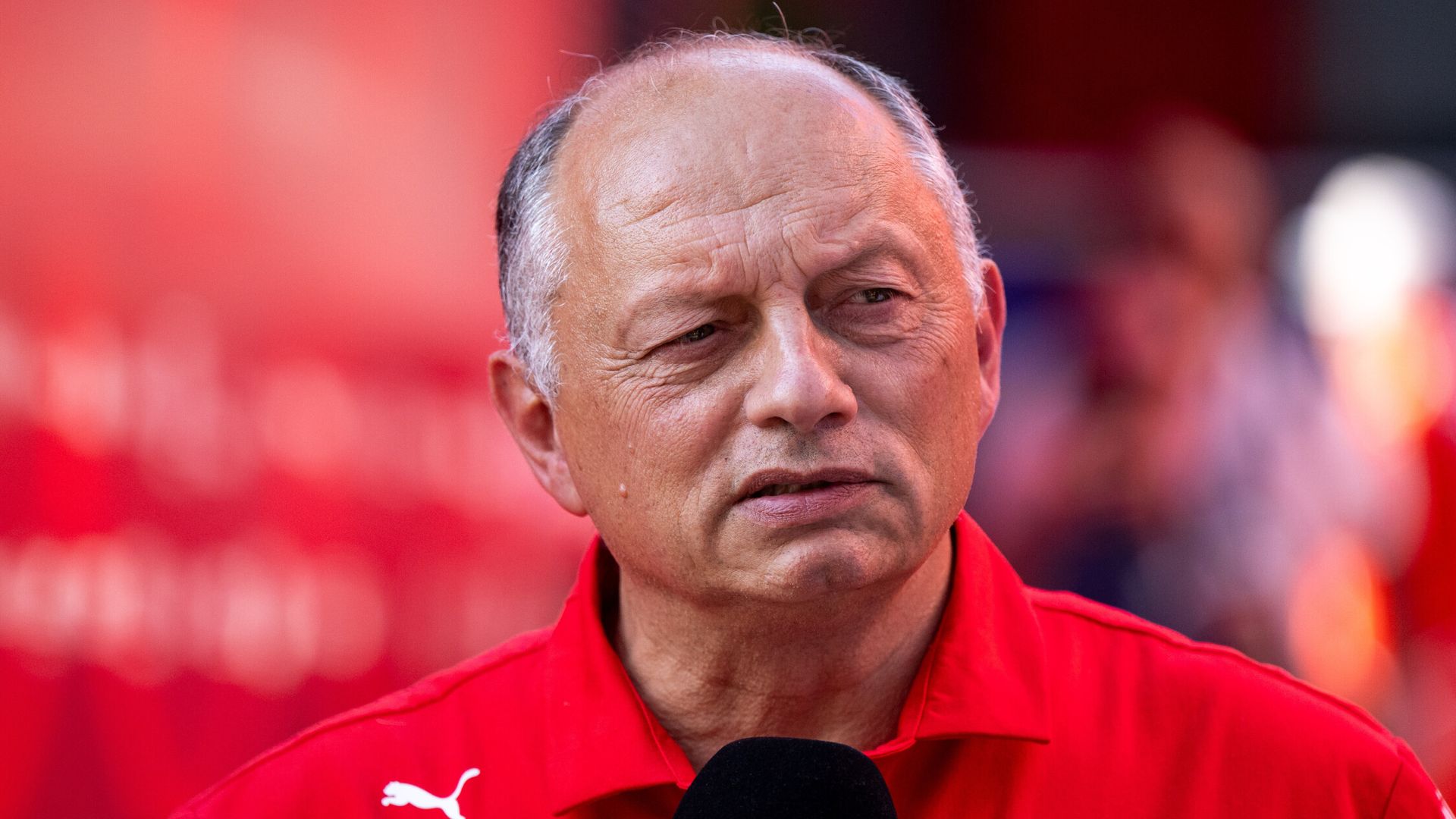
'Better we don't speak' - Vasseur unhappy with Wolff over 'cheating' accusation
Sky Sports

ESPN
SportsJul 3, 2026 · 1 min
C's pick up Queta's option, add $56M extension
ESPN
BBC Sport
SportsJul 3, 2026 · 1 min
What might Robinson's Aberdeen look like this season?
BBC Sport