CNA
I always thought getting ahead was the point. My grandmother showed me I was wrong
Voices
In a society that rewards individual achievement, Mr K B Ryan Joshua Mahindapala's grandmother's life of service makes him question whether it's worth focusing only on tangible gains such as awards and promotions.
New: You can now listen to articles.
This audio is generated by an AI tool.
03 Jul 2026 09:30PM
In Singapore, we're taught almost from birth to get ahead: do well in school, build a career and accumulate achievements that mark us as "successful".
I absorbed this definition of success without question for most of my life.
My paternal grandmother is not someone society would call successful by any conventional measure. She never ran a company, held public office or collected awards. She barely even made any money, having spent her life as a homemaker.
For more than two decades, she volunteered weekly as a tutor for children with learning difficulties at a non-profit organisation, showing up no matter how fatigued or busy she got.
She also served for more than 30 years in church, arriving early and staying late to stack chairs, wash dishes, welcome newcomers and so on.
She did the unpaid, unseen work that nobody notices – until it stops being done.
Growing up, I watched her throw herself into preparations for our church's annual Christmas party, organising rehearsals, preparing food and decorating the hall. She worked tirelessly behind the scenes, always upbeat and cheerful, and never sought recognition.
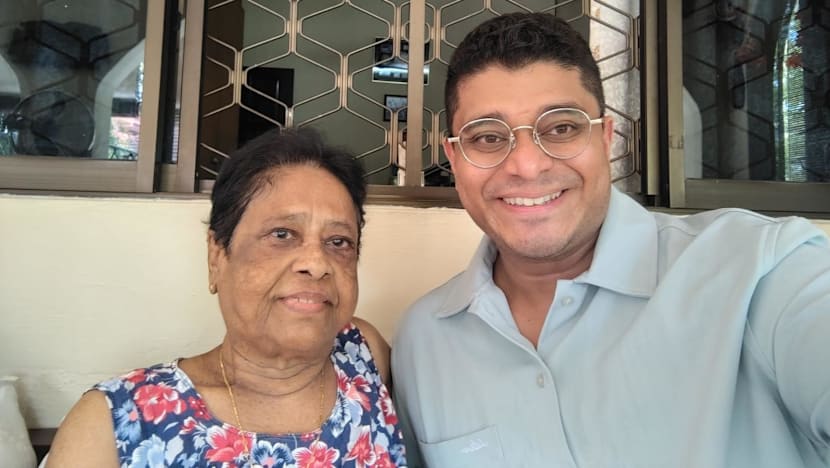
Recently, I paid a visit to my now elderly grandmother. As we sat together in her living room, surrounded by family photographs, she spoke about those decades of service.
What struck me most was how matter-of-factly she spoke about those memories that can't be summed up in an Instagram reel or a LinkedIn post.
She never framed them as sacrifice or achievement; she had simply looked at work that needed doing and done it.
In a world where we are encouraged to build personal brands and keep public record of our milestones, she had simply contributed. She never weighed her contributions in terms of how it would make her look, but how it would benefit the people around her.
If there was work to be done, she stepped forward. If someone needed help, she offered it.
GOING THE EXTRA MILE FOR OTHERS
Listening to her, I realised that the values I'd lived by might be incomplete.
I had spent much of my life measuring progress by what I achieved for myself; she had spent hers giving what she could to others.
In that moment, sitting across from her, my framework suddenly looked smaller.
It also dawned on me how much of her I already carried within me.
My older sister, Ryna, and I had spent most of our childhood living with our paternal grandparents. We shared the same rooms, the same meals – and we spent much time watching our grandmother live out these values.
The instinct to help before being asked. The discomfort of taking credit for something that was a group effort. The quiet satisfaction of finishing a task that no one will ever notice was done.
I had always assumed these were my own tendencies, quirks of my own personality that I’d developed on my own.
Yet, every single one of these traits had been hers first, and I inherited them through years of consistent observation, not from explicit teaching.
My grandmother never weighed her contributions in terms of how it would make her look, but how it would benefit the people around her.
As a child, I had trailed around after her at church events.
Now, I remember things I never cared about before: the way everyone seemed to know her name, how warmly they greeted her, the heartfelt thanks they expressed to her for things I had not understood at the time.
Her influence and impact was never built on visibility, but on presence – on showing up so consistently that people came to rely on it without ever having to ask.
I see it in myself now, most clearly in my work as a tutor.
It has always been important to me to go the extra mile for my students: anticipating where a concept might trip them up before they even reach it, preparing extra material for the ones who are ready to go further, staying a little longer with no overtime pay when something has not clicked.
I don't do these because they're required or because anyone is keeping score. I do them because I can't ignore it when someone needs something more than what I had planned to give.
That, I think, is what my grandmother gave me – not a philosophy for success or a set of rules for climbing societal ladders, but a way of moving through the world and making it just a little better for those we share it with.
WORK THAT "EARNS" US NOTHING
Lately, this tension has started to feel urgent to me again. The never-ending pressure to get ahead can make it easy to forget that getting ahead is not, by itself, the point.
In a culture that values visibility, the kind of invisible work my grandmother spent more than 30 years doing – teaching, caregiving, volunteering – often feels like it is becoming less valuable.
We "earn" nothing from it – no salary, status or public affirmation. And yet without it, communities do not hold.
As I prepared to leave her house that afternoon, my grandmother did what she always does: She packed food into containers and insisted I take them home.
It was a gesture I had seen her do hundreds of times: to give without calculation, to put someone else’s comfort ahead of your own convenience.
It wasn’t a switch she flipped on for the big moments where everyone was watching. It was simply a virtue she embodied.
Most importantly, it's a value I think more of us would do well to cultivate in ourselves.
Will we go through life only seeking to get ahead, or looking for ways to help our family, friends and neighbours thrive alongside us?
K B Ryan Joshua Mahindapala is a Singaporean lawyer turned writer and educator. He frequently writes on topics related to heritage, culture and identity.
If you have an experience to share or know someone who wishes to contribute to this series, write to voices [at] mediacorp.com.sg (voices[at]mediacorp[dot]com[dot]sg) with your full name, address and phone number.
Source: CNA/ml/sf
Related stories

The Punch
WorldJul 3, 2026 · 1 min
PFIPC scandal exposes depth of institutional decay, ADC slams presidency
The Punch
The Punch
WorldJul 3, 2026 · 1 min
Nursing council urges quality service, inducts 92 ABUAD graduates
The Punch
The Punch
WorldJul 3, 2026 · 1 min
Bayern sign Germany defender Brown on six-year deal
The Punch
The Punch
WorldJul 3, 2026 · 1 min
Florence Ajimobi arrives Vienna, assumes duty as Nigeria’s ambassador to Austria
The Punch