Indian Express
In Punjab, why AAP govt steps up Hindu outreach with grand Luv-Kush temple plan
For a party that built its politics in Punjab around education, health and an anti-corruption plank, the ruling Aam Aadmi Party (AAP) seems to be taking a different route in the run-up to the Assembly elections slated for early 2027.
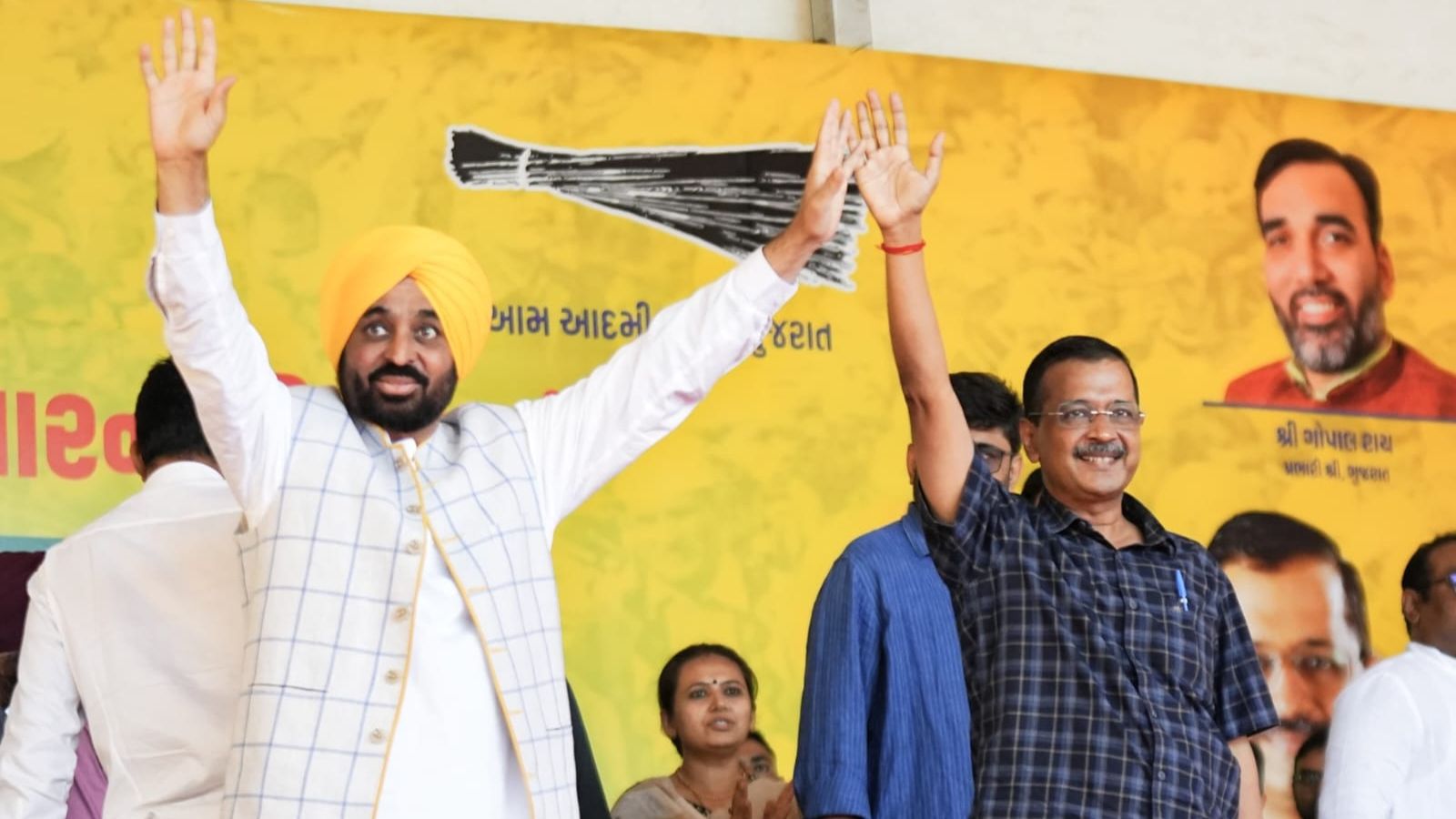
On June 27, at a Shiv Sandhya programme, AAP chief Arvind Kejriwal announced the construction of a Luv-Kush temple in Amritsar.
The Rs 150-crore project is the AAP’s strongest Hindu outreach yet and is bound to draw comparisons with the BJP, which had built a national political narrative around the Ram Temple in Ayodhya. Unlike the Ram Temple, which was built after a long political movement and legal battle, the proposed Luv-Kush temple will be funded by the Punjab government. Sources said the state Tourism Department would execute the grand project. “It is still an announcement. The construction is expected to cost around Rs 150 crore. The plan is to have a three-storied temple,” sources said.
Deepak Bali, an AAP leader and adviser to the Punjab Heritage and Tourism Board, confirmed that the Bhagwant Mann-led AAP government intends to begin work on the temple during its present tenure. “We will start the construction during this term of the government and complete it during our next tenure,” Bali told The Indian Express, adding that the party was confident of returning to power in the 2027 elections.
The proposed temple is expected to come up at the Ram Tirath pilgrimage site on the outskirts of Amritsar, believed to be the place where goddess Sita took refuge after leaving Ayodhya and where Luv and Kush were born in the ashram of Maharishi Valmiki. The site is already a major pilgrimage centre for the Valmiki community and attracts thousands of devotees every year.
This is not the first time the state has invested in the Ram Tirath site. The previous Shiromani Akali Dal-BJP government had undertaken a major facelift of the Ram Tirath complex, developing it into a religious tourism destination, with a museum and other facilities. The Centre had also extended assistance under the Pilgrimage Rejuvenation and Spiritual, Heritage Augmentation Drive (PRASHAD) scheme.
The AAP leadership’s announcement of the temple fits into a broader political pattern that has become increasingly visible over the last two years.
When the AAP came to power in Punjab in 2022, it projected its governance agenda centred on ensuring better schools and hospitals, creating jobs and ensuring measures to combat corruption. Religious symbolism was largely absent from its political messaging.
However, the AAP has gradually reached out to the Hindu community in a state where Sikhs are in majority.
Over the past year, both Kejriwal and Chief Minister Mann have been in attendance at several Hindu events. The Shiv Sandhya programme, where the temple announcement was made, itself reflected the party’s efforts to connect with Hindu sentiments.
The AAP government has also taken steps to boost religious tourism. Apart from Sikh shrines, it has promoted the Hindu pilgrimage circuits under the Mukh Mantri Tirath Yatra scheme. It has also developed the Bhagwan Valmiki Tirath Sthal at Ram Tirath, recognising its significance for devotees, particularly Valmikis.
In recent months, Mann has attended several Hindu religious programmes alongside Sikh events. Kejriwal, too, has increasingly invoked Hindu religious references during public meetings in Punjab. Party leaders maintain that they respect all religions and that preserving religious heritage is part of promoting Punjab’s tourism potential.
Hindus account for nearly 40% of Punjab’s population, which have a significant concentration in urban constituencies. These are areas where the BJP traditionally enjoyed support before its decline in the state following the farmers’ agitation in 2020-21. With the BJP now looking to regain its ground in the state and the principal Opposition Congress trying to broaden its appeal, the AAP appears keen to expand beyond its traditional support base of Sikhs and rural voters.
An AAP leader said, “There is no competitive religious politics. The government has been paying equal importance to all religions. Hindus also belong to Punjab as much as any other community. What is wrong in constructing a temple for the sons of Lord Ram?”
View original source — Indian Express ↗
Related stories

The Punch
WorldJul 3, 2026 · 1 min
C’River using tax authorities to target my university, says PDP candidate
The Punch

AllAfrica
WorldJul 3, 2026 · 1 min
Nigeria: Court of Appeal Rules Against Hijab Use At UI International School
AllAfrica

Rio Times
WorldJul 3, 2026 · 1 min
A US Firm Will Build Argentina’s First Private Nuclear Reactor
Rio Times

The Guardian
WorldJul 3, 2026 · 1 min
Hundreds join support group for survivors of drug-facilitated rape
The Guardian