Indian Express
UPSC Key: India–Japan Cooperation, Virtual Private Network and Hasdeo Arand Forest
From strategic stockpiling to AI ecosystem, roadmap is rolled out
Syllabus:
Preliminary Examination: Current events of national and international importance
Mains Examination: General Studies II: Bilateral, regional and global groupings and agreements involving India and/or affecting India’s interests.
What’s the ongoing story: In the wake of global energy supply disruptions, India and Japan Thursday came out with a joint statement on energy resilience during the visit of Japanese Prime Minister Sanae Takaichi, expressing their shared intention to work together as responsible powers and major energy-consuming countries in Asia.
Key Points to Ponder:
• India and Japan joint statement-what are the key takeaways?
• What is POWERR Asia?
• Compare and contrast MAHASAGAR and Free and Open Indo-Pacific (FOIP).
• How Japanese firms can adapt to India?
• What Indian companies can do?
• What is meant by strategic stockpiling?
• How has India–Japan cooperation evolved in recent years?
• What is the significance of the India–Japan roadmap for strengthening economic security in the Indo-Pacific?
Key Takeaways:
• The two sides also advanced cooperation “to enhance the resilience and competitiveness of both countries in the field of AI”. The aim is to bring about innovation and growth in both countries, in order to build a safe, secure, trustworthy, inclusive, human-centric, sustainable, accountable, and innovation-oriented AI ecosystem, the joint statement on AI said.
• Towards energy resilience, both sides highlighted the importance of regional initiatives to strengthen energy resilience, such as India’s support for energy security in South Asia and Japan’s Partnership On Wide Energy and Resources Resilience (POWERR Asia).
• Following discussions between Modi and Takaichi, the Ministry of Petroleum and Natural Gas and the Japanese Ministry of Economy, Trade and Industry will cooperate on the strategic stockpiling ecosystem.
• “Cooperation will focus on mechanisms related to national stockpiling systems and reserves, including industry stockpiles; and coordination regarding arrangements with producing countries, besides emergency response and market stabilisation,” said a statement by the Ministry of External Affairs (MEA).
• The two sides reaffirmed the importance of cooperation to address shared challenges of energy availability and affordability, through supply assurance, enhancing resilience and creating mechanisms to mitigate volatility, thereby strengthening the voice of oil and gas-consuming countries, the MEA said.
• The joint statement on energy resilience also highlighted the importance of resilient, self-reliant, and efficient maritime transport of oil and gas as a critical pillar of energy security for both countries.
• New Delhi and Tokyo will also hold discussions under the India-Japan Joint Working Group on Petroleum and Natural Gas under the aegis of the India-Japan Energy Dialogue. Through this platform, the two sides will share up-to-date knowledge and experience and explore mutually beneficial opportunities for cooperation.
• In the AI domain, the joint statement said the two leaders concurred in cooperating to build resilient and growth-oriented economic ecosystems in alignment with India’s MAHASAGAR and Japan’s updated “Free and Open Indo-Pacific (FOIP)”.
• Meanwhile, in the economic sector, India and Japan aimed to deepen their trade and strategic partnership by setting
a target of mobilising 10 trillion yen in Japanese investment into India over the next decade.
• Modi said the investment partnership between the two countries was gaining momentum, with 120 new business agreements signed over the past year and Japanese investments worth around $10 billion committed to India.
Takaichi said that cooperation between the two countries included co-creation of economic growth of both India and Japan through investment and innovation collaboration.
Do You Know:
• Japanese Prime Minister Sanae Takaichi arrives in India on her maiden visit, in what is being described as a reflection of the shared commitment of both countries to strengthen their special bond.
• During her three-day visit, Takaichi will participate in the 16th edition of the India-Japan Annual Summit, a mechanism established in 2006 under which the prime ministers of the two countries meet annually, each alternating as host. The summit follows PM Narendra Modi’s visit to Tokyo in August 2025 for the 15th edition, during which the two countries reaffirmed their commitment to deepening cooperation across strategic, economic, technological and security domains.
• A large business delegation accompanies her, and the two leaders will also attend business events with executives from both countries. According to government statistics, around 1,400 Japanese companies operate in India, with nearly half of them in the manufacturing sector.
Meanwhile, bilateral trade reached $27.5 billion in 2025-26, with Japanese investment in India going up to $3.2 billion between April and December 2025. Japan is among India’s largest investors, backing major infrastructure projects including a high-speed rail corridor between Mumbai and Ahmedabad. Japanese firms have also increased investments in Indian companies, including a recent $1.6 billion deal for a 20% stake in Yes Bank.
• India-Japan relations provide a strategic and economic counterweight to China’s growing dominance in the region. The leaders will also discuss security cooperation and efforts to advance a free and open Indo-Pacific. India and Japan are members of the Quad grouping alongside the United States and Australia, and have steadily expanded defence and strategic collaboration in recent years.
• The India-Japan ties are based on cooperation across eight key pillars — economy, economic security, mobility, environment, technology and innovation, healthcare, people-to-people exchanges, and state-prefecture engagement.
• India and Japan share a long-standing friendship rooted in centuries of cultural and civilisational exchange, spiritual affinity, and shared values of freedom, democracy and respect for the rule of law. However, ties have gained specific focus and traction over the last decade when the relationship was elevated to a Special Strategic and Global Partnership in 2014.
• The relationship was launched as a Global Partnership in 2000, upgraded to a Strategic and Global Partnership in 2006, and elevated to a Special Strategic and Global Partnership in 2014 during the Summit between PM Modi and former PM Shinzo Abe.
• Japan participates in several bilateral exercises with India, including JAIMEX, Dharma Guardian, Veer Guardian, and bilateral Coast Guard Drills, as well as in multilateral exercises such as MALABAR and MILAN. Defence equipment and technology cooperation has also progressed, including the signing of a Memorandum of Implementation for the transfer of the UNICORN Mast in November 2024.
Other Important Articles Covering the same topic:
📍Modi flags trust amid turmoil, Takaichi underlines: ‘Build ties as brother, sister’
Previous year UPSC Prelims Question Covering similar theme:
1) Consider the following countries: (UPSC CSE, 2018)
1. Australia
2. Canada
3. China
4. India
5. Japan
6. USA
Which of the above are among the ‘free-trade partners’ of ASEAN?
(a) 1, 2, 4 and 5
(b) 3, 4, 5 and 6
(c) 1, 3, 4 and 5
(d) 2, 3, 4 and 6
2) The term ‘Regional Comprehensive Economic Partnership’ often appears in the news in the context of the affairs of a group of countries known as (UPSC CSE, 2016)
(a) G20
(b) ASEAN
(c) SCO
(d) SAARC
Govt looks at stricter rules for VPN providers: Office in India, appoint compliance officials
Syllabus:
Preliminary Examination: Current events of national and international importance
Mains Examination: General Studies II: Government policies and interventions for development in various sectors and issues arising out of their design and implementation.
What’s the ongoing story: The Centre is working on an expansive legal framework to curtail virtual private network (VPN) providers that could require them to establish a local India presence and appoint key personnel to serve as a liaison with the government, The Indian Express has learnt.
Key Points to Ponder:
• What is a VPN?
• How does VPN work?
• What if the secrecy is misused?
• Are there any practical problems?
• What are the other technologies similar to VPN?
• What is the concept of digital sovereignty in the context of cyber governance?
• What is the constitutional significance of the Right to Privacy in the digital age?
• Why there is the need for regulating VPN service providers in India while safeguarding privacy and innovation?
Key Takeaways:
• This comes after a controversial directive in 2022 by the Indian Computer Emergency Response Team (Cert-In) which required VPN service providers to store a vast amount of customer data, including their names, email IDs, contact numbers and IP addresses.
• However, a new legal framework is now being seen as necessary due to an implicit acknowledgement that the 2022 directives may not have been able to yield satisfactory results. The primary concern that the government has is that VPNs are being increasingly used by people to get around the blocking of apps and online content.
• The new framework could require VPN operators to establish offices in India and hire compliance officers who can address grievances raised by the government, two senior government officials told The Indian Express. Penal consequences, including jail terms for local employees, are also being considered in case of non-compliance, it is understood. Much of these requirements and penalties are also present for large social media companies under India’s Information Technology (IT) Rules, 2021.
Do You Know:
• VPN services allow users to mask their IP addresses and browse the Internet via servers located elsewhere, making it appear like the traffic is coming from a different jurisdiction, while hiding the original location. India’s censorship orders typically require companies to geo-block content within the country’s jurisdiction, so, by using a VPN server located in the US, for instance, people can visit content that has been blocked here. They are also a way to anonymously browse the web, and are largely seen as a privacy-enhancing service.
• India has stepped up its content blocking ecosystem in recent years, with over 24,000 orders issued in 2025, up from the over 12,000 orders it had issued in 2024, The Indian Express had earlier reported.
• Another official said the need for having local points of contact for VPN companies is being felt so that the government can direct these services to not allow access to content that is being blocked, as such services “otherwise defeat the purpose”.
• For instance, when the Centre temporarily blocked Telegram ahead of the NEET-UG retest last month, David Peterson, general manager at Proton VPN, a major VPN provider, said that daily registrations for the service from India jumped by more than 120%. Peterson’s post on X and his account were both blocked in India after he shared this information.
• The 2022 Cert-In directive required VPN service providers along with data centres and cloud service providers, to store information such as names, email IDs, contact numbers and IP addresses (among other things) of their customers for a period of five years. In response, VPN operators like Proton VPN, NordVPN, ExpressVPN and Surfshark, had removed their servers physically located in India and had started routing traffic coming from India via Singapore.
Other Important Articles Covering the same topic:
📍Explained: What is VPN, now being targeted by the Govt? What should you know before using one?
Previous year UPSC Prelims Question Covering similar theme:
3) What is “Virtual Private Network”? (UPSC CSE, 2011)
(a) It is a private computer network of an organization where the remote users can transmit encrypted information through the server of the organization.
(b) It is a computer network across a public internet that provides users access to their organization’s network while maintaining the security of the information transmitted.
(c) It is a computer network in which users can access a shared pool of computing resources through a service provider.
(d) None of the statements (a), (b) and (c) given above is a correct description of Virtual Private Network.
Nation
In Chhattisgarh’s Hasdeo forests, ministry’s green nod for coal mining in Kente block
Syllabus:
Preliminary Examination: Indian Polity and Governance
Mains Examination:
• General Studies II: Government policies and interventions for development in various sectors and issues arising out of their design and implementation
• General Studies III: Conservation, environmental pollution and degradation, environmental impact
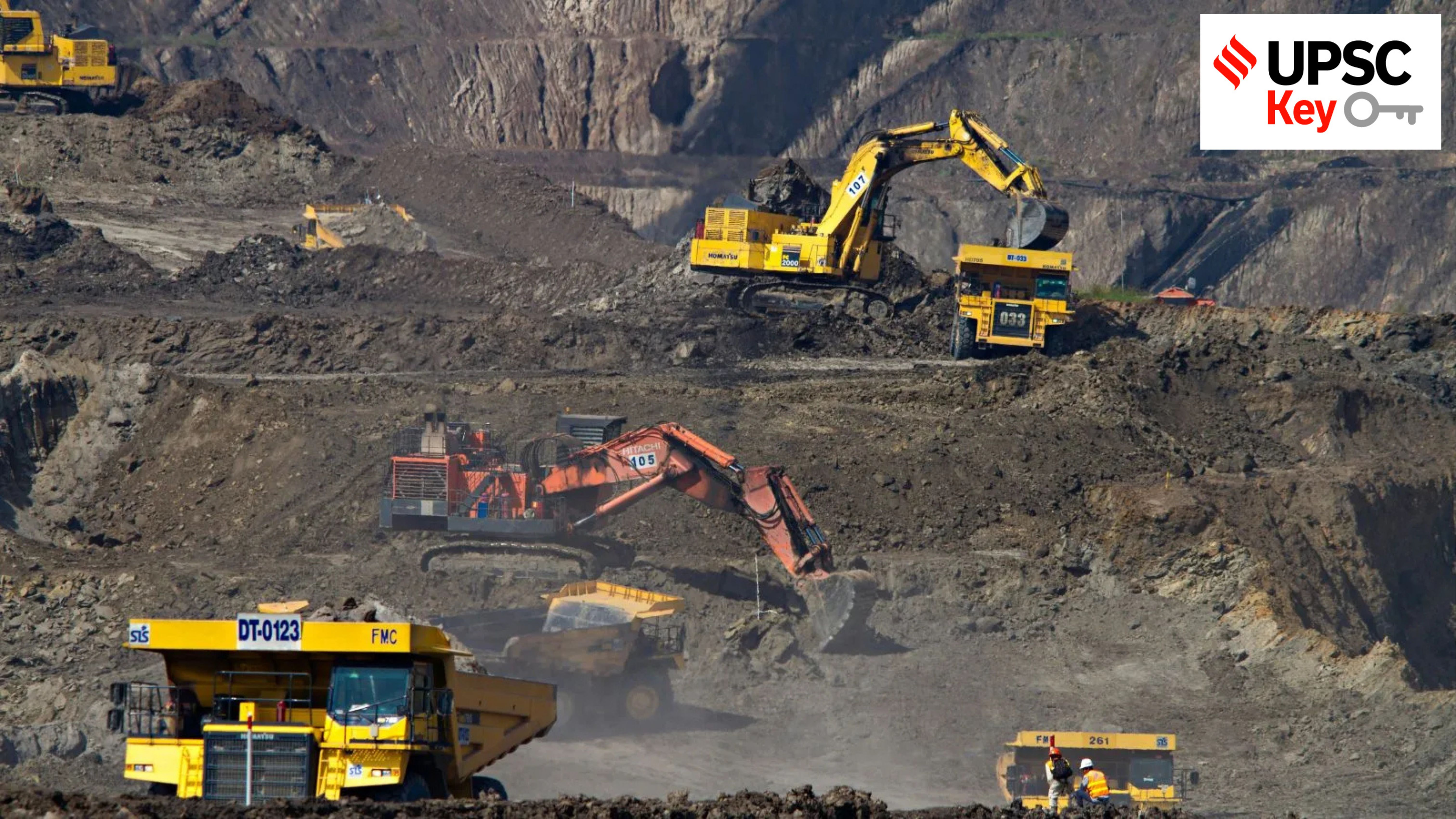
What’s the ongoing story: In Chhattisgarh’s Hasdeo-Arand forests, the Environment Ministry has accorded environmental clearance for mining in the Kente extension integrated coal block ,with a projected production capacity of 9 million tonnes of coal per annum.
Key Points to Ponder:
• Map Work-Hasdeo Arand Forest
• Why Hasdeo Arand forest is in News?
• Why Hasdeo Arand is referred to as the “lungs of Chhattisgarh”?
• What is the significance of Hasdeo in terms of ecology and environment?
• Captive use of coal refers to what?
• What is compensatory afforestation?
• Which is the largest coal field in Chhattisgarh?
• Deforestation and mining in Hasdeo Arand Forest-Why it is against the development of people?
• Know the overlapping National Park or wildlife sanctuary with Hasdeo Aranya forest like Tadoba Tiger Reserve or lemru elephant reserve etc.
• What are the possible consequences of mining in this region?
• The Council of Forestry Research and Education (ICFRE), a government body comes under which Ministry?
• Earlier deemed Hasdeo Arand area as a “no-go area”. What is “no-go-Area”?
• Know more about Indian Council of Forestry Research and Education
• What do you understand by the term ‘Environmental Impact Assessment’ (EIA)?
• Environmental Impact Assessment (EIA) and Environment Protection Act, 1986-How they are related with each other?
• Why Environmental Impact Assessment (EIA) is Important?
Key Takeaways:
• The environmental clearance (EC), issued on June 24, comes close on the heels of the in-principle forest clearance granted for the integrated open cast mining and washery proposal. The ministry’s sectoral expert appraisal committee on coal mining had recommended EC for the project in January 2025. The grant of final EC, though, was linked to the in-principle forest approval, which was issued on June 9.
• This is the third major coalfield that has been granted clearance in the Hasdeo forests. Parsa and Parsa East Kente Basan (PEKB) open cast mines are already operational in the forests — once earmarked as a no-go zone for mining to protect forests and wildlife.
• The Kente extension coal block, spread over 1,760 hectares in Surguja district, was allotted to Rajasthan Rajya Vidyut Utpadan Ltd in 2015. The Adani Group is the mine developer and operator. Coal extracted from this mine will be transported to Rajasthan to feed the Chhabra and Suratgarh coal plants.
Do You Know:
• Captive use of coal refers to mining coal specifically for an organization’s own consumption—primarily for steel, power, and cement production—rather than for open-market sale.
• The Hasdeo Arand is referred to as the “lungs of Chhattisgarh”, with a wealth of biodiversity. According to the Indian Council of Forestry Research and Education (ICFRE), Hasdeo Arand is the “largest un-fragmented forests in Central India consisting of pristine Sal (Shorea robusta) and teak forests.”
The Hasdeo-Arand Coalfield (HAC) covers an area of 1,879.6 sqkm, spanning three districts of Sarguja, Korba and Surajpur, in the northern tribal belt of Chhattisgarh.
• As per a 2021 report by the Wildlife Institute of India (WII), nine species in HAC have special protection under schedule I of the Wildlife Protection Act, 1972. These include Elephant, Leopard, Sloth Bear, Indian Grey Wolf, Honey Badger, Four-Horned Antelope, Indian Pangolin, Giant squirrel, and Rusty spotted cat. There are 92 species of birds in Hasdeo and 25 different mammals,16 types of snakes. Its also a habitat as well as a corridor for elephants and a corridor for tigers.
• According to the ICFRE in 2021, there are 640 floral species, 128 medicinal plants and 40 timber-yielding species of plants.
Other Important Articles Covering the same topic:
📍UPSC Ethics Simplified: What is Environmental Ethics?
Previous year UPSC Prelims Question Covering similar theme:
4) Consider the following statements: (UPSC CSE, 2019)
1. As per law, the Compensatory Afforestation Fund Management and Planning Authority exists at both National and State levels.
2. People’s participation is mandatory in the compensatory afforestation programmes carried out under the Compensatory Afforestation Fund Act, 2016.
Which of the statements given above is/are correct?
(a) 1 only
(b) 2 only
(c) Both 1 and 2
(d) Neither 1 nor 2
Explained
How temples deal with donations
Syllabus:
Preliminary Examination: Current events of national and international importance.
Mains Examination: General Studies II: Government policies and interventions for development in various sectors and issues arising out of their design and implementation.
What’s the ongoing story: Every day, thousands of devotees quietly fold currency notes into temple hundis believing the offering has reached the deity. What follows is a carefully choreographed chain involving authorised personnel, counting halls, bank officials, auditors, and surveillance cameras — a system that remains largely invisible to pilgrims.
Key Points to Ponder:
• Know the socio-cultural significance of India’s major temple institutions beyond their religious role.
• How do these temples handle devotees’ offerings?
• What safeguards exist?
• How does the Ram Temple compare?
• Who is responsible for counting the money?
• What are the constitutional provisions relating to the management of religious institutions in India?
• Why is financial accountability important in managing large religious institutions?
• What is the role of technology in improving governance of charitable and religious trusts?
• What are the governance challenges associated with managing large temple institutions receiving substantial public donations?
Key Takeaways:
• The recent allegations of theft of donations at the Ram Temple in Ayodhya have brought that hidden world into public view. But Ayodhya is far from the country’s only temple handling massive offerings. Shrines such as Tirupati, Jagannath, Vaishno Devi, Siddhivinayak, and Kashi Vishwanath receive hundreds of crores in donations every year, besides tonnes of gold, silver, and jewellery.
• Across India’s biggest temples, the broad donation chain is remarkably similar. Offerings placed in hundis are removed by authorised personnel, shifted to counting centres, segregated into cash, coins and valuables, counted and recorded before being deposited into designated bank accounts. The entire process is under CCTV surveillance.
• Where temples differ is not in the journey of the donation but in the institutions governing it — who supervises each stage, who appoints the people handling donations, and what legal and administrative safeguards exist to ensure accountability.
• At the Ram Temple in Ayodhya, donations from about 35 hundis are opened by authorised personnel, including trust officials and a State Bank of India (SBI) representative, and taken to a counting hall inside the Pilgrim Facilitation Centre.
• There, counting staff outsourced by SBI and trust employees count cash and jewellery under the supervision of retired banker Subhash Srivastava, while overall responsibility for the donation process rests with trust member Anil Mishra. Once verified, the collections are deposited into the trust’s SBI account.
• Few religious institutions in the world process donations on the scale of Tirumala, and its famed Parakamani system has evolved accordingly. Permanent Tirumala Tirupati Devasthanams (TTD) finance personnel, representatives of nationalised banks, and carefully vetted volunteers — mostly serving or retired government and bank employees — work together to process donations under an extensive CCTV network monitored by the temple’s vigilance wing.
Do You Know:
• Most of India’s older major temples are administered under dedicated legislation enacted by state governments. TTD functions under the Andhra Pradesh Charitable and Hindu Religious Institutions and Endowments Act, the Jagannath Temple under the Shri Jagannath Temple Act, the Shri Mata Vaishno Devi Shrine under the Jammu and Kashmir Shri Mata Vaishno Devi Shrine Act, the Siddhivinayak Temple under a Maharashtra law governing its trust, while the Kashi Vishwanath Temple is administered under the Uttar Pradesh Shri Kashi Vishwanath Temple Act. These laws create the governing bodies, define the powers of administrators, prescribe financial procedures, provide for government oversight and statutory audits, and in some cases lay down detailed rules for handling donations.
• The Ram Temple follows a different model. The Shri Ram Janmabhoomi Teerth Kshetra functions through a trust deed rather than a dedicated statute governing the administration of the temple. Day-to-day management, including appointments and financial administration, rests with the trust.
• Another point of departure is the composition of the management itself. In several of the older temples, key financial processes involve executive officers, statutory administrators, government nominees, magistrates, auditors, or other public officials whose responsibilities are defined under law.
• At the Ram Temple, many of the key office-bearers associated with donation management — including General Secretary Champat Rai, trust member Anil Mishra, administrator Gopal Rao, and donation supervisor Subhash Srivastava — have long associations with the RSS or its affiliates. Responsibility for administration is therefore concentrated within the trust structure rather than distributed across a broader statutory administrative framework.
Other Important Articles Covering the same topic:
📍The traditional models to manage temples, state’s role
Previous year UPSC main Question Covering similar theme:
📍Indian philosophy and tradition played a significant role in conceiving and shaping the monuments and their art in India. Discuss. (2020)
Economy
New withdrawal rules, same PF contribution rates
Syllabus:
Preliminary Examination: Economic and Social Development
Mains Examination: General Studies III: Indian Economy and issues relating to planning, mobilization, of resources, growth, development and employment.
What’s the ongoing story: The Centre has notified the Employees’ Provident Funds Scheme, 2026, replacing the Employees’ Provident Funds Scheme, 1952. The Ministry of Labour and Employment’s move is part of the implementation of the Code on Social Security, 2020, with the new scheme coming into effect from June 29.
Key Points to Ponder:
• What is the Employees’ Provident Funds Scheme, 2026?
• How Employees’ Provident Funds Scheme, 2026 is different from the Employees’ Provident Funds Scheme, 1952?
• What is the significance of contributory social security in India’s labour market?
• What is the Code on social security?
• What are the major reforms introduced under the EPF Scheme, 2026?
• How the Code on Social Security, 2020 seeks to modernize India’s labour welfare framework?
• What are the challenges in extending effective social security coverage to contract and informal workers?
• Know the role of provident fund reforms in promoting inclusive economic growth.
Key Takeaways:
• The EPF Scheme, 2026 states that the employer will be required to pay both the employer’s contribution and the employee’s contribution, in the first instance, along with administrative charges or other fees for an employee directly employed by the employer or through a contractor (not registered independently), within 15 days of the close of every month.
Do You Know:
• In October 2025, the EPFO announced a slew of changes to its withdrawal norms by streamlining the withdrawal categories from 13 to three — essential needs (illness, education, marriage); housing needs; and special circumstances, along with an introduction of a minimum balance of 25%.
• The new EPF Scheme, 2026 incorporates those changes by allowing members to withdraw funds in case of illness of self and family members, up to 100% of the eligible member balance, after completion of 12 months of total membership of the Fund. The 100% eligible member balance means withdrawal of 75% of the total funds as 25% is mandatory minimum balance requirement. The full 100% amount can be withdrawn after remaining unemployed for one year.
• The rate of contribution remains the same from the previous scheme at 12% and 10% for certain notified establishments. As per the existing scheme, the rate of contribution is mandatory till the wage ceiling. The EPF Scheme, 2026 requires provident fund contributions at 12% of wages from both the employer and employee and specifically provides that where wages exceed the statutory wage ceiling, mandatory contributions will be restricted on the wage ceiling amount. Gupta said. “Employees may, however, opt to make voluntary contributions either on wages exceeding the statutory wage ceiling or at a rate higher than the prescribed 12%. Employers also have the option to make matching contributions against such voluntary contributions,” he added.
Other Important Articles Covering the same topic:
📍Finance ministry ratifies EPF rate of 8.25% for FY26; UPI withdrawal by month-end
Previous year UPSC Prelims Question Covering similar theme:
5) With reference to casual workers employed in India, consider the following statements: (UPSC CSE, 2021)
1. All casual workers are entitled for Employees Provident Fund Coverage.
2. All casual workers are entitled for regular working hours and overtime payment.
3. The government can by a notification specify that an establishment or industry shall pay wages only through its bank account.
Which of the above statements are correct?
(a) 1 and 2 only
(b) 2 and 3 only
(c) 1 and 3 only
(d) 1, 2 and 3
PRELIMS ANSWER KEY
1.(c) 2.(b) 3.(b) 4.(a) 5.(d)
For any queries and feedback, contact [email protected]
Subscribe to our UPSC newsletter. Stay updated with the latest UPSC articles by joining our Telegram channel – IndianExpress UPSC Hub, and follow us on Instagram and X.
View original source — Indian Express ↗
Related stories

AllAfrica
TechnologyJul 3, 2026 · 1 min
Somalia: African Union Calls Emergency Meeting As U.S. Ends Somalia Army Funds
AllAfrica

TechRadar
TechnologyJul 3, 2026 · 1 min
GTA 6 developer Rockstar Games accused of enabling crunch, failing to address gender pay gap, and weaponizing bonuses
TechRadar
Indian Express
TechnologyJul 3, 2026 · 1 min
Maharashtra FDA cracks down on milk adulteration, issues stricter norms for supply chain
Indian Express

The Guardian
TechnologyJul 3, 2026 · 1 min
Man charged with manslaughter over Tesla crash originally blamed on car’s self-driving mode
The Guardian