The Guardian
Three men found not guilty of murdering journalist Lyra McKee
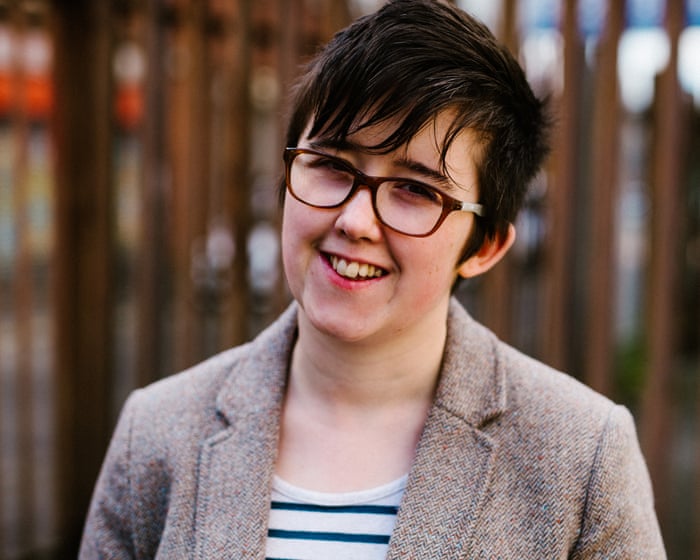
Three men from Derry have been found not guilty of murdering the journalist Lyra McKee in 2019.
McKee, 29, from Belfast, died after being hit by a bullet as she stood close to police vehicles while observing rioting in the Creggan area of Derry on 18 April 2019. The New IRA claimed responsibility for the killing.
On Friday in a long-awaited verdict, Jordan Devine, 25, Paul McIntyre, 58, and Peter Cavanagh, 38, were all cleared of her murder. The trial, which opened in May 2024, was held at Belfast crown court before Mrs Justice Smyth, who sat without a jury.
Prosecutors told the court none of the three men fired the fatal shot, but were engaged in a joint enterprise to encourage and assist the gunman. In February, Smyth rejected a defence application that there was no case to answer due to insufficiency of evidence.
McKee’s friends described the verdict as “heartbreaking”.
The shooting happened while an MTV crew was filming in the area for a documentary that included interviews with members of the dissident republican party Saoradh.
Several petrol bombs were thrown at police and a car was set on fire during rioting that culminated in four shots being fired towards officers. The prosecution said the shooting was termed a “culmination of orchestrated violence” on a suburban street in Derry.
McKee’s killing prompted an outpouring of condemnation and grief that quickly spread beyond Northern Ireland and went around the world. It led to pressure being exerted on politicians to resume stalled talks to restore the then suspended powersharing institutions at Stormont.
The then Irish president, Michael D Higgins, the then UK prime minister Theresa May and the then taoiseach, Leo Varadkar, were among the mourners at her funeral.
Originally from Belfast, McKee had moved to Derry to live with her partner Sara Canning.
Her book Angels with Blue Faces, about a Troubles era murder, was published soon after her death. She rose to prominence in 2014 after a blogpost titled “Letter to my 14-year-old self” in which she spoke about the struggle of growing up gay in Belfast. The letter was later turned into a short film.
The National Union of Journalists described McKee as one of the most promising journalists in Northern Ireland.
View original source — The Guardian ↗
Related stories

The Punch
WorldJul 3, 2026 · 1 min
C’River using tax authorities to target my university, says PDP candidate
The Punch

AllAfrica
WorldJul 3, 2026 · 1 min
Nigeria: Court of Appeal Rules Against Hijab Use At UI International School
AllAfrica

Rio Times
WorldJul 3, 2026 · 1 min
A US Firm Will Build Argentina’s First Private Nuclear Reactor
Rio Times
The Guardian
WorldJul 3, 2026 · 1 min
Hundreds join support group for survivors of drug-facilitated rape
The Guardian