Indian Express
7 stunning lava lakes around the world
3 min readNew DelhiJul 3, 2026 08:00 PM IST
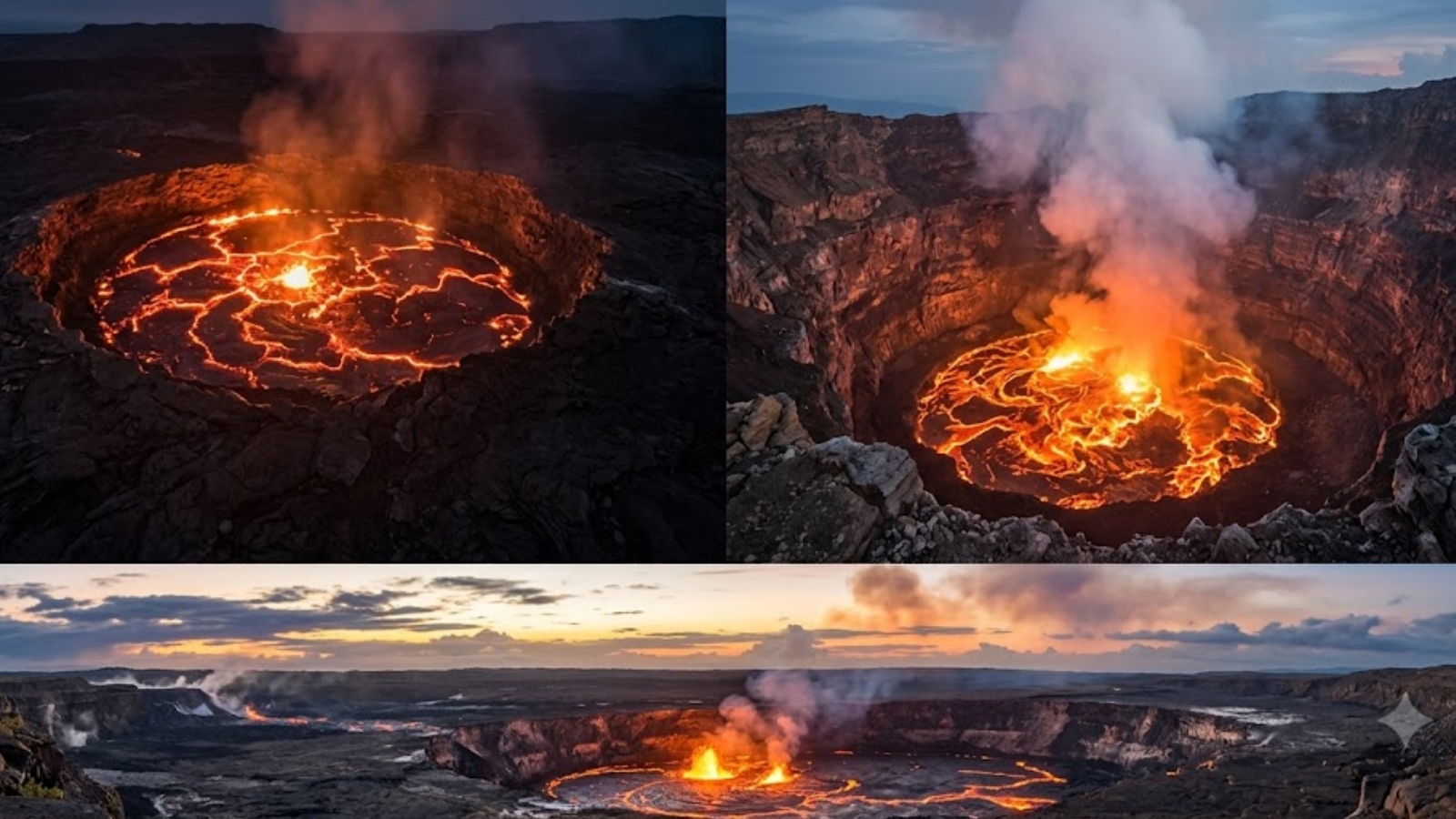
Lava lakes are among the rarest geological phenomena on Earth. Unlike typical volcanic eruptions, in which magma briefly reaches the surface, lava lakes are persistent pools of molten rock that remain within volcanic craters for extended periods. They form only when a delicate balance exists between magma supply, volcanic gases, and crater structure.
Today, only a handful of volcanoes are known to host long-lasting lava lakes, while others appear and disappear depending on volcanic activity. Here are seven of the world’s most fascinating lava lakes.
1. Erta Ale, Ethiopia
Located in Ethiopia’s Danakil Depression, Erta Ale is one of the world’s longest-lived lava lakes. Nicknamed the “Gateway to Hell,” the shield volcano has hosted active lava lakes for decades, although their size fluctuates with eruptions.
The glowing orange crater is especially striking after sunset, when the molten lava illuminates the surrounding volcanic landscape.
2. Mount Nyiragongo, Democratic Republic of the Congo
Often regarded as home to one of the world’s largest lava lakes, Mount Nyiragongo is famous for its highly fluid lava, which can flow at remarkable speeds during eruptions.
The lava lake has repeatedly drained and refilled over the years, making it one of the most closely monitored volcanoes in Africa.
Erta Ale is an active shield volcano located in the Afar Region of northeastern Ethiopia, (Photo: Wikipedia)
3. Halemaʻumaʻu Crater, Kīlauea, Hawaii
The Halemaʻumaʻu crater within Kīlauea has periodically hosted spectacular lava lakes. Activity varies over time, with lava lakes appearing and disappearing as volcanic conditions change. Besides its geological significance, the crater holds deep cultural importance in Native Hawaiian traditions.
Story continues below this ad
4. Mount Erebus, Antarctica
Mount Erebus is the southernmost active volcano on Earth and one of the very few known to maintain a long-lived lava lake. Unlike tropical volcanoes, Erebus sits amid Antarctica’s icy landscape, creating a dramatic contrast between snow-covered slopes and glowing molten lava.
5. Ambrym Volcano, Vanuatu
The twin craters of Ambrym Volcano once housed two lava lakes that attracted volcanologists from around the world. Although volcanic eruptions have periodically drained the lakes, renewed magma activity has occasionally brought molten lava back to the surface.
6. Masaya Volcano, Nicaragua
Masaya Volcano’s Santiago crater has hosted an active lava lake since 2015, making it one of the easiest lava lakes to observe safely from designated viewpoints. The volcano continuously emits volcanic gases, earning it the nickname “The Mouth of Hell” during the Spanish colonial era.
7. Villarrica Volcano, Chile
One of South America’s most active volcanoes, Villarrica frequently develops a lava lake inside its summit crater. The visible lava often rises and falls depending on volcanic pressure, creating spectacular nighttime glows that can sometimes be seen from nearby towns.
View original source — Indian Express ↗
Related stories

Deadline
EntertainmentJul 3, 2026 · 1 min
‘Minions & Monsters’ Taking On The World With $62M+ WW Cume To Date – Box Office Update
Deadline

Deadline
EntertainmentJul 3, 2026 · 1 min
Michelle Dockery Returns To London Stage With ‘Bloodsport: After Helen Of Troy’ Co-Starring Laura Aikman
Deadline

Indian Express
EntertainmentJul 3, 2026 · 1 min
Dharna Durga on self-doubt after sharing a film set with Madhuri Dixit: ‘I overthink’
Indian Express

Indian Express
EntertainmentJul 3, 2026 · 1 min
Gatta Kusthi 2 review: Vishnu Vishal, Aishwarya Lekshmi can’t save poorly crafted sequel
Indian Express