
Indian Express
The Snicko-like tech behind Croatia’s disallowed equaliser in thriller vs Portugal
On July 3, Portugal officially secured their spot as one of the last 16 teams at the FIFA World Cup after a dramatic injury-time victory against Croatia.
Despite conceding the first goal of the match, Portugal levelled the game thanks to a definitively placed penalty by Cristiano Ronaldo in the 68th minute. What ensued after was a tight battle of wit and endurance bringing the results of the game right down to the wire.
In the 90+5th minute, Portuguese winger Rafael Leao beautifully set up a header for striker Goncalo Ramos which was promptly slotted into the back of the net sealing the Croats’ fate.
Subsequently, however, Croatia guided the ball to the back of the net once again nearing the very fag end of the game. They did not, however, level the game because the goal was deemed offside. Why was the goal ruled offside and how does the new review technology work? We explain.
What happened
Trailing 1-2 with the final whistle imminent, the Croats attacked the rival box building on Ivan Perisic’s probing ball. Renato Veiga tried to nod it away, only managing to flick it Mario Pasalic’s way. The latter brought it down clumsily, but Josko Gvardiol rushed in to fire it home.
Pasalic was deemed onside, the goal stood on field and would have remained so post the video assistant referee (VAR) check, if not for a microchip installed in the Trionda. The 2026 World Cup match ball detected a miniscule touch by Igor Matanovic, which made Pasalic offside before his assist, and the equaliser was snatched away from Gvardiol and Croatia.
Amid the despair, Matanovic later admitted to feeling “a slight contact” with his hair, as quoted by Portuguese daily A Bola.
Story continues below this ad
How VAR could make the call
The aforementioned microchip houses an inertial measurement unit sensor that captures motion data a whopping 500 times per second. This ‘connected ball technology’, launched by FIFA and makers Adidas, employs waveform tech to track the ball’s real-time acceleration and granular movement in three dimensions.
It is meant to speed up the VAR decision-making process, which otherwise relies on videos available at around 50 frames per second. By measuring the precise moment when a player makes contact with the ball, referees can ascertain the decisive pass in a potential offside scenario.
On Friday, it was broadcast as a ‘heartbeat graphic’, and Norwegian referee Espen Eskas could thus rule that Matanovic’s deflection rendered Pasalic offside.
The technology is similar to cricket’s Snicko, in the sense that both display spikes upon finding the faintest of touches — be it player on ball in football or bat on ball in cricket. While Snicko detects sound, the connected ball tech checks for a physical touch.
Has this technology been used before?
Yes. Sweden’s fourth goal against Tunisia in their Group F clash at Guadalupe was awarded with the help of this waveform technology. Mattias Svanberg was adjudged to be offside on the pitch, but subsequent VAR review showed that Alexander Isak got a tiny touch which pegged Svanberg onside, and the goal was given.
Story continues below this ad
The technology was employed at the 2022 World Cup and 2024 European Championships as well. In Qatar, it proved that Bruno Fernandes, and not Cristiano Ronaldo, scored Portugal’s first goal in a 2-0 win over Uruguay.
At the Euros, Romelu Lukaku netted for Belgium versus Slovakia, but the goal was
disallowed after a review showed Lois Openda handling the ball.
Reactions to the decision
Croatia manager Zlatko Dalic said “VAR kills emotions” after his side was knocked out of the tournament. “It kills everything within you. We have gone too far with VAR,” he added.
“You were able to see to what extent emotions had been killed and altogether, all these decisions take you back and actually take the joy out of football.”
Story continues below this ad
Portugal coach Roberto Martinez, understandably, differed. “There’s no bad decision or lucky decision. It was a clear moment. The balls now have a chip and the sensor shows the ball was touched.”
View original source — Indian Express ↗
Related stories

Wired
TechnologyJul 3, 2026 · 1 min
Google DeepMind Unionization Talks Are Off to a Rocky Start
Wired

TechCrunch
TechnologyJul 3, 2026 · 1 min
Chevy built an All-American EV truck. Why is nobody buying it?
TechCrunch
Dawn
TechnologyJul 3, 2026 · 1 min
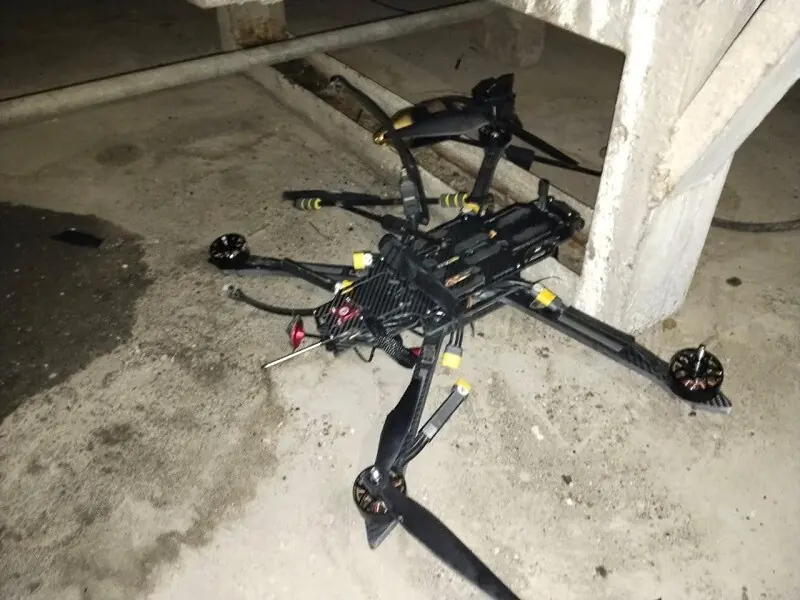
Unidentified quadcopter crashes on rooftop of house in Islamabad’s Humak locality
Dawn
AllAfrica
TechnologyJul 3, 2026 · 1 min
Somalia: African Union Calls Emergency Meeting As U.S. Ends Somalia Army Funds
AllAfrica