Indian Express
Court refuses stay on Karnataka gig workers act, directs platforms to deposit welfare fee
The Karnataka High Court Friday refused to pass an interim order on a plea challenging the implementation of the Karnataka Platform-Based Gig Workers (Social Security and Welfare) Act, which is likely to cover around four lakh gig workers employed by various platforms across the state.
The legislation has been challenged by an umbrella body of app-based service providers called the Internet and Mobile Association of India.
Justice M Nagaprasanna said, “You have challenged the constitutional validity of the Act; there cannot be any interim order.”
Further, the court directed platforms and aggregators like Zomato, Swiggy, Blinkit, and Zepto to deposit with the high court registry within three weeks the amount that it is supposed to pay the state government under the Act as ‘welfare fee’.
Senior Advocate Dhyan Chinnappa, appearing for the petitioners, made a request to the court that it allow them to tender bank guarantees instead of depositing the amount with the high court registry. Chinnappa had argued that if the amount is directed to be deposited, it leaves the coffers of the petitioners, thereby affecting the profit and loss statement. He also indicated that the amount is to be collected per ride undertaken by the gig worker, and the figure could be substantial.
To which the bench said, “The amount is not being demanded by the state as a charity; it is demanded in terms of a promulgation of legislation. The legislation is being tested before this court; therefore, to balance the rights of the petitioners, state, and rights of persons who are likely to get some amount or not, the amount of the second quarter shall be deposited with this court in three weeks from today.”
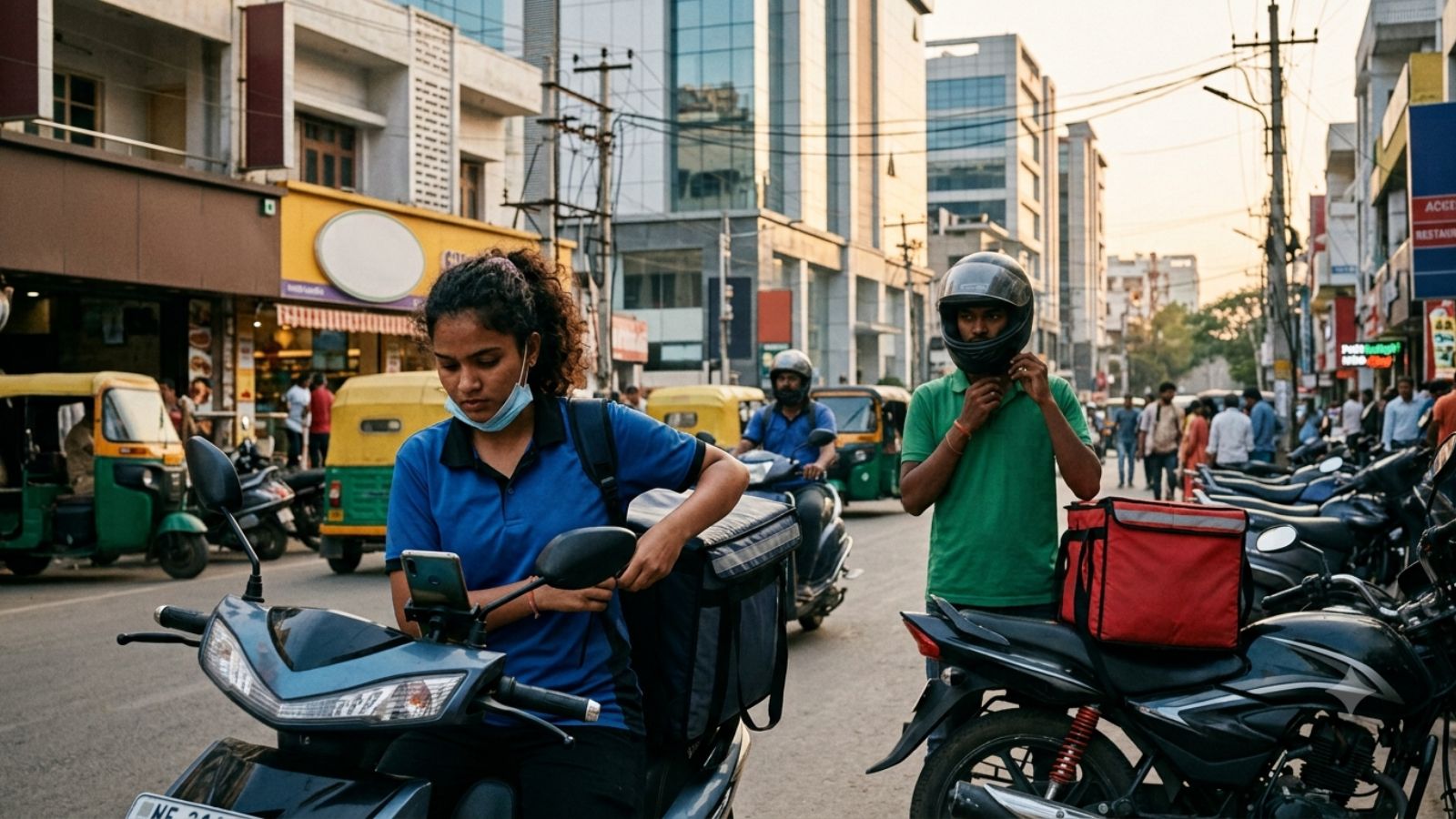
During the hearing, the bench took strong exception to the petitioners’ unwillingness to deposit the welfare fee amount. Justice Nagaprasanna said, “Swiggy, Zomato have some mercy on these delivery boys. If you are charging 40 per cent extra to the customers than the maximum retail price, why can’t you pay the poor man who delivers, be it rain or shine, 50 paise is not that big an amount…”
Story continues below this ad
Further, the court ordered that the state government shall not take any coercive steps against the petitioners till the next date of hearing. The state government has issued show cause notices demanding payment of the welfare fee to the petitioners, and it is to be deposited by July 5, or else, as per the law, the platform could face penal action or levy of interest amount under Section 21 of the Act.
The quantum of gig workers’ welfare fee to be paid by the platform or aggregator is as follows: for every two-wheeler ride, the fee is 50 paise. For a three-wheeler ride, it is 75 paise, and the rate is Re 1 for a four-wheeler ride. This fee is to be deposited on a quarterly basis with the board formed under the Act by the state government.
Constitutional validity
The petitioners have challenged the constitutional validity of the Karnataka Platform-Based Gig Workers (Social Security and Welfare) Act, 2025, and the Rules framed under it. The state legislation was passed in August 2025.
Advocate Chinnappa informed the court about the Code on Social Security, 2020 (COSS), a Central Government legislation, which also aims to ensure the welfare of all workers in the unorganised sector, including gig workers, and argued that the state government could not have enacted a similar legislation. He said, “The State Act has not only encroached upon the Central Legislation but is also dictating how the COSS is to operate.”
Story continues below this ad
He took the court through several provisions in the state Act and pointed out that both the legislations aim to ensure social security for the gig workers. Chinnappa said, “If the COSS is exhaustive, then no state government can encroach upon it. We are not against the welfare of gig workers, we are dependent on them, and they are on us, and we want to comply with the provisions, but we cannot be forced to register with Centre and State and pay welfare fee to the Centre and State Government.”
Additional Solicitor General Aravind Kamath also supported the petitioners and contended that the state Act is in direct conflict with provisions of COSS and it “cannot be permitted to be implemented in teeth of Article 254 of the Constitution of India.”
Article 254 mandates that “law made by Parliament, whether passed before or after the law made by the Legislature of such State, or, as the case may be, the existing law, shall prevail and the law made by the Legislature of the State shall, to the extent of the repugnancy, be void.”
‘No conflict’
Advocate General Shashi Kiran Shetty argued that there is no conflict with the law enacted by the Centre and the law promulgated by the state government.
Story continues below this ad
Shetty also pointed out that states like Rajasthan, Telangana, and Bihar have also promulgated similar legislation in 2023 and 2024, and added that he would place on record the details of implementation being done in those states on the next date of hearing.
‘Born from womb of social justice’
During the hearing, the bench orally observed that both the Central and state legislations were born from the womb of social justice to help gig workers and delivery boys.
Justice Nagaprasanna directed the state government to file a comprehensive statement of objection, saying, “Whether it is to be implemented or not, therefore, the implementation or continuation by the state government would be steered clear once the state government files its objections.”
The court also queried whether a ‘harmonious construction’ of the two legislation be done so that both statutes exist and the gig workers and delivery boys benefit from it. The bench said, “Gig workers should not be deprived of any benefit. Ultimately, both acts are born from the womb of social justice.”
Story continues below this ad
The court has now posted the matter for further hearing on July 31.
View original source — Indian Express ↗
Related stories

The Punch
WorldJul 3, 2026 · 1 min
APM gov candidate donates N2.5m to Oyo fire victims
The Punch
The Punch
WorldJul 3, 2026 · 1 min
Benue mourns ex-SSG killed by suspected bandits
The Punch
The Punch
WorldJul 3, 2026 · 1 min
Enugu State government sacks elected leaders of Orba Modern Market Traders Association, defying a High Court order that…
The Punch
The Punch
WorldJul 3, 2026 · 1 min
Adeyemi exploiting corruption narrative to drag Gbajabiamila, shield himself – Presidential aide
The Punch