Indian Express
Delhi draws up 7-year air pollution mitigation plan, backed by World Bank
3 min readNew DelhiJul 3, 2026 09:37 PM IST
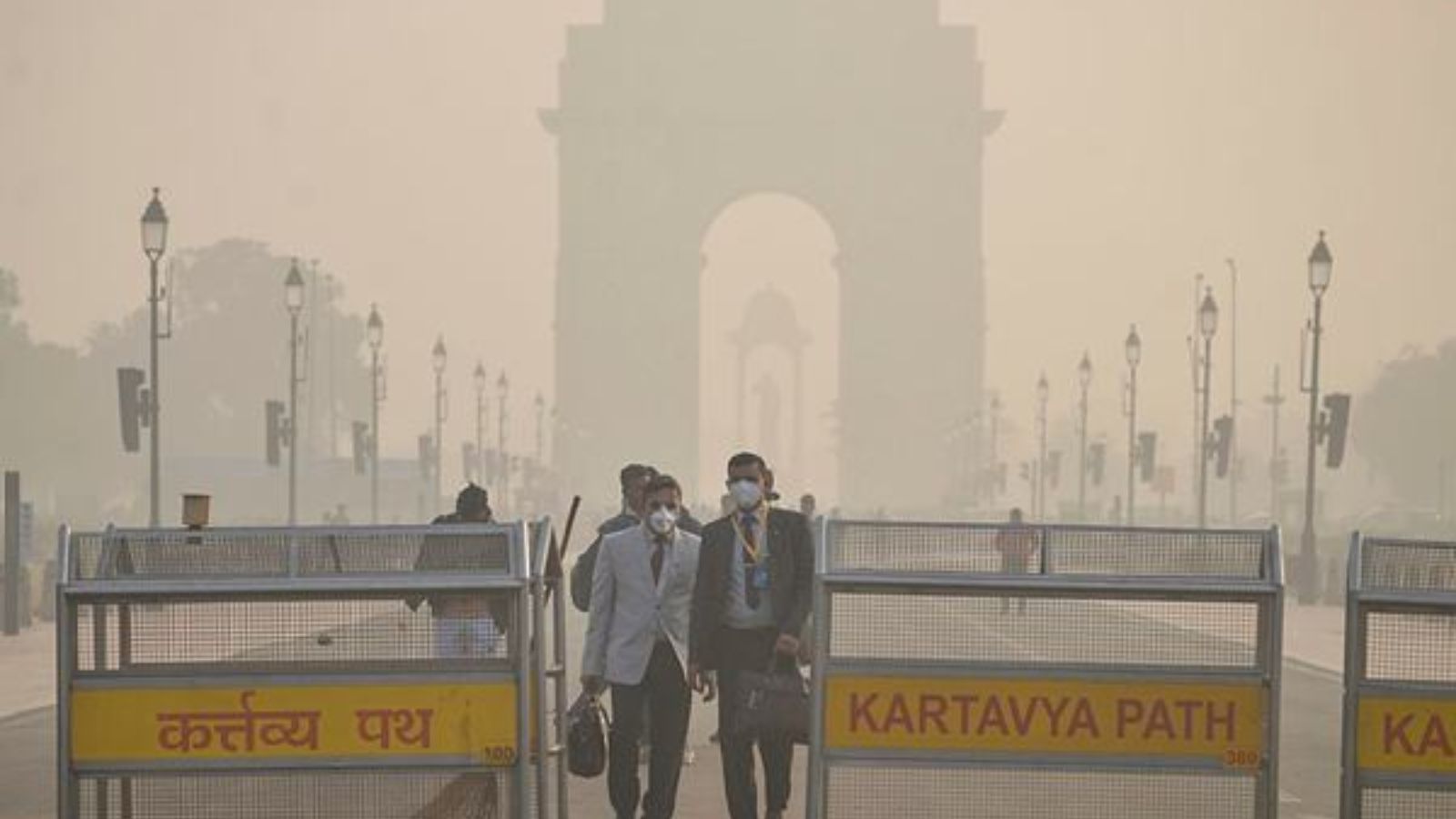
People wearing face mask at Kartavya Path amid dense smog as air quality remains poor, in New Delhi. (ANI Photo/File)
The Delhi government has drawn up a seven-year air pollution mitigation plan with an estimated outlay of Rs 8,300 crore as it aims to strengthen air quality management in the Capital and reduce emissions from major pollution sources such as vehicles, road dust, construction and demolition waste.
“The goal is to accelerate the implementation of Delhi’s air pollution mitigation plan, advance the objectives of the National Clean Air Programme (NCAP) and contribute to the vision of ‘Viksit Bharat 2047’,” said Chief Minister Rekha Gupta on Friday. NCAP was launched by the Centre in 2019 with to curb pollution in major cities.
Titled ‘Swachh Hawa, Swasth Delhi’, the Delhi government project is proposed to be implemented between September this year and August 2033 with support from the World Bank. “The World Bank will provide 65% financial assistance, while the remaining 35% will be borne by the Delhi government,” Gupta said.
She added, “A special workshop will be held on July 10 to define the role of various departments and agencies and lay the roadmap for the effective and timely implementation of the project.”
Under the strengthening Institutional Capacity for Air Quality Management (AQM), the government aims to establish a dedicated Project Management Unit (PMU) to ensure mission-mode implementation, developing advanced air quality monitoring, data analytics, and Integrated Command and Control Centre (ICCC)-based monitoring systems, strengthening inter-departmental coordination and collaboration with Indo-Gangetic Plain (IGP) states for airshed-based pollution management, according to officials.
Another key aspect of the plan is to promote cleaner transportation by accelerating the phase-out of polluting vehicles, expanding electric vehicle (EV) adoption, improving public transport integration, and establishing advanced Pollution Under Control (PUC) systems, implement dust control measures through road redevelopment, end-to-end paving, mechanised cleaning, and innovative dust suppression technologies and strengthen construction and demolition (C&D) waste management and promote the use of Recycled Aggregate Manufacturing Systems (RAMS).
Besides, this project also aims to improve municipal solid waste collection, processing, and disposal to prevent open waste burning and landfill fires, support cleaner industrial operations through adoption of cleaner technologies and strengthened compliance mechanisms and enhance green cover through plantation activities and improve management of water pollution and untreated effluent discharge.
Story continues below this ad
Also in discussion is piloting innovative interventions such as low-emission zones, integrated urban planning solutions, and green public spaces. “The project is expected to improve air quality, reduce emissions from transport, industry, waste, and dust sources, strengthen governance and monitoring systems, enhance green cover, mobilise private investment, create employment opportunities, and adopt international best practices in air quality management…The goal is to develop scientific, coordinated and sustainable solutions to tackle air pollution so that future generations inherit a cleaner, healthier and better Delhi,” said the CM.
View original source — Indian Express ↗
Related stories

The Punch
WorldJul 3, 2026 · 1 min
APM gov candidate donates N2.5m to Oyo fire victims
The Punch
The Punch
WorldJul 3, 2026 · 1 min
Benue mourns ex-SSG killed by suspected bandits
The Punch
The Punch
WorldJul 3, 2026 · 1 min
Enugu State government sacks elected leaders of Orba Modern Market Traders Association, defying a High Court order that…
The Punch
The Punch
WorldJul 3, 2026 · 1 min
Adeyemi exploiting corruption narrative to drag Gbajabiamila, shield himself – Presidential aide
The Punch