Indian Express
Eggs or paneer: Which gives children better nutrition?
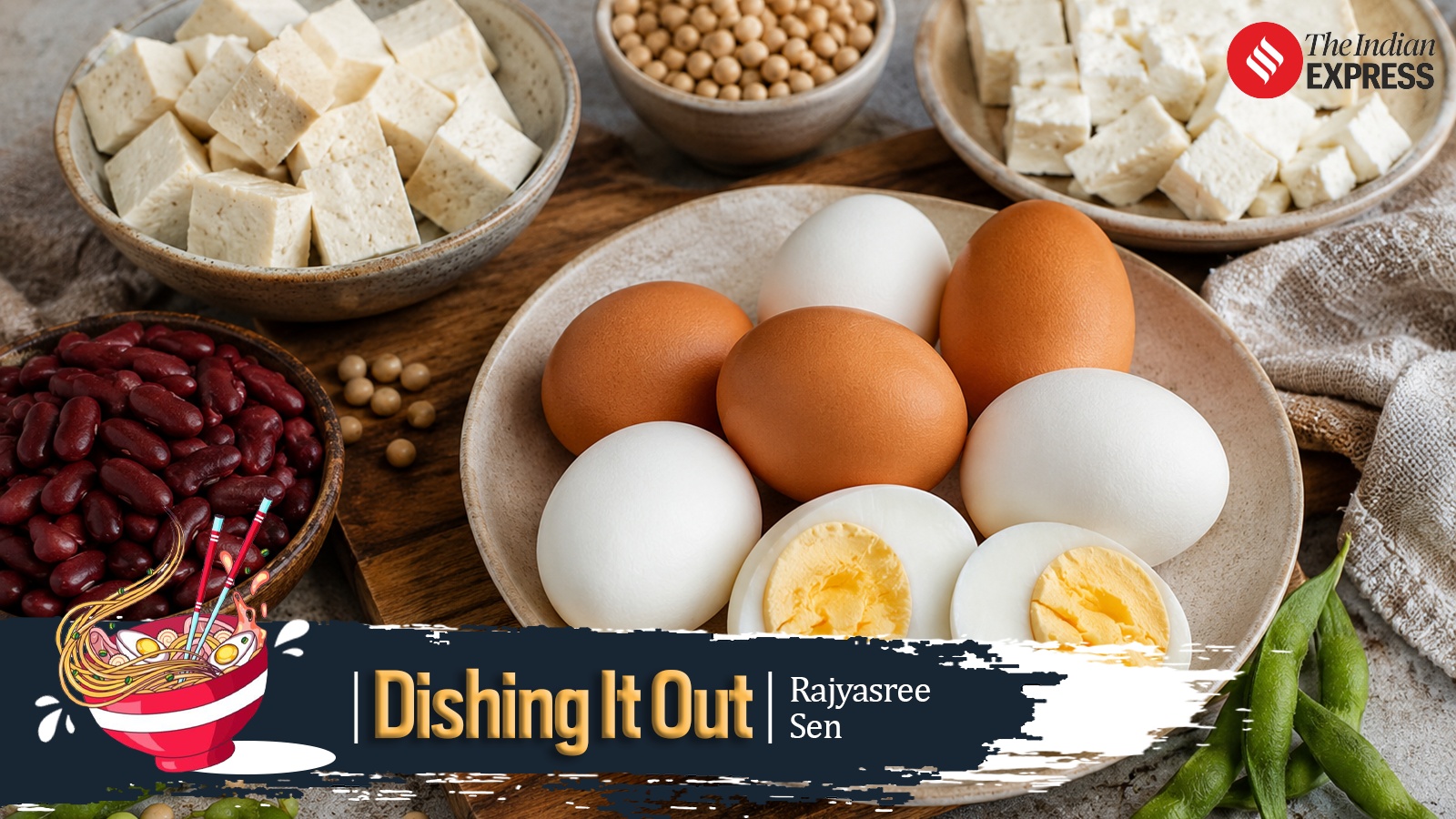
Are eggs good for growing children? Especially those whose only source of protein might be eggs? Can they instead eat soya, paneer, and rajma to get all the protein they need? Most of us really couldn’t be bothered with these questions, but were suddenly thinking of them last week when it was announced that Bengal would be doing away with serving eggs in the government midday school meals for children from underserved communities and switching them to a pure shakahari/vegetarian menu devoid of even onions and garlic. Keep in mind that these are the only square meals that most of these children from economically backwards homes get in the day – and that one lone egg in the week might be the only source of protein they get.
DISCLAIMER: This article is based on information from the public domain and/or the experts we spoke to. Always consult your health practitioner before starting any routine.
So what’s the big brouhaha about eggs? Leaving the politics of eggs and enforced vegetarianism aside – are eggs really such a powerhouse of nutrition? And can they be replaced by soya or rajma? The simple answer is – no, they cannot. Not at the same price, or in the same quantity.
Now I am not a big fan of eggs. I genuinely despise boiled eggs – which are the healthiest form of eating eggs, and what is served in the midday meal. I don’t like the texture of the white of the boiled egg. I find it tasteless. And I carry the trauma of being force-fed half-boiled eggs as a child, till I threw up one day in school. Today, I am a fan of Eggs Cocotte – the French baked egg delicacy, where eggs are cracked and baked in cream with cheese and herbs, and served in individual ramekins. Eggs Benedict is a close second, simply because it is so difficult to get right, with its perfect poached egg on a base of spinach and ham, topped with Hollandaise sauce. A true test of a good hotel. I have written paeans on the Eggs Kejriwal as well. And can whip up a mean Eggs Jeanette à la Jacques Pépin and a perfectly creamy scrambled egg.
While I eat eggs for the flavour and the preparation and the joy of dipping my toast soldiers in the runny yolk of a sunny side up – I also know that eggs are good for me. For my heart, for my skin, and my hair. I also know that they are an excellent nutritional source for children. You don’t need to be a nutritionist to know this. But I still spoke to one, to ensure that the benefits of eggs weren’t a figment of my imagination. According to Gurgaon-based certified nutritionist Shweta Arora, “an egg is a complete protein food with all the essential amino acids present in it. It’s a great addition to children’s diets because it’s a rich source of choline, folate, Vitamin A, D, E, K, and helps in a child’s brain health and muscular development in their years of growth.”
What is beneficial? (Photo: Freepik)
40g of paneer equivalent to 1 whole egg
Can we replace eggs with paneer or tofu? According to Arora, “we need to have around 30-40 gms of paneer/tofu to substitute the protein profile of 1 whole egg. Which is why I would definitely recommend whole eggs to anyone who is on a diet. A yolk of an egg is a rich source of healthy fats and folate, which helps in our cognitive health, and one to two whole eggs are completely healthy to include for a person in a day.”
In a news report, Ganga Ram Hospital dietician Aakanksha Arya explained the nutritional impact of replacing eggs with paneer and soybeans in mid-day meals. According to her, “Eggs cannot truly be replaced by any other single food. They are an excellent source of high-quality protein and also provide vitamin B12, vitamin D, essential amino acids, and healthy fats… If schools currently serve eggs once or twice a week, replacing them would require providing an equivalent amount of protein from other foods, which many children
may not be able to consume in sufficient quantities. There is also an economic concern, as many families may not be able to afford eggs at home if they are removed from school meals. Eggs play a vital role in a child’s growth and development, so they should not be replaced.”
Story continues below this ad
Acceptance in schools globally
Other countries across the world have realised the benefit of serving eggs to children, which is why they include them in the school meals that each country recommends. According to a study by the Cambridge University Press in April 2026 — What’s on the menu? A review of school meal quality across 29 countries — eggs are a regular component of Japanese kyūshoku (school lunches), appearing boiled, scrambled, in omelettes or mixed dishes. Menus emphasise balanced nutrition. In Finland, eggs are commonly served alongside fish, meat and legumes in the free school meal programme. In Sweden, school menus regularly include egg dishes or eggs as part of salads and protein offerings. In the United Kingdom, School Food Standards allow and encourage eggs as a protein source alongside meat, fish, beans and pulses. In the United States, eggs are widely served under the National School Lunch and School Breakfast Programs, particularly at breakfast. They count towards the meat/meat alternate requirement. Brazil’s National School Feeding Programme (PNAE) includes eggs as one of several animal protein options depending on local procurement.
While global nutrition guidance does not insist on eggs per se, it repeatedly recognises them as one of the highest-quality, most affordable animal-source foods for children. And that is one of the most critical factors in deciding whether or not eggs should be given to children or eaten by adults. It is simply the most affordable source of high-quality protein and nutrients available to humans. A boiled egg is also impossible to cook badly, is incredibly easy to store or transport, and is difficult to tamper with. On top of which, if you are so inclined, it is tasty and as close to being vegetarian as possible.
What we eat are unfertilised eggs. The only reason to not eat eggs is on aesthetic grounds – like mine – or if you are vegetarian for religious reasons. Otherwise, give the children what they need. As our elders told us while we were growing up in India – ‘Sunday ho ya Monday, roz khao Andey’ (Be it Sunday or Monday, have an egg daily).
Next week, I’ll be writing on that very common ingredient across Indian kitchens, but which weren’t indigenous to India – the humble tomato.
Story continues below this ad
DISCLAIMER: This article is based on information from the public domain and/or the experts we spoke to. Always consult your health practitioner before starting any routine.
View original source — Indian Express ↗
Related stories

Rolling Stone
EntertainmentJul 3, 2026 · 1 min
Dolly Parton Thanks Taylor Swift and Travis Kelce for $2 Million Donation to Her Imagination Library
Rolling Stone

E! Online
EntertainmentJul 3, 2026 · 1 min
Taylor Frankie Paul Breaks Silence on Ex Tate Paul, Rehab Stay
E! Online

Variety
EntertainmentJul 3, 2026 · 1 min
Strictly Business From Cannes Lions
Variety

Variety
EntertainmentJul 3, 2026 · 1 min
Lela Rochon on the Final Season of ‘The Chi,’ the Beauty of Nostalgia and Pushing for More Women-Led Stories
Variety