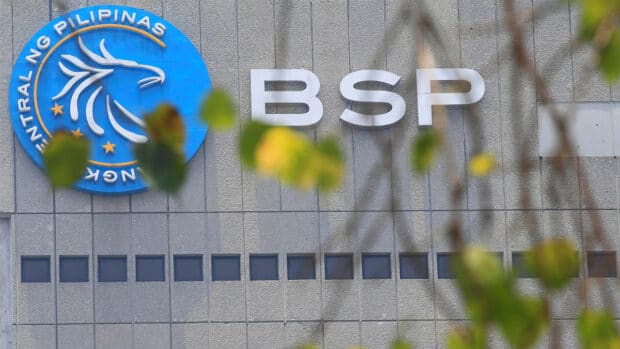
Philippine Daily Inquirer
Banks’ bad loans rise as loss buffers fall
MANILA, Philippines – Philippine banks’ bad loan ratio rose to a nine-month high in May as borrowers continued to feel the sting of inflation, slow economic growth and higher borrowing costs amid the war in the Middle East.
Nonperforming loans (NPL), or debts overdue by at least 90 days and at risk of default, accounted for 3.44 percent of the local banking sector’s total lending portfolio during the month, figures from the Bangko Sentral ng Pilipinas (BSP) showed.
READ: PH banks’ bad loan ratio rises to 8-mo high
Article continues after this advertisement
That marked the highest gross NPL ratio since August 2025, when the share stood at 3.5 percent.
FEATURED STORIES
BUSINESS
BUSINESS
BUSINESS
In peso terms, roughly P601.4 billion of the sector’s P17.5-trillion loan book had soured during the month.
The stock of bad loans was 14 percent higher than a year earlier and almost 4 percent higher month-on-month.
Even so, banks pared their buffers against unpaid loans.
Lenders set aside P534.8 billion as allowance for credit losses, translating to a coverage ratio of 88.92 percent—the lowest since March 2022, when buffers had covered 88.38 percent of NPL.
Article continues after this advertisement
“The increase in NPL ratio suggests that some borrowers are continuing to face repayment challenges amid elevated interest rates, slower economic growth and the lingering effects of high inflation,” said John Paolo Rivera, a senior research fellow at state-run Philippine Institute for Development Studies.
“The decline in the NPL coverage ratio indicates that loan loss provisions have not kept pace with the increase in bad loans. This does not necessarily signal financial weakness, but it does mean banks have a relatively smaller buffer against future credit losses,” he added.
Article continues after this advertisement
In its report on the Philippine financial system for the second half of 2025, the BSP said banks and nonbank financial institutions remained in sound condition during the period, leaving the industry well-positioned when the Middle East crisis had escalated earlier this year.
READ: Filipinos taking smaller, more frequent loans – study
The BSP has said it would “take necessary actions” to tame inflation back to its 3-percent target. The central bank raised its benchmark interest rate by 25 basis points last month to 4.75 percent, marking its second increase in the current tightening cycle and bringing cumulative hikes to 50 basis points.
At the same time, the central bank has rolled out relief measures to cushion banks and borrowers from the economic fallout of the conflict. These include temporary grace periods of up to six months for affected borrowers and the deferment of agricultural loan payments for as long as one year, subject to banks’ assessment.
Your subscription could not be saved. Please try again.
Your subscription has been successful.
The BSP has also temporarily allowed banks to exclude losses on government securities from regulatory capital calculations, a move aimed at easing pressure on lenders’ capital ratios as interest rates remain elevated. INQ
View original source — Philippine Daily Inquirer ↗
Related stories
Buenos Aires Times
BusinessJul 3, 2026 · 1 min
Argentina pushes US$6 billion in repo maturities past election
Buenos Aires Times

CNBC
BusinessJul 3, 2026 · 1 min
Feds seek lower prison term for $100 million New Jersey deli fraudster — but some reasons why are hidden
CNBC

The New York Times
BusinessJul 3, 2026 · 1 min
David S. Doty, Judge Who Helped Shape the Modern N.F.L., Dies at 96
The New York Times

The Punch
BusinessJul 3, 2026 · 1 min
How Yahoo boys stole judge’s N7.2m child’s school fees overnight — EFCC chair
The Punch