Times of Israel
Eurovision chief rules out another vote on Israel: ‘Membership spoke conclusively’
Eurovision director Martin Green said he has ruled out holding an additional vote on Israel’s participation in the annual song contest, and denied that the competition is facing financial difficulties due to an Israel-related boycott.
“That’s done. The membership spoke conclusively,” Green told the Variety entertainment news site in an interview this week. “Almost 70 percent [of European Broadcasting Union members] made their decision that they believe that public service broadcasters are not responsible for the actions of their government, and that [Israeli broadcaster] Kan should be allowed to participate.”
A number of anti-Israel public broadcasters forced an indirect vote last year on Israel’s participation, after pushing for years to oust the country over its war against Hamas in Gaza. After a majority of members chose to keep Kan in the contest, five countries backed out in protest: Ireland, Iceland, the Netherlands, Slovenia and Spain — which had been one of the “Big Five” countries that provide a greater financial contribution to the contest.
The Eurovision director declined to comment on whether he expected any of the boycotters to return next year, and said he was unaware of any countries planning to join them.
Speculation has run rampant that Slovenia could come back to the competition after its anti-Israel government was replaced with a new pro-Israel prime minister, although there has been no confirmation from its public broadcaster.
Get The Times of Israel's Daily Edition
by email and never miss our top stories
By signing up, you agree to the terms
Belgium — which alternates its representation yearly between its French-language and Flemish-language public broadcasters — has indicated that it is likely to pull out next year, when the Flemish VRT is in control, after the French RTBF stayed in this year’s competition. Dutch broadcaster AVROTROS said it will reveal its decision for next year in August, while Omroep Max, a separate broadcaster in the Netherlands, has indicated it may participate if AVROTROS does not.
Broadcasters generally have until mid-October to confirm their participation in the following year’s contest.
In the interview, Green denied that Spain’s exit from the competition has strained the competition’s finances, and rejected the idea that Canada — which announced this week it was joining the contest — was recruited to offset the loss.
“It’s bollocks,” he said of the claim, employing a vulgar British slang term, noting that Canada has been in talks to join the EBU for many years. “Eurovision has a really robust model and it has over the 70 years weathered what the world tried to throw at it. So we’ll be around for many, many, many, many, many years to come.”
Green also dismissed a New York Times report earlier this year which asserted that Israel was manipulating the competition and its voting.
“I thought it was just a sort of rehash of lots of bits and pieces,” he said of the article. “We had a fully validated vote again this year.”
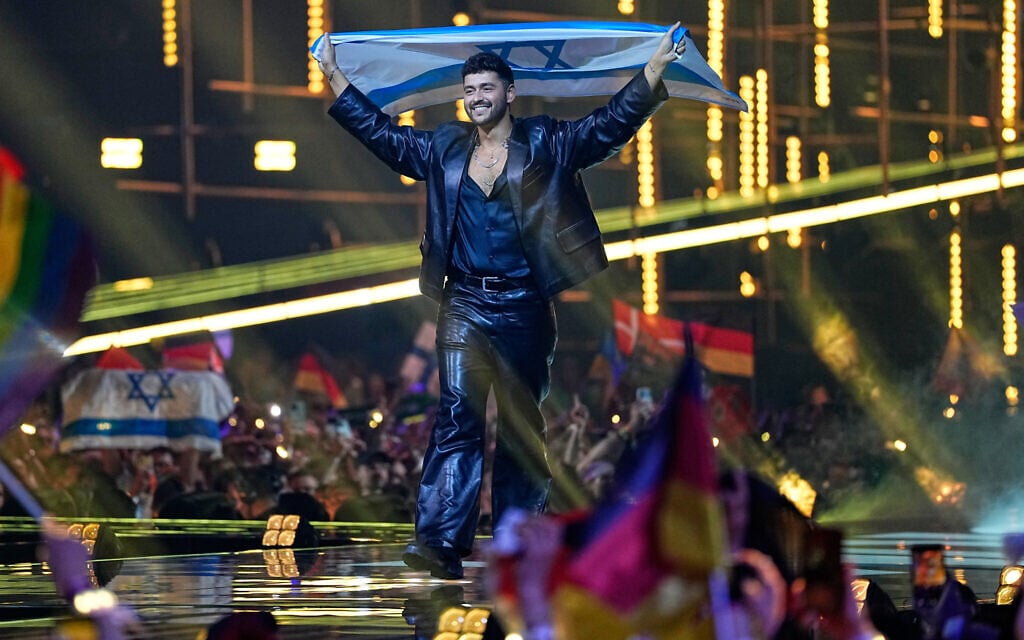
After being cleared to compete, Israel sent Noam Bettan to this year’s competition in Vienna, where he finished in second place, as Bulgaria’s Dara took the win with the upbeat dance number “Bangaranga.”
Bettan, who sang the French-English-Hebrew pop number “Michelle,” came third in the televote — the public voting system that accounts for 50% of each country’s total score — and eighth in the jury rankings, with enough combined support to propel him to a second-place finish.
Ahead of this year’s contest, the EBU instituted a new package of reforms aimed at quelling some of the anger over Israel’s participation as well as addressing claims that Jerusalem was attempting to rig the vote.
The voting reforms included capping votes per person at 10 instead of 20, returning juries to the semifinal rounds alongside the televote, and new rules discouraging large online campaigns, as well as barring contestants from cooperating with any such paid advertising.
“We saw no evidence of undue large-scale paid promotion, we saw no evidence of anything untoward in our voting at all,” Green said in the interview. “We know that the availability of [the audience each] being able to vote 10 times doesn’t make any difference to the outcome.”
He added that the Eurovision vote this year “is fair and true and validated, and it’s like any vote, really. If you’re not that keen on the outcome, then next year vote more and vote for something else.”
View original source — Times of Israel ↗
Related stories

The Punch
WorldJul 3, 2026 · 1 min
CAF invites bids to host AFCON 2028, 2032, 2036
The Punch
The Punch
WorldJul 3, 2026 · 1 min
NDLEA warns against fake vehicle auction offers
The Punch

Straits Times
WorldJul 3, 2026 · 1 min
Russian defence ministry says its forces captured Kostiantynivka in eastern Ukraine
Straits Times
The Punch
WorldJul 3, 2026 · 1 min
Kwara APC sets up reconciliation panel
The Punch