Indian Express
FM Nirmala Sitharaman at a panel talk in France: Middle class consumption powering India’s economic growth
2 min readNew DelhiJul 4, 2026 06:07 AM IST
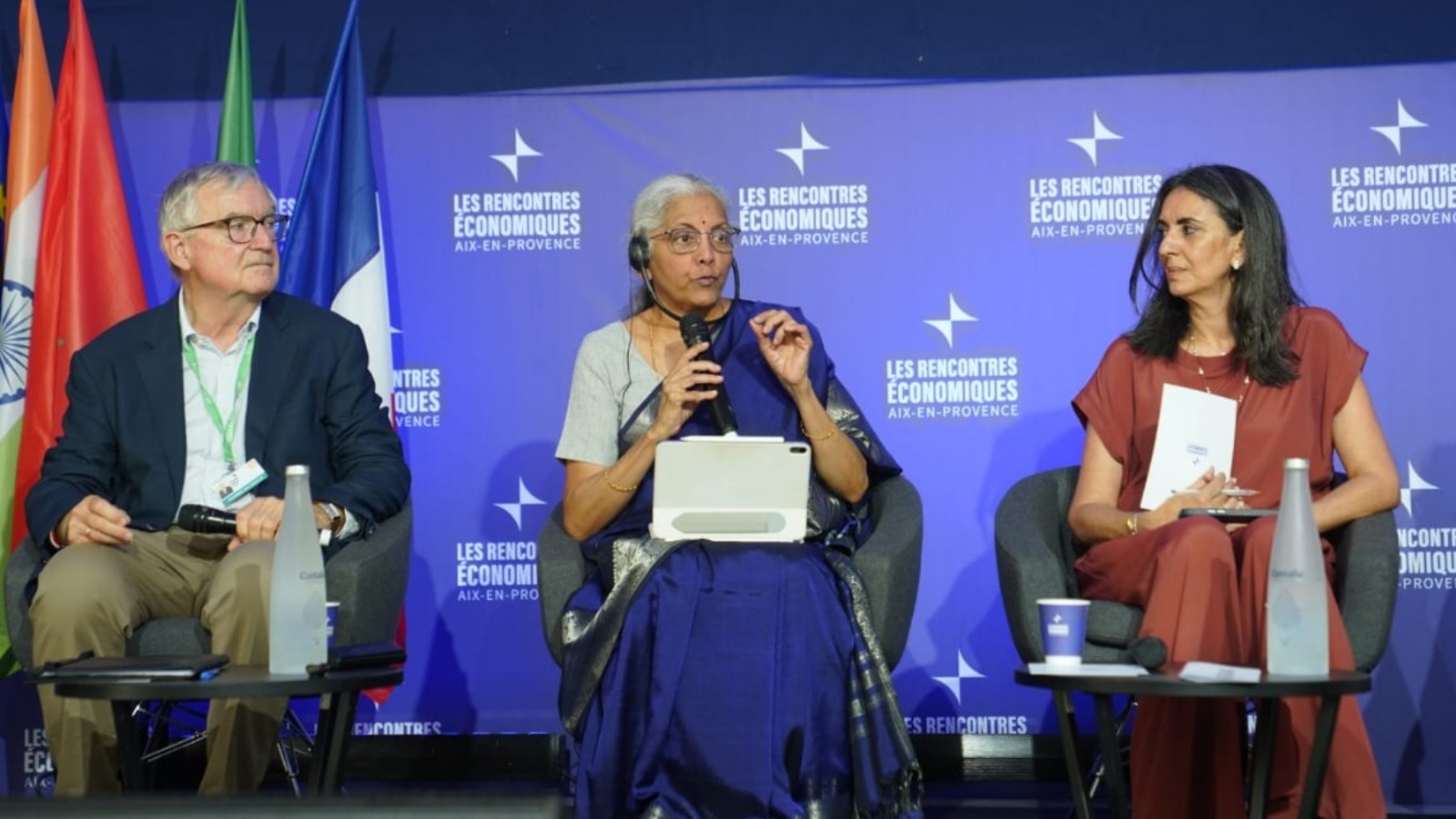
By 2036, 93% of all spending in India will be because of middle class or slightly affluent consumers, Sitharaman said. (Photo: @nsitharaman)
Finance Minister Nirmala Sitharaman on Friday said India’s expanding middle class has emerged as the country’s engine of growth, with consumption-led demand helping the economy remain the world’s fastest-growing major economy after the Covid-19 pandemic.
The middle class is no longer merely a beneficiary of economic growth but the principal driver of it, Sitharaman said speaking on the theme ‘How to Promote the Rise of a New Middle Class?’ at the Rencontres Économiques d’Aix-en-Provence, a major economic forum, at Aix-Marseille University, France. “In India, the middle class is the engine of growth. After Covid, India remained the fastest-growing large economy primarily because of the consumption which is triggered from the middle class and turns around into a virtuous cycle generating economic activity,” she said.
The minister said India’s middle class has expanded at an average annual rate of 6.3% since 1995, following the country’s economic liberalisation. Citing OECD projections, she said India is expected to surpass China in the absolute size of its middle-class population between 2030 and 2035.
She also referred to World Economic Forum estimates showing a fundamental shift in India’s consumption patterns, with nearly 500 cities emerging as new centres of economic activity. “By 2036, 93% of all spending in India will be because of the middle class or the slightly affluent consumers,” she said. Emphasising that India’s growth is geographically broad-based, Sitharaman said the middle class is increasingly concentrated in tier-II and tier-III cities rather than only in metropolitan centres, leading to a wider distribution of wealth.
Listing the government’s initiatives to expand the middle class, the minister highlighted financial inclusion through Jan Dhan accounts, saying 248 million people have moved out of multidimensional poverty, citing World Bank and IMF estimates. She said the government-backed credit guarantee programme has enabled first-time entrepreneurs to access concessional loans without collateral, while widespread digital connectivity and digital payments have improved the creditworthiness of small businesses. Sitharaman also pointed to lower GST rates, investments in girls’ hostels, skill development in animation, visual effects, gaming and digital media, and university townships focused on training. FE
View original source — Indian Express ↗
Related stories

TASS
BusinessJul 4, 2026 · 1 min
Tehran offers Japanese companies to purchase Iranian oil — Kyodo
TASS

Dawn
BusinessJul 4, 2026 · 1 min
18pc sales tax cripples cotton ginning
Dawn

Philippine Daily Inquirer
BusinessJul 4, 2026 · 1 min
SM Supermalls and Go Negosyo strengthen partnership to build more livelihood opportunities for Filipinos
Philippine Daily Inquirer

RNZ
BusinessJul 4, 2026 · 1 min
First All Blacks test at Te Kaha boosts Christchurch economy
RNZ