Philippine Daily Inquirer
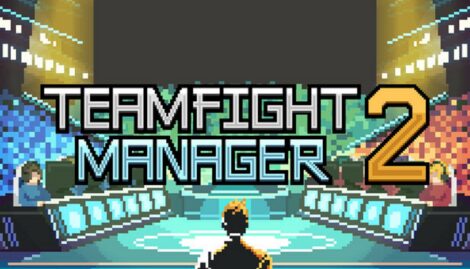
Teamfight Manager 2 is Football Manager for the MOBA fans who loves drafting
There is a certain kind of MOBA player who enjoys the game before the match and Teamfight Manager 2 brings that experience in bunches..
They’re the ones debating whether first-picking a power hero is worth exposing their strategy. They spend as much time looking at patch notes as they do climbing the ranked ladder. During professional tournaments, they pay just as much attention to the draft as they do the teamfights.
Teamfight Manager 2 feels like it was made specifically for those players and as someone who has followed the esports scene locally and globally for more than a decade, this game really checks a lot of boxes for me. I’ve always been interested in drafting but never really got the chance to do it on a professional level and this game gave me a chance.
Article continues after this advertisement
Rather than putting players behind the keyboard to outplay opponents mechanically, Teamfight Manager 2 turns them into the coach, general manager, analyst, and strategist behind an esports organization. The result is a management simulator that borrows heavily from games like Football Manager while capturing the constantly evolving metagame that defines competitive MOBAs.
FEATURED STORIES
TECHNOLOGY
TECHNOLOGY
TECHNOLOGY
The original Teamfight Manager already proved that the formula worked. The sequel expands on nearly every system without losing the simplicity that made the first game so addictive.
Heroes rise and fall naturally throughout a season. A previously ignored support suddenly becomes a first-pick priority after teams begin experimenting with a new composition. A dominant carry starts disappearing from drafts once opponents figure out reliable counters. Certain combinations become tournament staples before eventually falling out of favor as the rest of the league adapts.
It mirrors the ebb and flow of real competitive games remarkably well.
Article continues after this advertisement
That constant evolution prevents seasons from becoming repetitive because there is rarely a single solution that works forever. Instead of memorizing one overpowered strategy, players are encouraged to keep scouting, experimenting, and reacting to what everyone else is doing.
But the drafting phase is where Teamfight Manager 2 truly shines. Every match becomes its own strategic puzzle. Do you ban the hero your opponent is known for, or target the latest meta threat? Is it worth revealing your strongest composition early, or should you save it for the playoffs? Can your roster execute a difficult strategy consistently, or are you better off drafting around comfort picks?
Players develop specialties over time, improve their hero pools, and develop preferences that influence how effective they are on particular characters. Building a successful roster isn’t simply about signing the highest-rated talent. It also means assembling players whose strengths complement one another while preparing them for whatever direction the meta takes next.
Article continues after this advertisement
Anyone familiar with Football Manager will immediately recognize the appeal.
The satisfaction doesn’t come from directly controlling the action. It comes from watching a carefully planned strategy unfold exactly as intended. A victory often feels earned several in-game weeks before the match even starts, when you decide to scout a promising rookie, invest in a new composition, or prepare a counter for the league’s strongest team.
The simulated matches themselves move quickly, allowing the focus to remain on decision-making rather than spectacle. Watching your team execute a composition you’ve spent an entire season refining is surprisingly rewarding, especially when it dismantles a heavily favored opponent.
The presentation remains deliberately simple. Character models and animations serve their purpose without trying to compete visually with the blockbuster MOBAs that inspired them. Instead, the game’s personality comes from its systems. Every season creates new storylines, rivalries, breakout stars, and shifting metas that feel unique to your save.
That emergent storytelling is arguably Teamfight Manager 2’s greatest accomplishment.
After enough seasons, players begin remembering organizations instead of individual matches. You remember the rookie who developed into the league’s best tank player. The dynasty that dominated three straight championships before refusing to adapt to a changing meta. The forgotten hero that unexpectedly returned to relevance after months of being ignored.
One of the biggest additions in Teamfight Manager 2 is that it no longer treats players as simple bundles of attack and defense stats. Every player now develops a wide range of attributes that influence how the AI behaves during a match, including mechanics, positioning, judgment, skill accuracy, dodging, map awareness, focus, mental resilience, aggression, and even language proficiency. A mechanically gifted player might consistently land difficult skill shots, but another player with superior judgment will make smarter macro decisions such as rotating for objectives, choosing when to disengage, or recognizing a favorable teamfight. As a result, building a roster becomes far more nuanced than simply signing the highest-rated free agent. A talented player who doesn’t fit your team’s communication or preferred style of play can easily underperform against a roster with better chemistry and decision-making
The game isn’t without shortcomings. Veterans of management simulators may eventually wish for deeper financial systems, more detailed staff management, or greater control over organizational decisions outside competition. Players looking for direct gameplay will also need to adjust their expectations because success depends almost entirely on preparation rather than mechanical skill.
It understands that the strategy surrounding competitive MOBAs can be just as engaging as the matches themselves. By combining adaptive drafting, evolving hero balance, roster management, and long-term planning, it captures a side of esports that few games have attempted to simulate.
Your subscription could not be saved. Please try again.
Your subscription has been successful.
If you’ve ever watched a professional League of Legends or Dota 2 draft and thought, “I wonder if I could build a championship team,” Teamfight Manager 2 offers one of the closest answers yet.
View original source — Philippine Daily Inquirer ↗
Related stories

The Punch
SportsJul 4, 2026 · 1 min
FULL LIST: Players with most World Cup knockout-phase goals
The Punch

ESPN
SportsJul 4, 2026 · 1 min
Chapman sets all-time record for K's by reliever
ESPN

ESPN
SportsJul 4, 2026 · 1 min
USMNT coach Pochettino latest World Cup star to th...
ESPN

France 24
SportsJul 4, 2026 · 1 min
US 'royal wedding': Taylor Swift and Travis Kelce marry at Madison Square Garden
France 24