Indian Express
Mumbai’s Parsis, Iran refugees from centuries ago, have a justice folklore
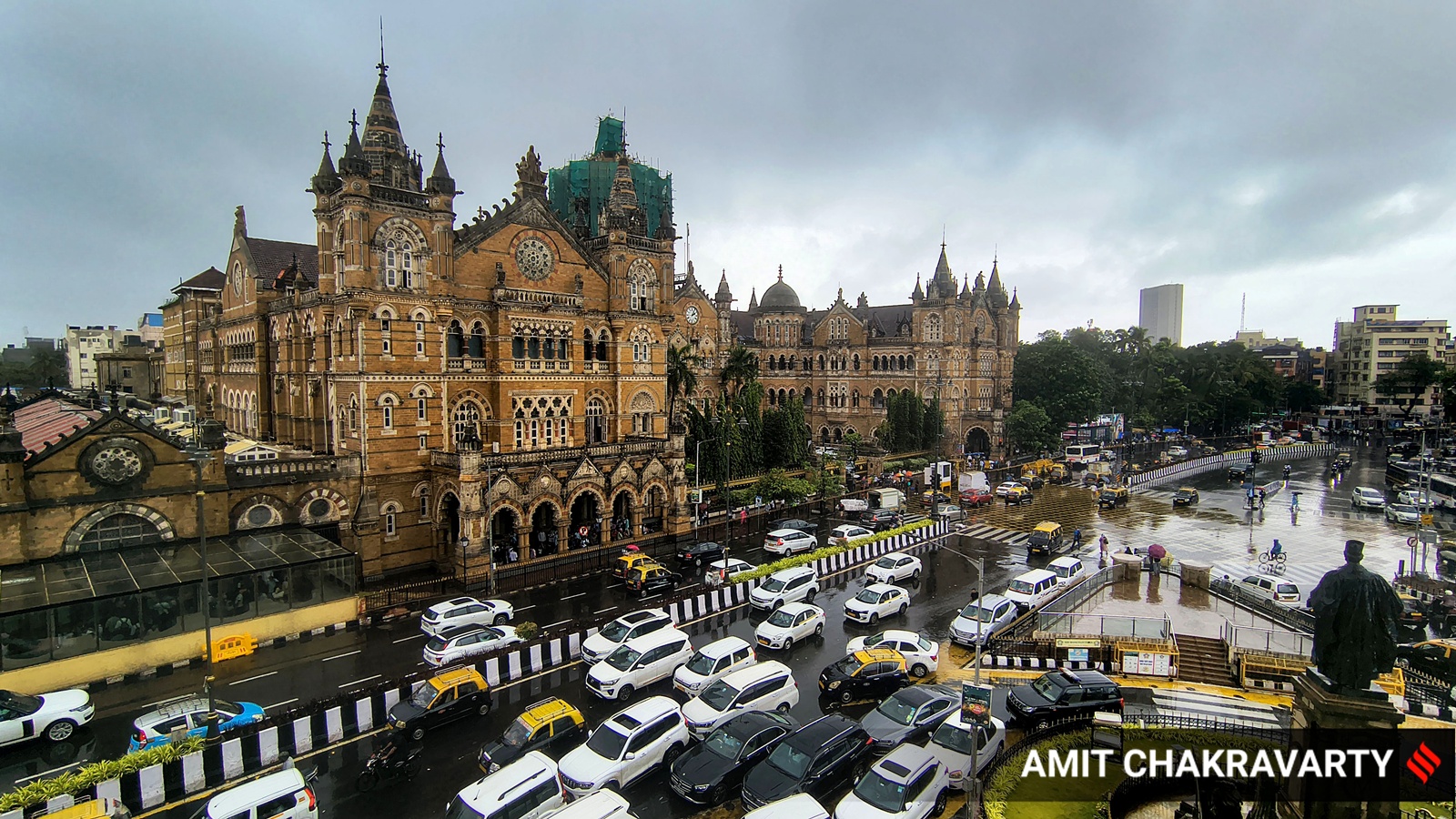
Few things represent life in Mumbai better than the Chhatrapati Shivaji Maharaj Terminus (CSMT).
The colossal, 19th-century railway station sees thousands – students, office-goers, tourists, vendors — flit in and out at all hours, giving a glimpse of not only the city’s famed fast pace but also its ‘melting pot spirit’ that makes way for people of different cultures and standings despite the acute lack of space.
But right at this cacophonous spot, only a few centuries ago, silence reigned supreme: the silence of death.
Before the Gothic arches, the gargoyles and stained-glass windows came up, the place served as Phansi Talao or the pond of death by hanging. Though there is little evidence of any water body now, there is the death of one particular figure here that is regularly invoked by a community without whom the story of Mumbai, then Bombay, would be incomplete.
The man was Homa Jamshed, a Parsi, and the year was 1783 — almost 100 years before the Victoria Terminus (VT), as the CSMT was earlier known, came up.
Britannia Restaurant reflects Mumbai’s layered past. Its walls display both Iranian and Indian flags, echoing Parsi-Iranian roots and cosmopolitan tastes.
(Express Photo by Amit Chakravarty)
The weaver from Bharuch (now part of Gujarat) was sentenced to death after, what many in the community believe, being wrongfully accused of kicking a pregnant woman, a fellow Parsi, resulting in a miscarriage.
The lore of Bazaar gate
Until the advent of the Railways, the area surrounding the CSMT was known as Bazaar Gate. It was a bustling marketplace where imported goods arrived, exports departed and merchants crowded narrow lanes leading towards the harbour – a sharp contrast to the scene at the gallows that stood right at the market’s edge.
Story continues below this ad
According to community lore, in 1782, a pregnant woman had accused Jamshed of kicking her. Jamshed had denied the allegation. He was tried before the Nawab of Bharuch and later, before a British court in then Bombay. Despite maintaining his innocence, he was sentenced to death.
Manekji Sheth Agiary, by Bazar Gate, anchors centuries of Parsi devotion within Mumbai’s old Fort precinct. (Express Photo by Amit Chakravarty)
As he was led through the Bazaar Gate towards the gallows, Jamshed is said to have made a final declaration: “Those responsible for my wrongful conviction would die on the fourth day of my execution”. Believers claim the prophecy came true and the woman, who had accused him, and several of her supporters mysteriously died four days later.
More than two centuries on, the story survives through prayers, rituals and oral tradition. While historians debate the factual basis of this claim, the tale offers a window into the evolution of Mumbai’s Parsis — a community that arrived on India’s shores as refugees, built some of the city’s most abiding institutions, and gradually assimilated into the social fabric without entirely surrendering its distinct identity.
But the community also hides a secret: A period when it weathered internal divisions, and for which Jamshed likely paid the price.
Story continues below this ad
A calendar dispute
Almost every faith has stories of innocent men whose suffering go on to acquire sacred significance. For Parsis, that figure is Homa Jamshed. Jamshed’s fate was decided from a feud not based on wealth, territory, or political power, but on a calendar.
In the eighth century, a number of followers of Zoroastrianism began looking to flee Iran to escape religious persecution. Many of them first landed in Hormuz – a hilly island on the Strait of Hormuz, which has lately found itself at the centre of unusual prominence in the wake of the Iran-US/Israel war. Eventually, they set sail for what was going to be their ultimate destination – the western coast of India. It was here that they settled between the eighth and 10th century, earning the moniker Parsis, derived from their roots in Iran, then called Persia.
The community had seamlessly assimilated into Indian culture – like sugar in a cup of milk, as the lore goes – when, in the 1720s, a Zoroastrian priest visiting India noticed that the calendar being followed in Iran was approximately a month behind the one followed by the Parsis.
Explains Khojeste Mistree, professor of Zoroastrian theology and former trustee of the Bombay Parsi Punchayet: “Since Iran was considered the source of religious orthodoxy, some Parsis in Surat felt the Iranian calendar represented the more authentic tradition and began campaigning for its adoption.”
Story continues below this ad
Two schools of thought emerged. Those who adopted the ancient Iranian calendar came to be known as ‘Kadmis’ or ‘Kadimis’, Persian for ‘ancient’, while those who followed the existing calendar became known as the ‘Shehenshahis’. The difference led to the emergence of varying habits. “Different fire temples were established following Kadmi and Shehenshahi traditions. The prayer patterns and ritual practices also differed,” says Mistree.
At one stage, the hostility started extending beyond rituals. Members of one group were discouraged from entering the other’s temples. Marriages across sectarian lines began being frowned upon. And Jamshed became a casualty of an intra-community feud triggered by an outsider.
The curse that refused to die
Despite Jamshed maintaining innocence, a “false” testimony led him to the gallows. Believers blame the sectarian difference for Jamshed’s fate. He was a Shehenshahi while the woman who accused him was a Kadmi. It is claimed that she was egged on by fellow Kadmis into wrongly accusing Jamshed.
“To date, Homaji (Jamshed) is seen as a patron saint of those who have been falsely accused, giving hope to others to persevere in the face of injustice,” says Noshir Dadrawala, who is affiliated with the Centre for Advancement of Philanthropy and writes for Parsi newspapers.
Story continues below this ad
Within Dadar’s Parsi Colony, Rustom Framna Agiary served as a spiritual centre: its consecrated fire, simple architecture and regular rituals anchored daily life and lifecycle ceremonies. (Express Photo by Amit Chakravarty)
A ceremony dedicated to ‘the wronged’
A carefully preserved tradition of Mumbai’s Parsis is Homaji ni Baj — a ceremony dedicated to Jamshed. Dadrawala says the ritual is often sought by individuals facing prolonged litigation, legal disputes or situations where they feel wronged. “People who believe they are suffering injustice remember Homa Jamshed,” he says.
The ceremony is observed on Roj Govad of Mah Dae — the 22nd day of the 10th Zoroastrian month. This year, it was observed on June 2. During the ritual, priests at the fire temples invoke the names of Jamshed and his father.
“The baj itself is a prayer ceremony performed in remembrance of the departed and is dedicated to Ahura Mazda, the supreme creator in Zoroastrianism,” says Dadrawala. One school of thought says the word Hormuz is derived from Ahura Mazda.
A better-known story related to the Parsis is from the time when they came to India from Hormuz. According to a legend, when Zoroastrian refugees sought shelter on India’s western coast, local ruler Jadav Rana presented them with a bowl filled to the brim with milk, signalling that his kingdom was full.
Story continues below this ad
A Zoroastrian priest gently added sugar to the milk. The sugar dissolved without causing the liquid to overflow. “The symbolism was that Parsis would seamlessly integrate into Indian society while only adding sweetness to it,” Mistree says.
The city Parsis helped build
The symbolism of the milk-and-sugar legend becomes easier to understand while walking through Mumbai. The legacy appears everywhere — in the docks built by the Wadia family, in the Taj Mahal Palace (celebrated as India’s first luxury hotel) and the industrial empire established by the Tatas, in hospitals such as Sir J J Hospital and Cama & Albless Hospital, in educational institutions, charitable trusts and public infrastructure. The Bombay Samachar, the city’s oldest newspaper that is still in circulation, was founded by a Parsi in 1822.
For Mumbaikars, though, the most visible remnants of Parsi culture are the city’s Irani cafés and eateries, which seem to have obtained a second life thanks to the numerous reels and posts that celebrate their unique flavours and old-world charm.
Over decades, Britannia restaurant has remained a living relic, blending culinary tradition with the city’s evolving cultural tapestry. (Express Photo by Amit Chakravarty)
Language also reflects the process of integration. Dadrawala says most Parsis speak Gujarati, Hindi, or English. “Very few Parsis, perhaps only small groups of Iranian Zoroastrians, speak Farsi in their circles. Even among those who migrated to India, Dari, a Persian dialect that is very different from modern-day Farsi spoken in Iran today, is in use,” he explains.
Story continues below this ad
In the modern Parsi culture, there is little space for the Kadmi-Shehenshahi divide. The fire temples are open to all Parsis alike; the same goes for marriage and other celebrations. “What started as a bitter religious rivalry centuries ago has almost no relevance now,” says Dadrawala.
The taste of continuity
Across Mumbai’s Parsi homes, festive gatherings centre around dishes such as patra ni machhi, salli marghi and berry pulao. Gahambars — communal religious feasts celebrating elements of God’s creation including sky, water, earth, animal, and man — remain occasions where food and faith intersect. These elements also find a place in the clothes. The ‘gara’ embroidery saree, for example, features nature-themed motifs, including flowers and birds.
For 83-year-old Dara Khodaiji, food remains one of the strongest expressions of the Parsi identity. He recalls his wife, a Christian, being initially puzzled by some culinary traditions of the community she married into. “She used to laugh at how Parsis ate dal with pulao or biryani. Now, she cannot eat one without the other,” he says.
Dadrawala shares another example of assimilation. “I remember weddings and initiation ceremonies in my childhood being solely catered by Parsi event planners. Now, the staff is a mix of various communities,” he says.
Story continues below this ad
The world inside a baug
If the CSMT is a ‘monument to movement’, Mumbai’s Parsi baugs (garden in Persian) are an ode to slow life. Children play cricket in courtyards. Elderly residents exchange gossip on shaded benches. Neighbours know one another’s routines.
“A baug feels like a world of its own. You will see elderly women lowering baskets tied to ropes from upper-floor balconies. Vendors place bread or groceries inside and the basket is pulled back up,” says Dadrawala.
Cusrow Baug in Colaba began in the late 19th century as a Parsi cooperative housing complex, offering secure, affordable homes for families tied to Mumbai’s mercantile and colonial-era professions. (Express Photo by Amit Chakravarty)
While every baug differs in size and character, they all contain a similar set of features — a clubhouse, a community hall, a small eatery, local shops, and open spaces where residents gather. Some of Mumbai’s most prominent Parsi settlements include Rustom baug, Cusrow baug, and the sprawling Parsi Colony in Dadar.
Within the boundaries of these baugs, traditions continue to survive despite demographic challenges.
Preserving more than numbers
One concern of the community that has been well documented, and has even compelled the government to get involved through initiatives like the Jiyo Parsi scheme, is its declining population in India. Mistree describes it as an “ageing” community, with considerably fewer births than deaths. Community members attribute this to delayed marriages, smaller family sizes, and a growing number of individuals choosing not to marry. Migration has also contributed to the trend. “When I first gave a lecture in New Zealand many years ago, only three Parsi families were present there. Today, there are over 300,” says Mistree.
The debate over how to respond to the crisis remains contentious. Some advocate greater acceptance of interfaith marriages and conversion. Mistree, though, disagrees. “Many reform-minded Parsis argue that the solution lies in opening the community more widely. However, this wouldn’t accurately resolve the issue of declining community members,” he says. “Children from mixed marriages may be less likely to marry within the community, potentially leading to the gradual erosion of a distinct Parsi identity over generations,” he adds.
Mistree says that for Parsis, the challenge is not merely preserving numbers. “It is preserving a religious and cultural tradition that has survived for more than three millennia,” he adds.
The task is formidable. But the community, known for its tenacity and ingenuity, will likely find a way. Like it did all those centuries ago.
View original source — Indian Express ↗
Related stories

TechRadar
TechnologyJul 4, 2026 · 1 min
How to watch Australia vs Ireland: FREE streams, TV channels for Nations Championship 2026 game
TechRadar

Philippine Daily Inquirer
TechnologyJul 4, 2026 · 1 min
Luke Ishikawa Plowden bats for AI use in doing good with least harm
Philippine Daily Inquirer

The Verge
TechnologyJul 4, 2026 · 1 min
The Kuxiu D5 keeps Qi-compatible phones cool while also charging a watch and earbuds
The Verge

Straits Times
TechnologyJul 4, 2026 · 1 min
St Petersburg region hit by major Ukrainian drone attack, Russian officials say
Straits Times