Indian Express
Why Punjab farmers choose cotton amid decreasing acreage, pest infestation
Most Punjab’s farmers collectively and steadily are moving away from cotton thus decreasing its acreage. The major reasons include shifting to alternative and lucrative crops, and severe pest infestation. Amid the shift, Gagandeep Singh of Mansa’s Raipur village, is doing exactly the opposite.
Out of his 10-acre landholding, he has dedicated seven acres to cotton this season — a firm commitment at a time when the state’s cottonacreage has fallen below 80,000 hectares, one of the lowest levels in Punjab’s history. The decline has largely been attributed to repeated attacks of pink bollworm over the past five years and recurring infestations of whitefly.
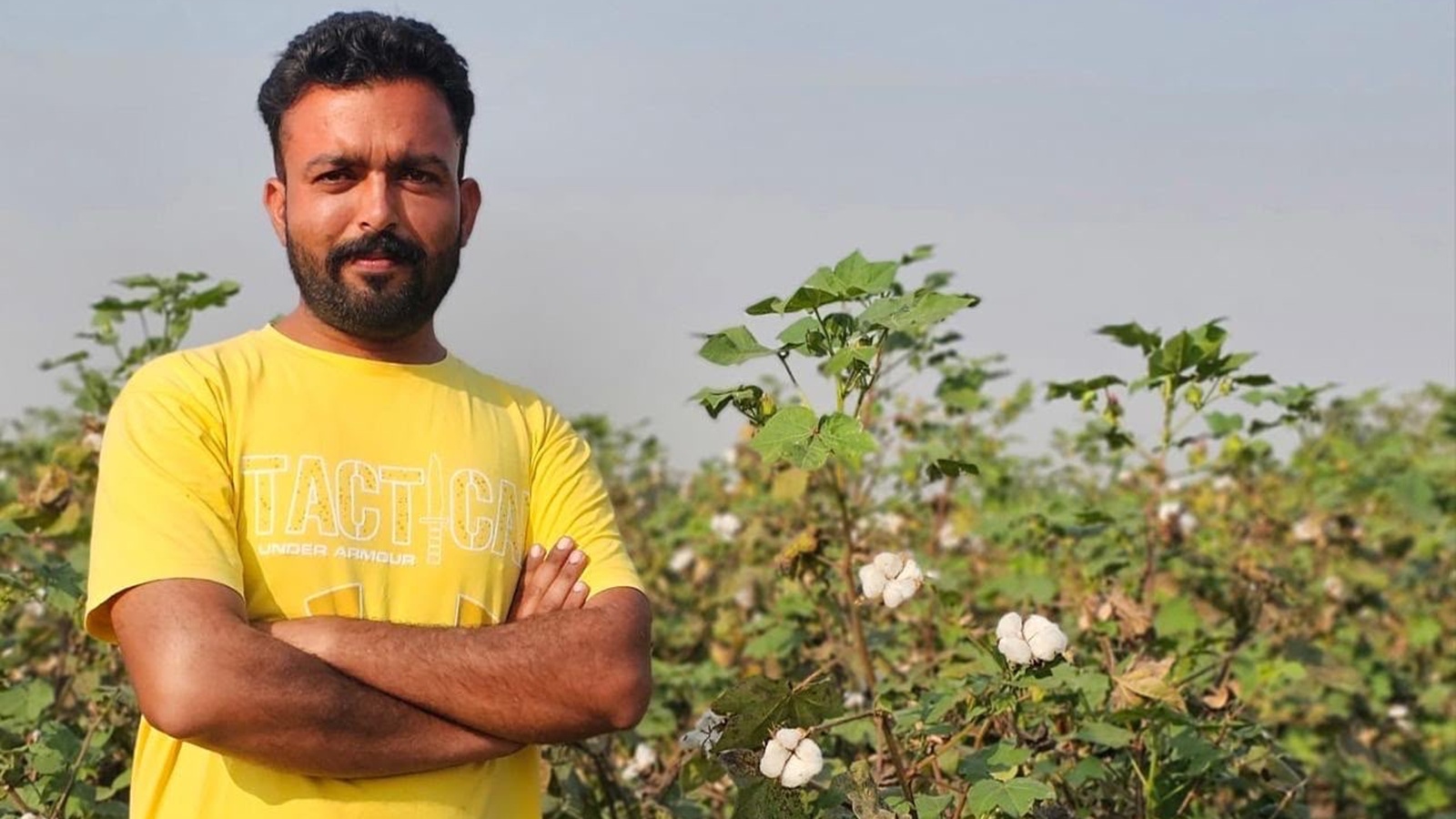
A more remarkable fact is that Gagandeep grows cotton without using chemical pesticides.
During the critical months of July and August, he carefully monitors insect populations in his fields. Instead of spraying pesticides, he assesses whether pest populations have crossed the Economic Threshold Level (ETL) — the scientific benchmark that determines when intervention is actually required.
He observes that the pest population remains below the threshold, allowing beneficial insects to naturally control harmful pests. As a result, he was able to eliminate pesticide use, reduce production costs and protect biodiversity.
“I learnt that not every insect is harmful. Beneficial insects are nature’s own pest managers,” he says, adding that he harvested nearly 950 kg of kapas (seed cotton) in 2022, when pink bollworm attacks were rampant across the cotton belt.
Gagandeep practises what he calls “zero-budget cotton farming”. He does not use pesticides even when pest pressure increases, and relies primarily on regular crop monitoring and home-made treatments. He also regularly trains neighbouring farmers on insect identification and ETL-based decision-making.
Story continues below this ad
A more remarkable fact is that Gagandeep grows cotton without using chemical pesticides. (Express Photo)
His confidence in cotton stands in sharp contrast to the broader trend unfolding across Punjab’s cotton belt.
For years, cotton growers have faced repeated setbacks due to whitefly infestations, pink bollworm attacks and outbreaks of American bollworm. Rising pesticide expenses, unpredictable weather conditions and fluctuating yields have further weakened farmers’confidence.
At the same time, the rapid expansion of tubewell irrigation in Punjab’s Malwa region, where most of the state’s cotton belt is located, has made paddy cultivation a safer and more predictable option. Thousands of new electricity connections and the growing adoption of solar-powered tubewells have ensured water availability, encouraging farmers to shift from cotton to paddy.
In such circumstances, the decision by some farmers to continue and expand acreage under cotton is attracting attention.
Story continues below this ad
Gurinder Singh from Bathinda’s Fatta Balu village is one such farmer.
Owning 18 acres of land, Gurinder expanded cotton cultivation from only three acres to seven, while most of his farm remained under paddy.
By understanding the role of beneficial insects and following ETL-based recommendations, he has successfully cultivated cotton without using chemical pesticides for the last four years. He has also received training and field support from the MVS.
He says that if insect populations occasionally exceed the ETL, farmers use pheromone traps at the rate of 25 to 30 per field. These cost less than Rs 1,000 per acre but can save several thousand rupees that would otherwise be spent on pesticide sprays. The inclusion of Desi cottonhas also strengthened his farming system.
Another farmer from Mansa’s Jherianwali village has been following the ETL-based pest management strategy and has successfully eliminated the practice of pesticide. Ram Singh, out of his 10-acre landholding, cultivates cottonon five while practises organic farming on the other three. Despite continuous pink bollworm attacks over the last four years, he has been harvesting around seven to nine quintals of kapas per acre. Ram also actively educates fellow farmers about beneficial insects, ecological balance and sustainable agriculture. His experience shows that cotton, when integrated into a diversified farming system, can remain profitable.
Story continues below this ad
Owning 12 acres of land, Davinder from Bathinda’s Lehri village doubled the area under cotton cultivation from two to four acres, after adopting sustainable cotton production practices.
A common factor behind these success stories is the support and guidance provided by Manav Vikas Sansthan (MVS), which has been promoting sustainable cotton cultivation through scientific pest monitoring, ecological farming practices and farmer education. (Express Phoot)
Although the increase may appear modest, it is significant because it reflects growing confidence in cotton cultivation at a time when most farmers are reducing acreage.
Agricultural experts say one of the biggest challenges that Punjab’s cotton sector faces is the tendency among farmers to spray pesticides without assessing actual pest populations. Excessive pesticide often destroys beneficial insects with harmful ones. This further increases long-term dependence on chemical interventions.
Project associates Satnam Singh and Kuljeet Singh, who work extensively in the cotton belt, said the MVS has encouraged farmers to understand ecological processes within their fields and use scientific monitoring as the basis for crop-management decisions.
Story continues below this ad
A common factor behind these success stories is the support and guidance provided by Manav Vikas Sansthan (MVS), which has been promoting sustainable cotton cultivation through scientific pest monitoring, ecological farming practices and farmer education.
A technical expert at MVS, Harleen Kaur, said, “Punjab’s cotton sector has faced significant challenges due to recurring pest outbreaks… rising cultivation costs and declining farmer confidence, leading to a sharp reduction in cottonacreage. At Manav Vikas Sansthan, we are working with farmers to revive cotton cultivation by promoting sustainable Integrated Pest Management (IPM), conserving resilient Desi cotton varieties and encouraging ecological pest management through yellow sticky traps, pheromone traps and biological solutions.” The future of cotton cultivation does not solely depend on new pesticides or higher inputs, but on improving farmers’ understanding of ecological farming systems, she said.
Amid a continuing decline in Punjab’s cotton area and farmers’ shifting towards paddy, these farmers envision cotton as a future crop — provided it is cultivated sustainably and monitored, said Satnam.
View original source — Indian Express ↗
Related stories

The Punch
WorldJul 4, 2026 · 1 min
Peter Obi warns of worsening hunger crisis in northern Nigeria
The Punch

Euronews
WorldJul 4, 2026 · 1 min
Up to 42°C in Spain: nine regions on alert for extreme heat
Euronews

Indian Express
WorldJul 4, 2026 · 1 min
CBSE Class 10 Second Board Exam Result 2026 Live Updates: Marksheets expected soon at cbse.gov.in
Indian Express

Lovin Malta
WorldJul 4, 2026 · 1 min
Llandilo Named Australia’s Most Maltese Suburb, With 27.9% Claiming Maltese Ancestry | Lovin Malta
Lovin Malta