Indian Express
Why the UAE waited until 2026 to launch an intercity passenger railway
5 min readNew DelhiUpdated: Jul 4, 2026 01:04 PM IST
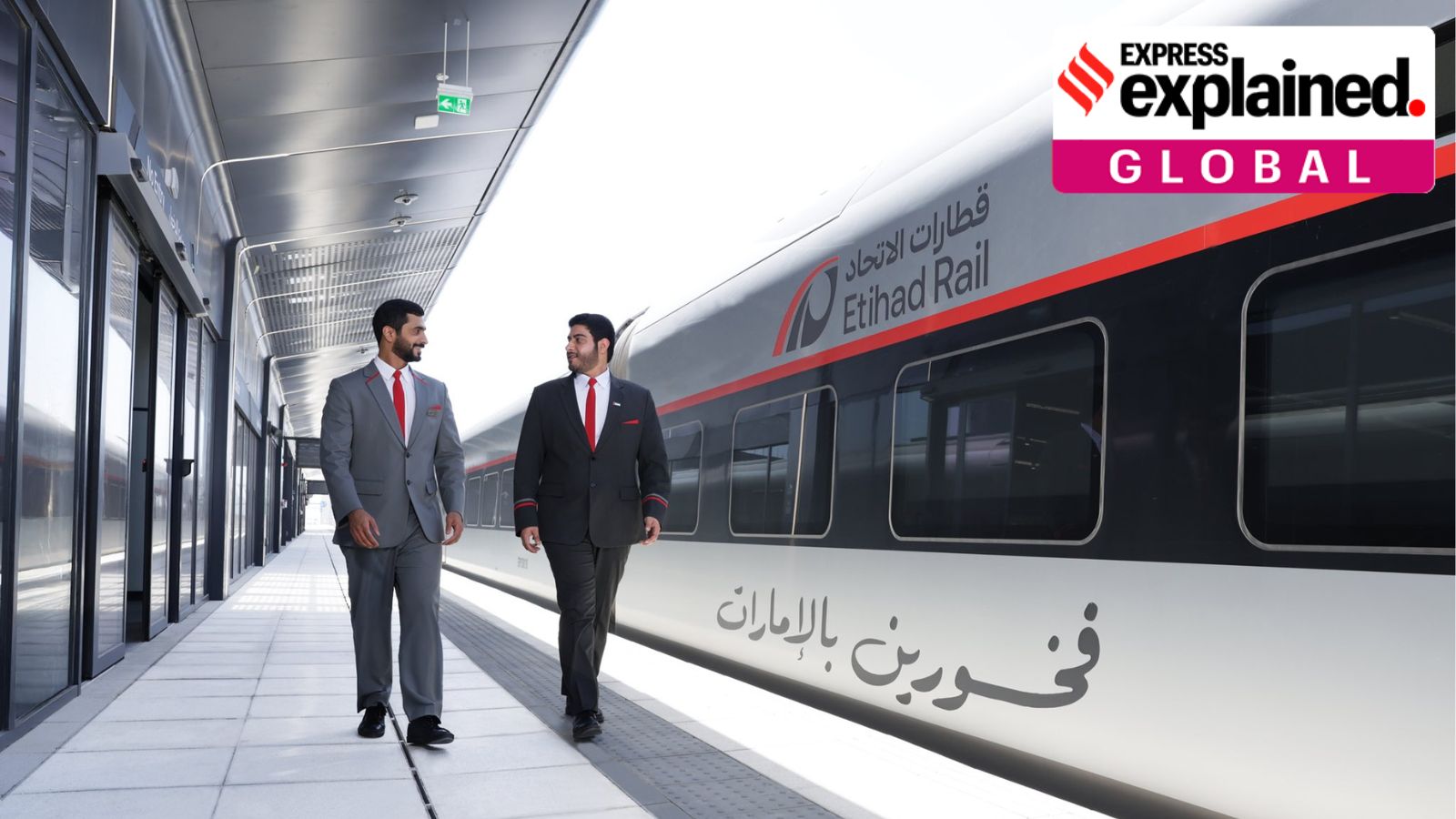
The inaugural service covered roughly 250 km between Abu Dhabi, on the UAE's west coast, and Fujairah, on its east coast facing the Gulf of Oman, in about one hour and 45 minutes. (X/Etihad_Rail)
Written by Abhishek Nair
For decades, the United Arab Emirates had little reason to build an intercity passenger railway. Cheap fuel, modern highways, short travel distances and a car-first culture made rail an expensive solution to a problem that barely existed.
That changed on June 30, when Etihad Rail launched the country’s first national intercity passenger rail service, linking Abu Dhabi and Fujairah over roughly 250 km between the UAE’s west and east coasts.
While Dubai has operated metro and tram services for more than a decade, the UAE had never before had a national intercity passenger railway.
More than a new transport link, the railway reflects the UAE’s broader shift towards economic diversification, stronger domestic connectivity and more resilient regional transport networks.
What to know about the launch
The inaugural passenger service covered roughly 250 km between Abu Dhabi, on the UAE’s west coast, and Fujairah, on its east coast facing the Gulf of Oman, in about one hour and 45 minutes, cutting road travel time by roughly an hour. It can reach speeds of up to 200 km/h.
Commercial operations are scheduled to begin on September 30, connecting Abu Dhabi, Dubai, Al Dhaid, and Fujairah. The network will expand to Al Dhafra in December 2026 and to Sharjah by March 2027.
Story continues below this ad
When Etihad Rail was announced in 2009, its primary purpose was to move sulphur from inland gas fields to the port of Ruwais before expanding into a nationwide freight network. Passenger services became the next phase of the project once the national freight network was in place.
Cheap fuel and cars
Cheap fuel, widespread car ownership and a limited public transport culture meant there was little demand for intercity rail. Speaking at the Middle East Rail conference in Dubai in October 2021, Youssef Khalifeh, then the Middle East regional director at Deutsche Bahn Engineering & Consulting, described the biggest obstacle as cultural.
“Why would they want to get into a train when they have a car with cheap fuel?” Khalifeh told UAE daily The National. “There is a lack of a good train experience but that will slowly change. We have seen that in Dubai with the Metro.”
The UAE’s extensive motorway network, short domestic travel distances and strong aviation links also reduced the need for an intercity railway.
Story continues below this ad
The economic case for rail also strengthened after the 2014 oil price collapse exposed the risks of relying heavily on hydrocarbon revenues. Gulf governments accelerated efforts to diversify their economies, while investment increasingly shifted towards infrastructure designed to improve long-term connectivity and resilience.
Building the railway also posed major engineering challenges. The route crosses environmentally sensitive desert where drifting sand can affect railway operations. According to contractor Saipem, engineers used meteorological analysis, wind modelling and specially designed embankments to minimise sand accumulation on the tracks, keeping ballast contamination below 3%.
Geopolitical concerns
The timing of the passenger launch also reflects changing strategic priorities across the Gulf. While Etihad Rail was conceived in 2009 primarily as a freight network, recent regional tensions have underscored the value of overland transport links that reduce dependence on maritime chokepoints.
The Israel-Iran conflict in June 2026 and the subsequent US strikes renewed concerns over the Strait of Hormuz, through which around one-fifth of the world’s oil trade passes. While the passenger service itself is not designed to bypass the strait, it forms part of a wider transport corridor linking Abu Dhabi on the Arabian Gulf with Fujairah on the Gulf of Oman, where cargo can avoid the narrow waterway.
Story continues below this ad
The strategy is not new. Since 2012, Abu Dhabi has used the 380 km Habshan-Fujairah pipeline to transport crude oil directly to the Gulf of Oman, bypassing the strait entirely. The railway strengthens the same east-west logistics corridor, improving connections between the UAE’s Arabian Gulf coast and Fujairah’s ports.
While the passenger service is the network’s newest addition, Etihad Rail says most of its projected emissions savings will come from shifting freight from road to rail. The company estimates this could reduce carbon dioxide emissions from the UAE’s road transport sector by up to 21% annually by 2050. It says a single freight train can replace up to 300 trucks, helping cut emissions by about 8.2 million tonnes a year.
The author is an intern with The Indian Express
© The Indian Express Pvt Ltd
View original source — Indian Express ↗
Related stories

Indian Express
TechnologyJul 4, 2026 · 1 min
Javed Jaffrey fraud case: Crime Branch arrests key accused in ₹16-crore scam, BMC officer still absconding
Indian Express

Dawn
TechnologyJul 4, 2026 · 1 min
PM Shehbaz invites Turkish companies to expand investments in Pakistan
Dawn

TASS
TechnologyJul 4, 2026 · 1 min
More than 200 UAVs headed toward Moscow Region over past 24 hours — mayor
TASS

Indian Express
TechnologyJul 4, 2026 · 1 min
Mumbai rain: Key roads shut as waterlogging worsens amid red alert
Indian Express