Indian Express
America at 250 needs to move forward. To do so, it must look back
Amongst all of J D Vance’s fiery speeches since he became US Vice President, one stands out. At a recent Claremont Institute event, Vance contrasted “heritage” Americans with what he calls the modern left, insisting that “the people whose ancestors fought in the Civil War have a hell of a lot more claim over America than the people who say they don’t belong.”
It would have been unthinkable for any right-wing Republican to say this even a decade ago. Unlike many European nations such as Germany, the United States has been rather squeamish about attaching citizenship to ancestry. And yet, Vance seemed to be signalling just that.
As the US looks upon its 250th birth anniversary, 250 years since it adopted a radical Declaration of Independence that held equality and freedom as unalienable principles, its creedal national identity— one built around common civic ideals instead of ethnicity or race — appears to come under serious intellectual and political threat by a more blood-and-soil, ethnic vision.
For the last 60 years or so, and maybe ever since the adoption of the 14th Amendment, the US has opted to decouple the question of national membership from considerations of race, religion, or ethnicity. American identity has been an imperfect but laudable experiment in crafting an identity built on the ideals of equality, freedom, natural rights, and rule of law. There is no British, Greek or Australian dream. But there is an American dream, available to anyone who accepts its founding principles.
This notion has come under intense strain in Trump’s second administration. On his first day of office, Trump signed an executive order that denied birthright citizenship to children of unauthorised migrants or temporary residents (the Supreme Court blocked this order last week). Whilst placing severe restrictions on accepting refugees, he also made a special exception for White South Africans who Trump claimed were facing a genocide in their home country. Vance, in a similar vein, has issued stark warnings that if only accepting American ideals makes one a citizen then nearly a billion people would be eligible. These policies and rhetoric have been seen by many as an attempt to refashion American identity on race and ancestry.
There is, more remarkably, a broad cultural shift in this direction too. Figures such as Zohran Mamdani, Vivek Ramaswamy and even Vance’s own wife Usha Vance have been the subject of horrific racist vitriol. Ramaswamy’s Hindu faith has consistently invited unfair provocations, many stating they would be reluctant to vote for a non-Christian official. Nick Fuentes, a far-right influencer, subjected Usha Vance to despicable anti-Indian slurs, while mocking Vance for marrying her.
To be sure, this shift to a more ethnic strain of nationalism must be taken seriously. It is the symptom of a real anger amongst large swathes of the American population who feel like they have been left behind by the Obama and Clinton era liberal-progressivism. Patrick Deneen and Yoram Hazony, two conservative academics who have exerted enormous influence on this growing movement on the Right, have made impressive critiques about the pitfalls of creedal nationalism and an excessively rights-based liberalism, which offers no dignity, no meaning, and no attachment to millions.
The kind of ethnic nationalism and grievance politics that we are witnessing unfold in the US is peculiarly effective in the wake of unrelenting globalisation and neoliberalism. As job security plummets and traditional institutions of belonging, from churches to unions to local communities weaken, appeals to ancestry and inheritance offer a seductive promise of certainty and solidarity. However, the prescriptive implications of such a nationalism often end in resentment, racism, and exclusion.
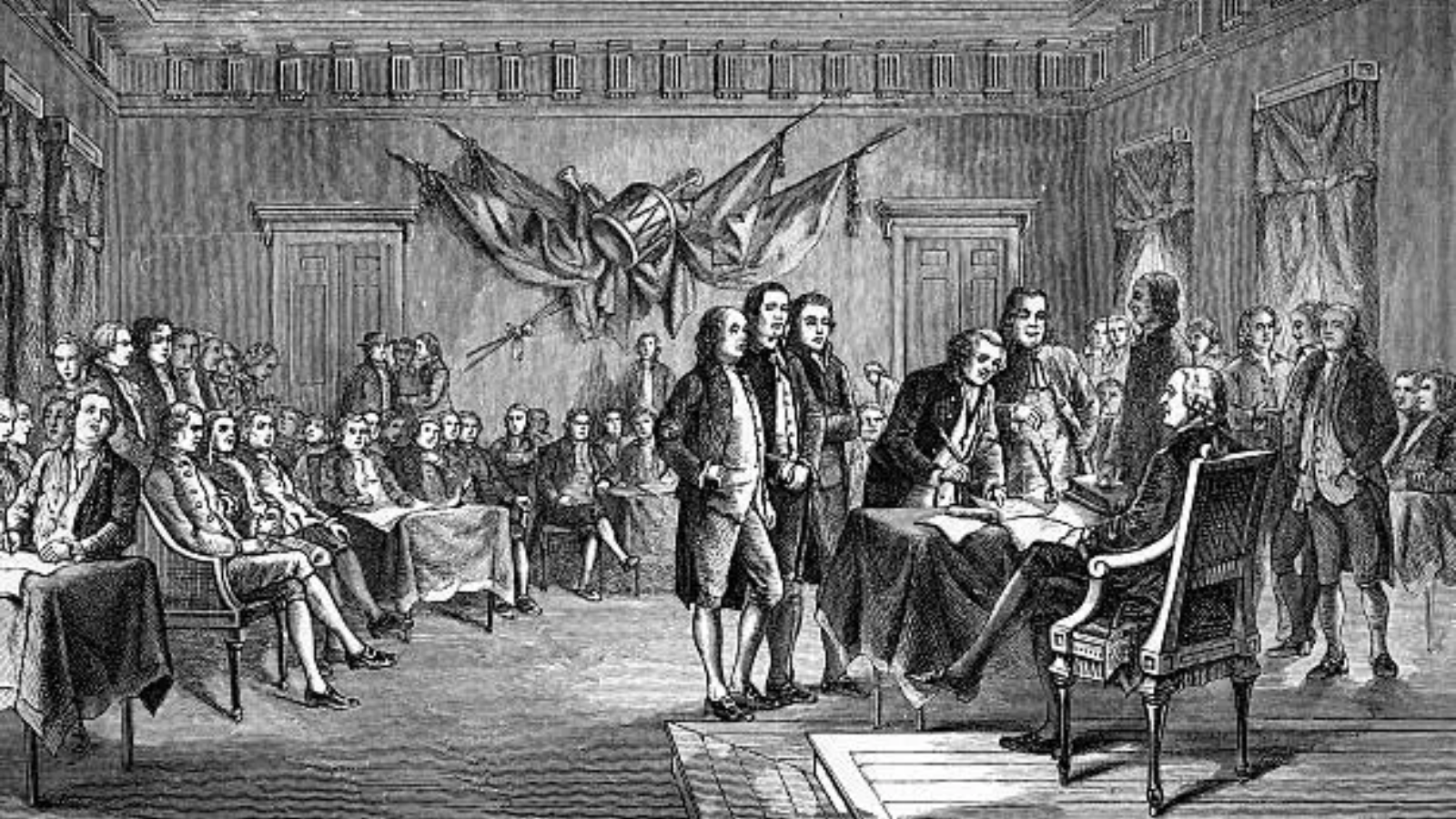
As we approach the 250th anniversary of the American Founding, it might be helpful to revisit the luminous text of the Declaration of Independence. Although rife with contradictions and written by men who themselves owned slaves at the time, there is a glaring universalism laced through every line. For all the ethno-religious signalling that goes around in contemporary politics, founding fathers such as Jefferson, Madison, and Franklin were deep sceptics and most of them were heavily persuaded by a non-ethnic, rational conception of natural rights. In many ways, the history of the American republic is a history of the expansion of their political and moral scope.
Where does America go from here? For my doctoral work, I closely examine the process of nation-building. And there is a uniquely liberal strain to the American founding, the kind that underwrote the powerful ideals of creedal nationalism. However, unchecked liberalism, as Ross Douthat and Fareed Zakaria have recently argued, can often be self-destructive. This creedal nationalism has been dented by an incessant focus on individualism, a frenzied worship of markets that erodes trust, and a politics that reduces citizenship to a set of abstract liberal rights without cultivating the culture that enables their sustenance.
A unique non-ethnic strain of nationalism might have to be carved out then, where the creed is the culture, and what is championed is not ancestry or race but the history of a republic founded on the incandescent claim that all are created equal and endowed with unalienable rights to life, liberty, and the pursuit of happiness. And to move forward, one can perhaps start by looking back.
The writer is a DPhil Candidate in Political Theory at St Anne’s College, Oxford
View original source — Indian Express ↗
Related stories

The Punch
WorldJul 4, 2026 · 1 min
TCN announces planned outage at FCT transmission substation
The Punch
The Punch
WorldJul 4, 2026 · 1 min
‘Akara seller better than prostitute’, APC youth defends Remi Tinubu
The Punch
The Punch
WorldJul 4, 2026 · 1 min
PFIPC scandal is pure scam— Presidency
The Punch
The Punch
WorldJul 4, 2026 · 1 min
VIDEO: Put God first when you make it, Davido urges young artistes
The Punch