Indian Express
Why UNESCO warned Pakistan over Taxila’s restoration
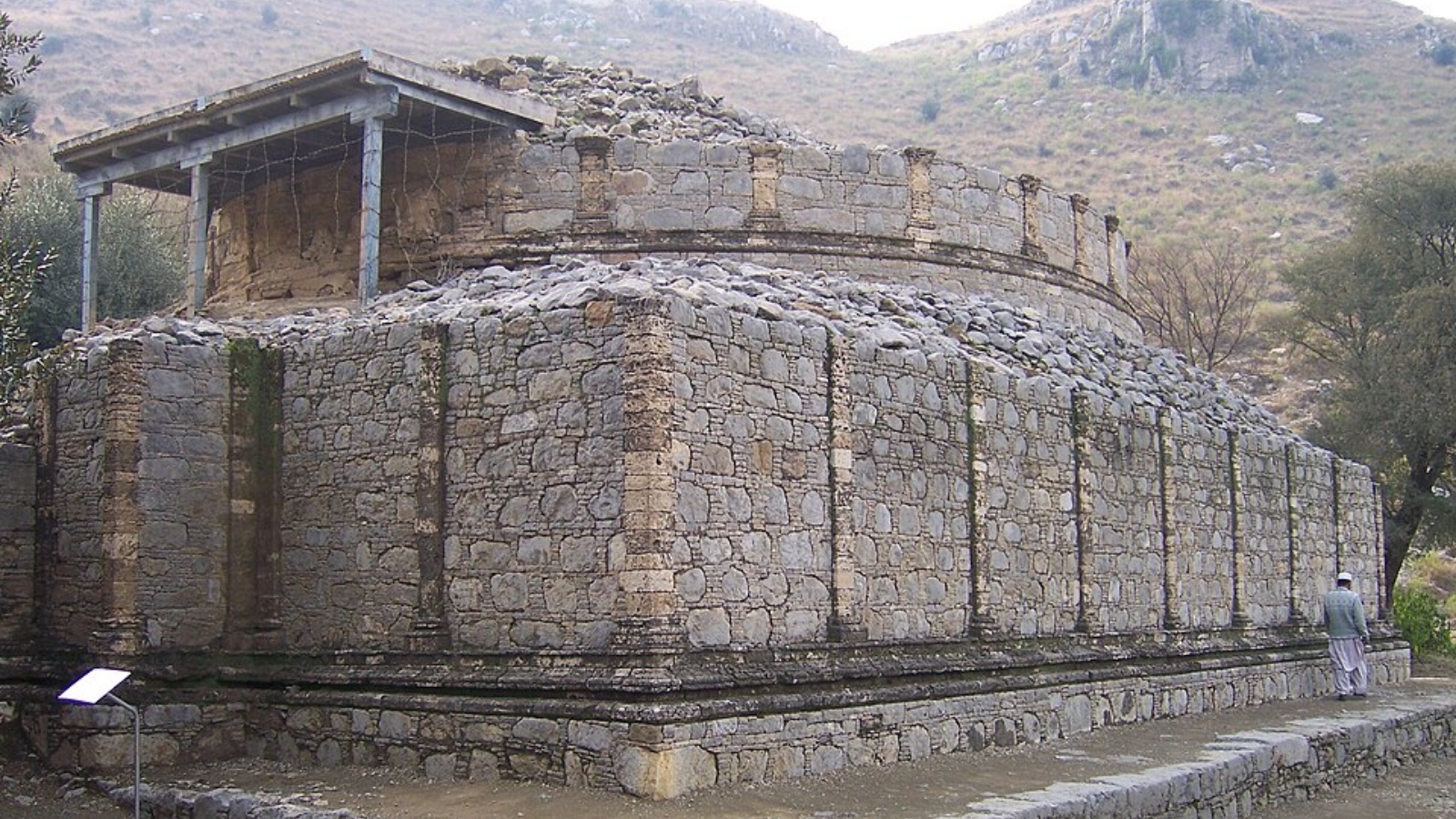
The United Nations’ cultural body, UNESCO, has asked Pakistan to reverse what it described as “reconstructions” at two historical sites in Taxila in Rawalpindi district, warning that failure to do so could place the world heritage property on its “danger list”, according to a report by Dawn. The report said UNESCO believes interventions at Mohra Moradu and Sirkap may have undermined the authenticity and integrity of the monuments while Pakistan’s Punjab archaeology department maintained that the work constitutes conservation—not reconstruction.
But how much intervention is too much? When does preserving a monument become altering it? According to K K Muhammed, former regional director (north) of the Archaeological Survey of India (ASI), archaeological conservation follows internationally accepted principles that prioritise authenticity and integrity above all else.
“We need to first understand the terminology,” said Muhammed. “In archaeology, preservation generally refers to chemical preservation, while conservation involves repairing damage to a monument without compromising its original character. Restoration comes into the picture when a monument has suffered extensive damage—say due to an earthquake or conflict—and enough original material survives to accurately reconstruct it.”
He emphasised that restoration should never be based on imagination. “International conservation principles make one thing very clear: authenticity and integrity must never be compromised. Restoration should never be based on speculation. It must rely on surviving architectural evidence, historical documentation and comparison with similar structures,” he added.
This distinction is central to UNESCO’s concerns over Taxila, where the Dawn report, quoting sources, suggests that sections of ancient walls were rebuilt using fresh masonry and, in some cases, their height was increased.
The pool at Mohra Muradu (Photo: Wikipedia)
When is restoration actually allowed?
Contrary to popular belief, restoration is not prohibited under international conservation principles. However, it is permitted only under carefully defined circumstances.
Muhammed pointed to anastylosis—an internationally recognised restoration technique formally endorsed under the Venice Charter (1964). “Restoration becomes acceptable when original fragments of a monument survive and can be scientifically reassembled,” he explained. “There is an internationally recognised technique called anastylosis, where broken architectural elements are put back together using the original material.”
Story continues below this ad
He noted that several archaeological sites in Greece, Armenia, and across the Roman world have successfully adopted this approach. “If these fragments are not reassembled, they too may eventually be lost,” he added.
Why UNESCO is concerned about Taxila
One of UNESCO’s reported objections concerns the use of new masonry and the apparent increase in the height of ancient walls. According to Muhammed, such interventions can directly affect a monument’s authenticity. “If the dimensions of a monument are altered, it affects its authenticity,” he said. “Such additions should ideally be reduced to the original height or configuration. Any intervention that changes the historic fabric beyond available evidence raises legitimate concerns. If UNESCO has flagged the issue, it means experts believe the balance between conservation and authenticity may not have been maintained.”
Repairs, restoration and reconstruction: What’s the difference?
To the average visitor, replacing damaged stones or rebuilding walls may simply appear to be routine repair work. Muhammed explained, “Routine conservation is meant to stabilise and protect a monument. Restoration seeks to bring back damaged portions using original evidence. Reconstruction, however, becomes problematic when new elements are added without adequate archaeological proof.”
He added that conservation decisions must never be driven by aesthetics alone. “The distinction is technical, and decisions should always be guided by conservation specialists rather than assumptions or aesthetic considerations,” he said.
Story continues below this ad
Can modern materials ever be used?
International conservation guidelines generally favour retaining original material, but they do not completely prohibit modern materials.
Muhammed cited the conservation of the Bhojpur Temple in Madhya Pradesh as an example. “Rainwater had been falling on the Shiva lingam for nearly a thousand years because the temple roof had collapsed,” he recalled. “Simply rebuilding the roof with stone would have added excessive weight and posed structural risks.”
Instead, conservators used fibreglass designed to replicate the appearance of the original structure. “From below, visitors cannot distinguish it from the historic structure, yet it protects the monument from further deterioration. Such interventions are sometimes essential to ensure long-term preservation,” he explained.
Mohra Muradu (Photo: Wikipedia)
Why conservation disputes keep recurring
According to Muhammed, they often stem from the tension between conservation theory and practical realities. “There is often a difference between theory and practice. Theoreticians focus on principles, while practitioners have to deal with real monuments that continue to deteriorate,” he said.
Story continues below this ad
Sometimes urgent intervention becomes unavoidable. “Immediate intervention may be necessary to prevent irreversible loss. At the same time, conservation professionals must ensure that any repair remains faithful to the monument’s authenticity. Balancing these two objectives is the real challenge,” he said.
The rules that guide heritage conservation
Muhammed pointed to internationally accepted frameworks such as the Venice Charter (1964), the Burra Charter, and, in India, the Archaeological Survey of India’s National Conservation Policy (2015). “These frameworks emphasise minimal intervention, respect for original material, and maintaining the authenticity and integrity of heritage structures,” he said.
For Muhammed, every archaeological site presents its own challenges, making a one-size-fits-all approach impossible. “Every monument presents a different challenge. Conservation cannot be driven solely by theory or solely by practical considerations,” he said.
“The objective should always be to preserve the monument for future generations while safeguarding its authenticity and integrity. Where original material survives, and sufficient evidence exists, careful restoration is justified. But interventions based on speculation or those that alter the historic character of a monument should be avoided,” he added.
View original source — Indian Express ↗
Related stories

Rolling Stone
EntertainmentJul 4, 2026 · 1 min
The White House Responds to Taylor Swift’s Wedding With Trump Meme
Rolling Stone

Indian Express
EntertainmentJul 4, 2026 · 1 min
Karan Johar slams Alpha critics, calls Alia Bhatt’s stardom ‘undebatable’
Indian Express

BBC
EntertainmentJul 4, 2026 · 1 min
Dior dress, Adam Sandler and a man of honour: what we know about Taylor and Travis's wedding
BBC
The Hollywood Reporter
EntertainmentJul 4, 2026 · 1 min
Jesse Eisenberg Is Getting Polish Citizenship and Wants to Work More in Europe
The Hollywood Reporter