Indian Express
‘Children care homes must restore hope’: Court denies custody of abused siblings
Declaring that children care homes must provide true safety rather than just shelter, the Chhattisgarh High Court refused to return two abused siblings to their step-sister. Citing overcrowding, the court ordered authorities to pursue adoption for the children’s long-term rehabilitation.
A bench of Chief Justice Ramesh Sinha and Justice Ravindra Kumar Agrawal was hearing a habeas corpus petition filed by the step-sister of the two children seeking their custody. The bench examined a confidential counselling report prepared after its June 30 directions to determine whether the siblings should be restored to the petitioner’s care.
“A Child Care Institution is expected to function not merely as a shelter but as a place of rehabilitation where children in need of care and protection are assured a safe, hygienic and dignified living environment. Adequate residential accommodation, proper bedding, sanitation and basic amenities constitute the minimum standards of care contemplated under the Juvenile Justice (Care and Protection of Children) Act, 2015,” the court said on July 2, permanently restraining them from visiting, meeting, contacting or otherwise interacting with the children in any manner.
The case arose after the two siblings were placed in child care institutions under orders of the child welfare committees. The high court had directed an independent counselling exercise to ascertain their wishes and evaluate what arrangement would best serve their welfare before deciding the habeas corpus petition.
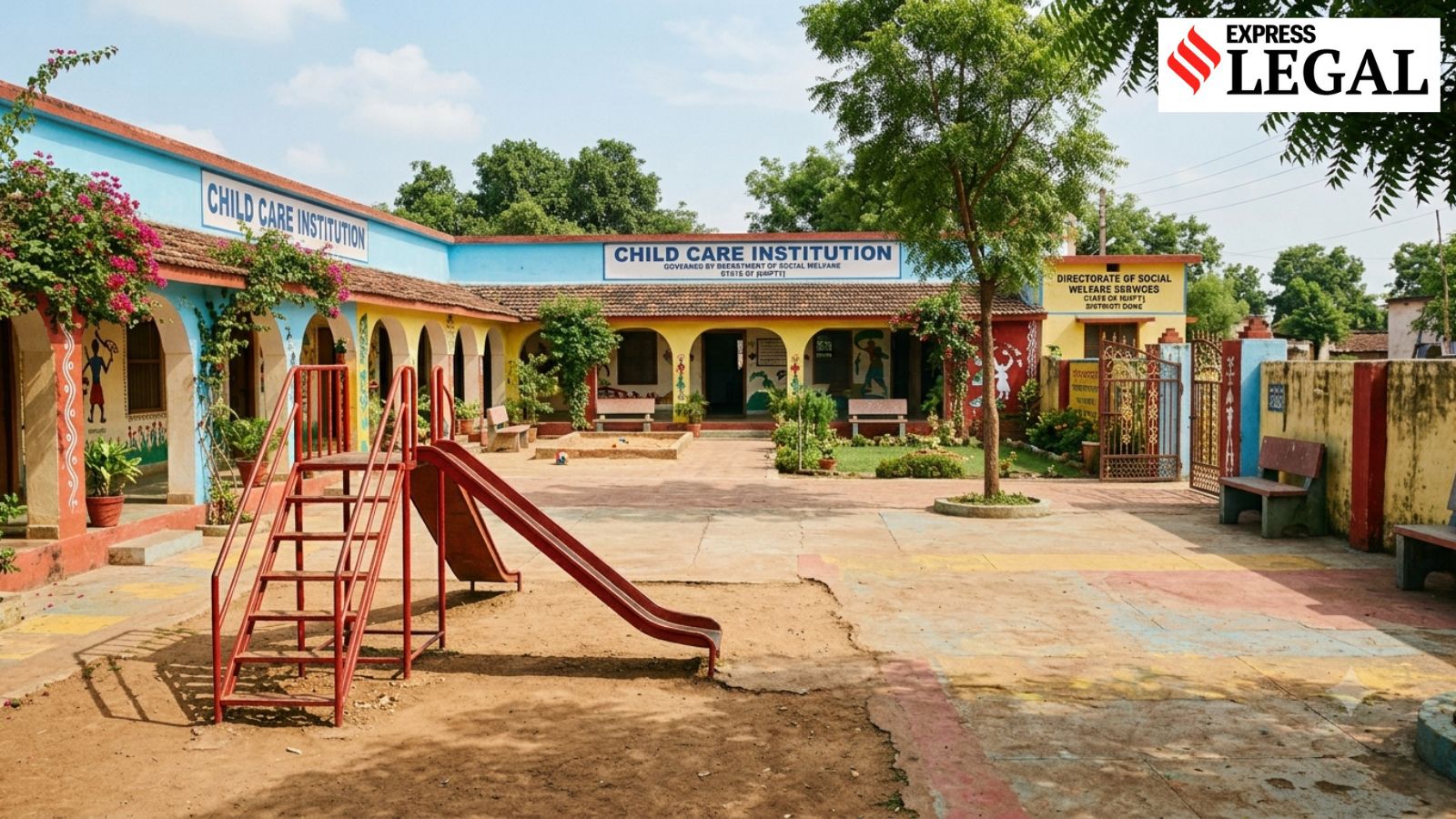
Chief Justice Ramesh Sinha and Justice Ravindra Kumar Agrawal noted that both children consistently narrated incidents of physical and emotional abuse while living with their step-sister and her husband. (Image enhanced using AI)
Children gave matching accounts of abuse
The court’s decision was driven largely by the findings of an independent, child-friendly counselling exercise conducted separately with the siblings. According to the report, both children consistently narrated incidents of physical and emotional abuse while living with their step-sister and her husband. They stated that they were compelled to perform household chores before attending school, while the younger brother was frequently assaulted.
The girl further disclosed that she had been assaulted and that her brother-in-law had attempted to sexually exploit her. The high court noted that criminal proceedings have already been initiated against him.
The bench found it significant that the children’s statements remained remarkably consistent despite being recorded independently and in confidence. It observed that there was nothing to suggest that either child had been coached or influenced by anyone.
Story continues below this ad
Instead, both children unequivocally expressed that they did not wish to return to the petitioner’s home because of the fear and trauma associated with that environment.
No case for Habeas Corpus
Rejecting the petition, the high court held that no writ of habeas corpus could be issued because the children were not in illegal detention. The bench observed that they were staying in recognised child care institutions pursuant to orders passed by the competent child welfare committees under the Juvenile Justice (Care and Protection of Children) Act, 2015. Their custody was therefore authorised by law and could not be treated as illegal.
However, considering the serious concerns surrounding the children’s welfare and future, the court decided to retain supervisory jurisdiction instead of disposing of the proceedings, so that it could continue monitoring their rehabilitation.
Court protects sibling bond
The counselling report also highlighted the extraordinary emotional bond between the siblings. Although they are currently staying in separate child care institutions, both children told the counsellor that they wished to remain close to each other and continue meeting regularly.
Story continues below this ad
Recognising that relationship as essential to their emotional recovery, the high court directed authorities to accommodate them, as far as practicable, in separate institutions located within the same city, preferably Ambikapur.
The court also ordered that the siblings should meet at least once every week in a child-friendly place such as a park or recreational centre, with transportation and coordination to be arranged by the district administration.
The counselling report further recorded that both children wished to be adopted by a caring family.
Taking note of their expressed wishes, the high court directed the competent authorities to examine the feasibility of rehabilitation through foster care or adoption in accordance with the Juvenile Justice Act, if all statutory requirements are fulfilled and such rehabilitation is found to be in the children’s best interests.
It also directed preparation of individual care plans covering education, psychological counselling, healthcare, emotional rehabilitation and long-term reintegration.
Story continues below this ad
Court flags overcrowding in children’s home
Apart from deciding the custody dispute, the high court also expressed concern over conditions prevailing inside one of the child care institutions.
During counselling, the girl informed the counsellor that nearly three children were sharing a single bunk bed.
Although she expressed satisfaction with the care provided by the institution and did not complain about its staff, the bench held that such overcrowding falls short of the standards of dignity and comfort guaranteed under law.
“Any indication of overcrowding in such institutions, even if not accompanied by a specific complaint from the child, cannot be overlooked by this Court, for the constitutional obligation to protect the dignity and welfare of children extends beyond mere physical custody,” the court said.
Accordingly, the bench directed the district magistrate of Surguja (Ambikapur) to inspect the institution, determine whether additional infrastructure or financial assistance is required and ensure that every child is provided adequate sleeping space, proper bedding and a dignified living environment.
“The custody of the minor children shall not, under any circumstances, be restored or entrusted to the petitioner or her husband,” the court directed.
The high court directed the child welfare committees to submit a comprehensive status report detailing the children’s education, counselling, rehabilitation, health and overall welfare before the next hearing.
It also ordered the district magistrate of Surguja to file a personal affidavit regarding compliance with the directions issued by the court. The matter has been listed for further hearing on July 15, when the high court will review the progress made towards ensuring a safe, stable and permanent future for the two siblings.
View original source — Indian Express ↗
Related stories

The Punch
WorldJul 4, 2026 · 1 min
Igboho’s security network rescues kidnapped Oyo woman, son in Kwara
The Punch
The Punch
WorldJul 4, 2026 · 1 min
NDDC donates relief materials to NCoS in Rivers
The Punch
The Punch
WorldJul 4, 2026 · 1 min
Critics politicising Lagos flooding, says commissioner
The Punch
The Punch
WorldJul 4, 2026 · 1 min
Police arrest 27-year-old suspected cultist in Lagos, recover firearm
The Punch