Indian Express
From Ex-Zomato rider who earned Rs 1,500 a day to AI founder: Suraj Biswas shares inspiring journey
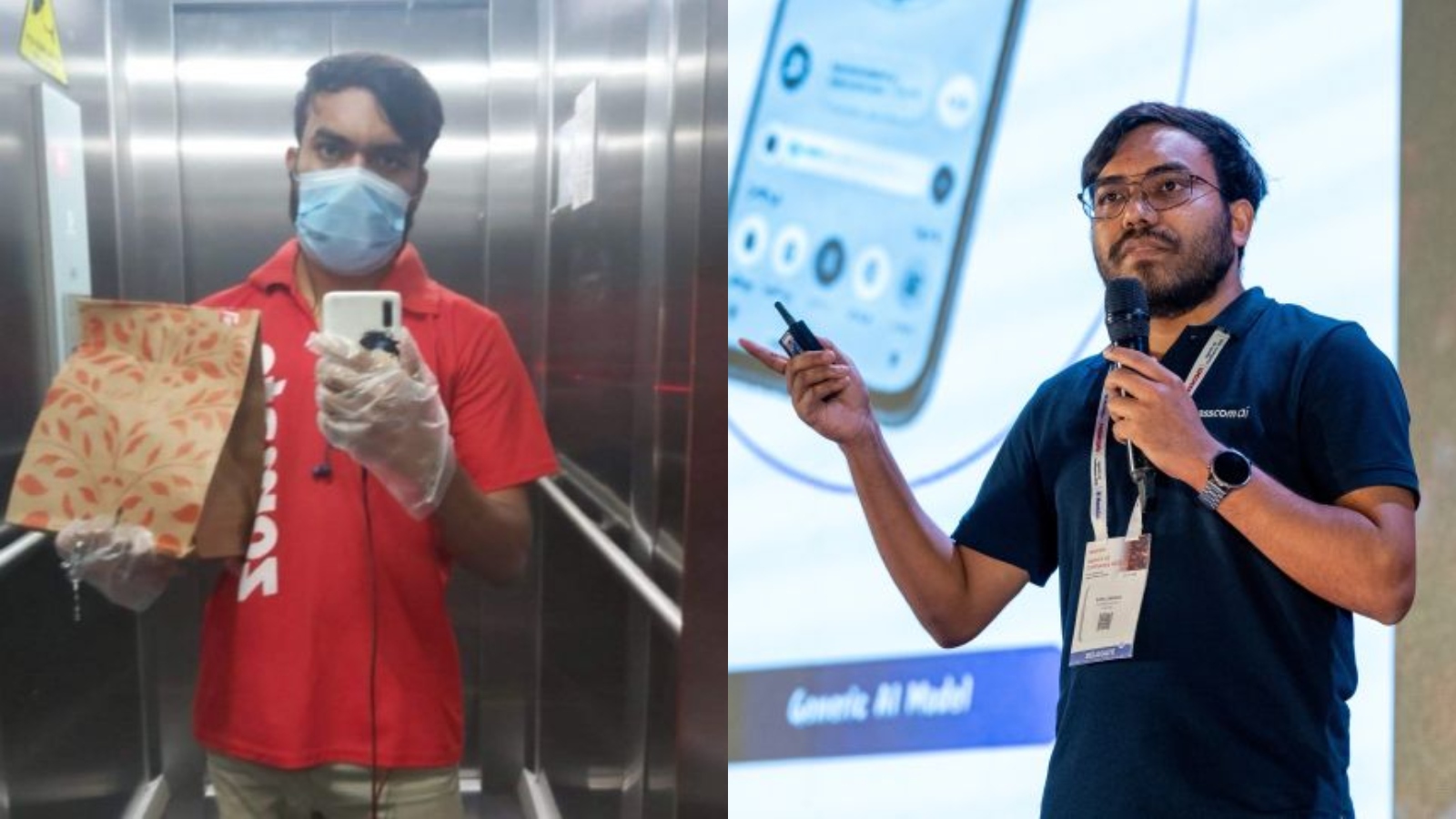
Life rarely follows a straight path, and 28-year-old Suraj Biswas knows that better than most. Before becoming the founder and CEO of two AI startups and publishing research papers, he spent his days riding across Kolkata as a Zomato delivery partner, earning between Rs 1,000 and Rs 1,500 a day.
In a conversation with Hindustan Times, Biswas reflected on his unconventional journey—from a small town in West Bengal to the startup ecosystem in Bengaluru. He spoke about abandoning his childhood dream of becoming a doctor, starting a company without investors or a co-founder, losing his father just as his venture began taking off, and his vision of creating AI that understands individuals rather than general patterns.
Small-town upbringing, unexpected career turn
Biswas grew up in Chakdaha in West Bengal’s Nadia district, far removed from the stereotypical image of a tech founder. “A small town, not the kind of place people expect founders to come from,” he said.
He went on to study Genetics at Gurunanak Institute of Pharmaceutical Science and Technology in Kolkata. Medicine had always been his first choice, but circumstances pushed him in another direction after graduation. To support himself while figuring out what to do next, he joined Zomato as a delivery partner.
Rather than looking back on that period with regret, Biswas sees it as an important chapter in his life. “My daily earnings were between Rs 1000-1500. I remember it clearly, not with shame, but with pride,” he recalled.
An idea born from frustration
Delivering food may have paid the bills, but it also gave Biswas time to think. What troubled him most was the education system’s inability to recognise that every student learns differently.
“It wasn’t one single moment. It was a slow accumulation of frustration and conviction. I had seen up close how broken personalisation in education was. Students weren’t failing because they were incapable. They were failing because the system treated every human being as identical. One size fits all, in a world where no two humans are actually the same.”
Story continues below this ad
Those questions gradually expanded beyond education and into Artificial Intelligence. Biswas began wondering why AI systems, despite their rapid progress, still treated people as data points instead of unique individuals.
“Then I started asking: Why does AI, the most powerful technology in human history, still not understand the individual human? Every AI model learns patterns across populations. None of them model you specifically, your state, your causation, your biology. That gap felt like the biggest unsolved problem in technology. And nobody was working on it.”
Convinced that the problem deserved attention, he decided to build a solution himself. In 2021, he founded Assessli without outside funding, an office or even a co-founder. Since then, he has also launched Dots-in, while continuing research in Artificial Intelligence. He currently leads both companies as founder and CEO.
Building a startup without privilege
Starting the company, however, was far from easy. When asked about the toughest part of the journey, Biswas laughed and responded, “Where do I begin?”
He said earning credibility was his first major obstacle.
Story continues below this ad
“The first was credibility. When you come from a small town, study at an unknown college, and deliver food on a bike, nobody takes your pitch seriously.”
Funding became another constant struggle. According to Biswas, building foundational AI is not something that delivers quick returns. It requires years of research, infrastructure, and continuous refinement before people begin to understand its value. Remaining committed through that uncertainty became one of the greatest tests of his resilience.
A personal loss that changed everything
As his startup finally began gaining recognition, Biswas experienced one of the most difficult moments of his life. His father, who worked as a house painter, died in January 2024 — just two days after the paperwork for an ISI Kolkata grant had been completed. The timing made the loss even more painful.
“Two things hit me hardest. My father. He was a house painter. He sacrificed his own comfort his entire life for my future. And I couldn’t give him the moment of seeing the full fruit of that sacrifice. He left just as things started to turn. That’s a debt I can never repay, so I carry it forward by building Indots for every child whose parents won’t live to see their success either.”
Story continues below this ad
His non-profit initiative, Indots, is dedicated to supporting children whose families may never get to see them achieve their dreams.
Biswas also spoke about another dream he had to leave behind. “The other sacrifice is my original dream. I wanted to become a doctor. I was drawn to biology, to understanding how the body works, how the mind works. That path closed.”
Although he now runs two AI ventures, Biswas believes his work has only just begun.
According to him, his biggest challenge today is helping people understand the long-term vision behind LBM. He says the technology is intended to become core infrastructure, and communicating that broader vision is often much harder than simply marketing a product.
Now based in Bengaluru, where his second startup operates, Biswas continues to keep Assessli rooted in West Bengal.
Story continues below this ad
‘Don’t wait for perfect conditions’
For aspiring entrepreneurs, his advice is simple: don’t wait for perfect conditions before taking the first step. Success, he believes, comes from embracing uncertainty, learning through setbacks and continuing despite fear. He also hopes young people don’t allow their circumstances to define what they think is possible.
“I came from a small town, studied at an unknown college, delivered food for money. None of that disqualified me. The world will try to tell you your starting point determines your ceiling. That is the biggest lie ever told to the most capable people on earth.”
View original source — Indian Express ↗
Related stories

The Punch
WorldJul 4, 2026 · 1 min
Igboho’s security network rescues kidnapped Oyo woman, son in Kwara
The Punch
The Punch
WorldJul 4, 2026 · 1 min
NDDC donates relief materials to NCoS in Rivers
The Punch
The Punch
WorldJul 4, 2026 · 1 min
Critics politicising Lagos flooding, says commissioner
The Punch
The Punch
WorldJul 4, 2026 · 1 min
Police arrest 27-year-old suspected cultist in Lagos, recover firearm
The Punch