Indian Express
I planned to set up semiconductor factory in India 2 decades ago, but government was shackled then: PM Modi
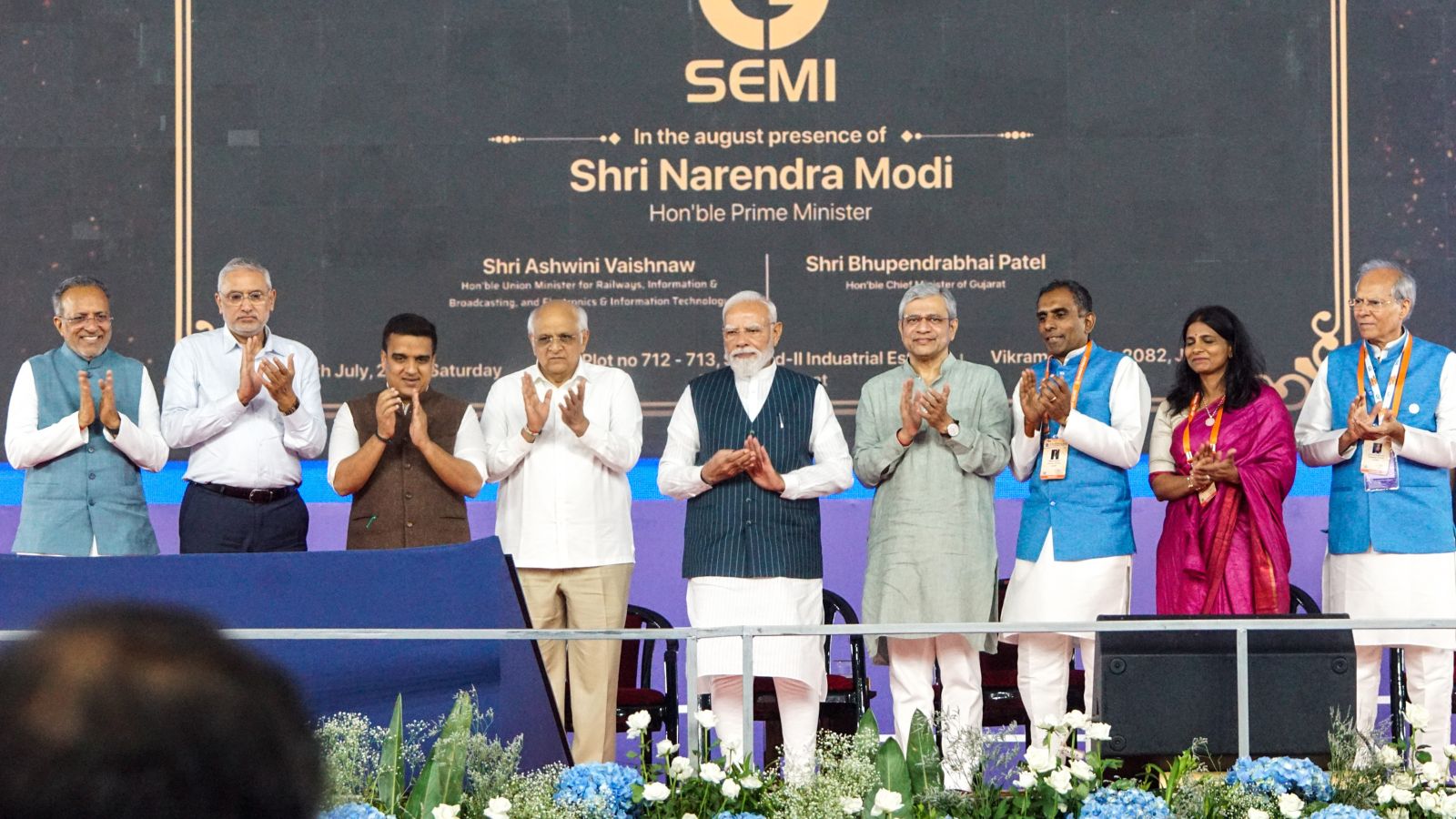
“I SAID earlier this year that India will have four functional semiconductor factories in 2026 but today my Minister has said that there would be five. In the past six months alone, production has started in three facilities. Today’s India has great ambitions and the strength to achieve them as well. India gives the same confidence and the same trust to investors as well. Our policies have stability. Our decisions have stability and progress has pace,” Prime Minister Narendra Modi said in Sanand, Gujarat, on Saturday.
PM Modi was speaking at a ceremony to mark the commencement of commercial production of CG Semi’a Outsourced Semiconductor Assembly and Test (ISAT) facility in Sanand. Vellayan Subbiah, Chairman of CG Semi, Gujarat CM Bhupendra Patel, Union Minister Ashwini Vaishnaw and Gujarat Deputy CM Harsh Sanghavi were among those present.
“India is committed to ease of doing business and our citizens will make India developed by 2047. Modi works so hard today so that when you, today’s youths, are 40 to 45 years old and when your children are growing up, you are able to see them grow up in a developed India. That is why I am using my life – for your children.
On his plans two decades ago, the PM said, “Around 20 years ago, or before, I made plans to set up a semiconductor plant in Gujarat. Identified 350-400 acres near Gandhinagar and Prantij and spoke to some companies. The Government of India then was also talking about big things. But I don’t know what happened and their (government) feet got shackled, and talks didn’t proceed further. Today I see my 20-year-old dream, something that nobody talked about at that time, today when it’s happening, I have a lot of happiness.”
On the plant itself, Modi said, “Five years ago, the country took an oath that we will make India a semiconductor hub. We had the mantra of ‘design in India, make in India’. Today, this is the third unit where commercial production of chip packaging is set to begin… This CG semi plant is a result of cooperation between India, Japan Thailand and other partners. It is not just a business venture it is a model of partnership that will give new impetus to India’s semiconductor journey. I’m told that 20 crore chips will be manufactured here each year. You may think I got it wrong and I said this number mistakenly… But 20 crore. And I’m told that you all have aimed at reaching 500 crore chips a year… which is 1.5 crore chips a day.”
On India’s semiconductor clusters, PM Modi said, “If we look at the industrial history of the world, we will see that no industrial power is made by one single factory… In a few months, Micron, Kaynes and CG Semi have started production and in India, there is a semiconductor cluster being born. Today packaging is being done, tomorrow chemical firms will come here, then testing labs, then machinery firms will come, design centres will be set up and new startups will also emerge from this cluster. This is the power of a cluster that one industry gives rise to several others. In turn, these many industries create lakhs of jobs and these jobs change the economic condition of the entire region. And this is not just happening in Sanand. There are semiconductor clusters coming up in other parts of India as well.”
On the growth of the electronics industry, PM Modi said, “People often see this semiconductor setup in isolation but that is not the right way this is part of the electronics revolution that has come to India over the past decade. We started with mobile phone manufacturing and there was a time when India was importing most of its smartphones. And today mobile phone production in India is 33 per cent higher than before 2014, when you sent me from Gujarat to Delhi. Today India is the world’s second largest mobile manufacturer. As well as the second largest mobile phone exporter.”
Story continues below this ad
He added, “Today, India’s entire electronics manufacturing production against 2014 is 7 times more than it was in 2014, and electronics export is 11 times more than it was at that time.”
On the strategy ahead, the PM said, “Our efforts at atmanirbharta are not limited to the final product. This is the next step in India’s journey. We will not just make mobile phones but will also make the chips that run the world of electronics. This is our strategy. First, product, then components, and now semiconductors. The entire value chain of the electronic sector will be in India. This is the road map of a developed India (viksit Bharat). This is the next step of Make in India. From here the next step is self-reliance in critical minerals and high tech materials.”
Referring to the Statue of Unity, Modi said, “I don’t have small aims. Even if I make a statue, it’s the biggest in the world.”
He also asked the youths to make the most of the opportunities that semiconductor and AI were bringing to India. He said, “I have confidence in the talent of this nation’s youth. I want to tell the youth that whenever any new industrial revolution comes, the most opportunities are for the youth. The IT revolution came, lakhs of Indian youth joined it. When smartphones and electronics revolution came, the youths got many opportunities. Today is the era of semiconductor and AI, and these two are also bringing many opportunities. The need of the day is skill and new ideas. What matters today is whether you have a new idea or not. Whether you have the will to learn something new or not. The youth should not waste this opportunity and I tell you “idea aapka, saath mera.”
Story continues below this ad
The PM also congratulated the company for starting the OSAT facility in less than two and a half years. He said, “I had the opportunity to conduct the groundbreaking ceremony of this plant in 2024. In August 2025, testing of chips began and today, this plant has been inaugurated.” He highlighted the role of women employees from the tribal belt of Jharkhand, Chhattisgarh and Madhya Pradesh who worked at the facility.
View original source — Indian Express ↗
Related stories

Indian Express
TechnologyJul 4, 2026 · 1 min
Stretch of road on Bhandup’s LBS Marg caves in, uproots several trees
Indian Express
Dawn
TechnologyJul 4, 2026 · 1 min
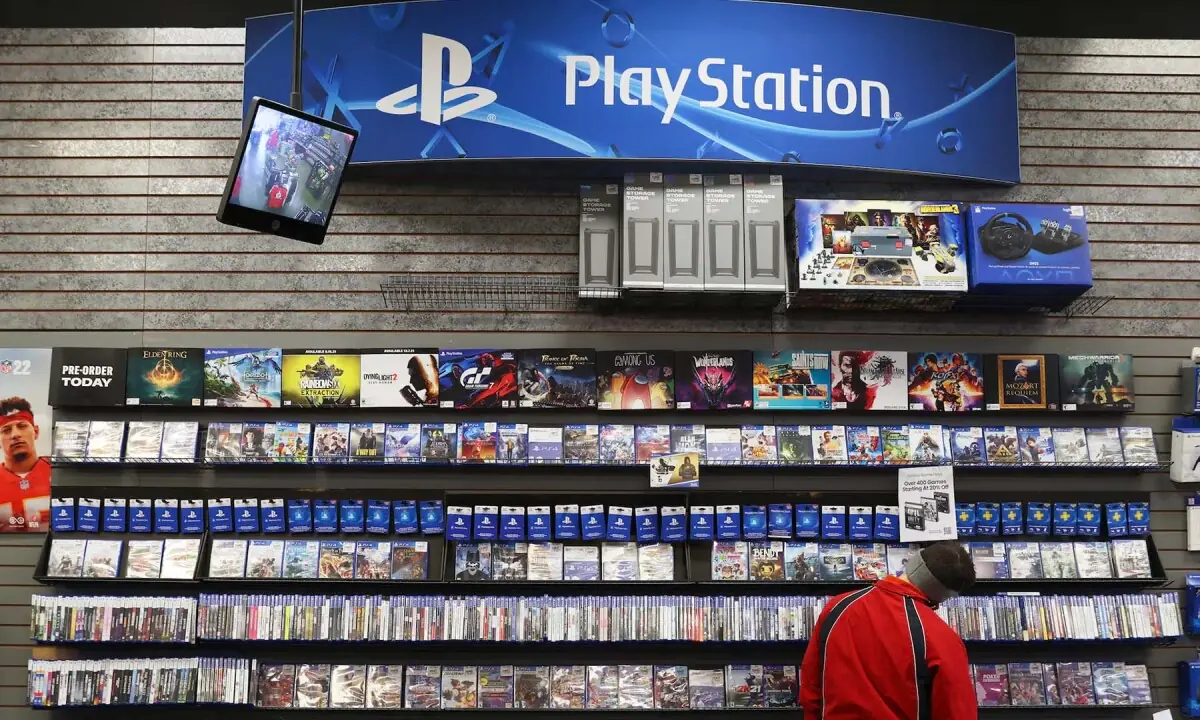
Digital pizzas? Corporations ridicule PlayStation over ending game disc production
Dawn

TechCrunch
TechnologyJul 4, 2026 · 1 min
Alibaba reportedly bans employees from using Claude Code
TechCrunch

Times of India
TechnologyJul 4, 2026 · 1 min
China threat sparks alarm: Taiwan launches biggest reserve military overhaul in decades
Times of India