Indian Express
Why invasive pufferfish are becoming a nightmare for Greek fishermen
3 min readNew DelhiJul 4, 2026 10:00 PM IST
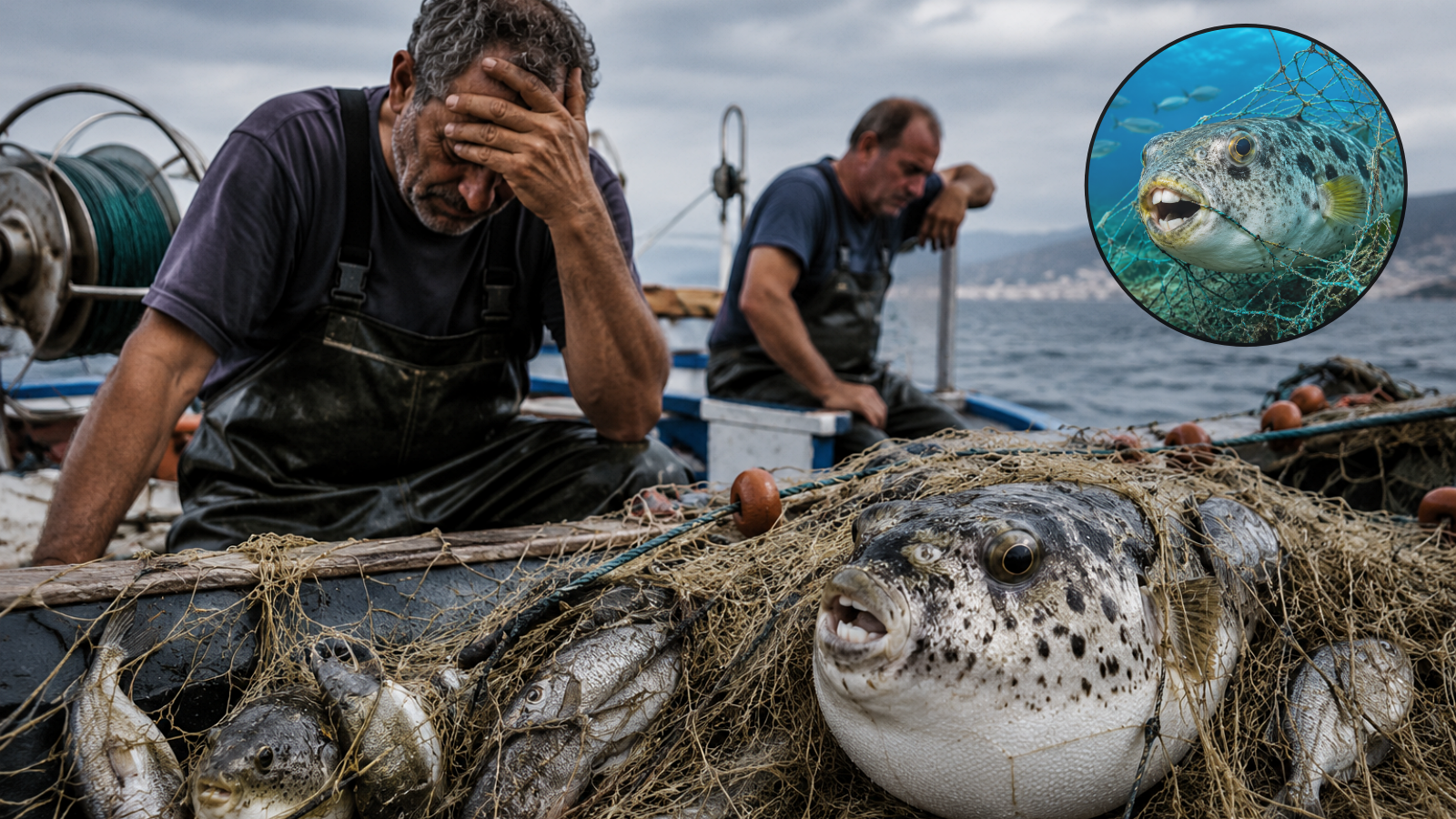
Invasive pufferfish has become a huge ecological and economical challenge for the Greek fishermen (Ai generated image)
Greek fishermen are facing an unusual and growing problem in the Mediterranean: invasive pufferfish with powerful teeth and huge appetites are tearing through fishing nets and reducing local fish stocks.
The culprit is a highly toxic kind of pufferfish known as the silver-cheeked toadfish (Lagocephalus sceleratus). It is a highly invasive species that has spread rapidly across the eastern Mediterranean in recent years, primarily due to ocean warming driven by global warming and climate change.
Originally native to the Indo-Pacific, the fish entered the Mediterranean through the Suez Canal— a phenomenon known as “Lessepsian migration”. But scientists say warming sea temperatures are now helping it expand even further.
The fish has become a major headache for local fishing communities, especially in Greece, where it damages nets with its sharp, beak-like teeth as it feeds.
🇬🇷 Greek fishermen struggle with invasive pufferfish
With massive teeth and a voracious appetite, pufferfish are ruining Greek fishing nets and wreaking havoc on local fish stocks, with warming seas allowing the invasive species to spread through the eastern Mediterranean. pic.twitter.com/SS8Vpu3PMI
— AFP News Agency (@AFP) June 27, 2026
Why are pufferfish such a problem?
The silver-cheeked toadfish is not only destructive but also extremely difficult to control. It feeds aggressively on squid, crustaceans and smaller fish, directly competing with native species and shrinking already stressed fish populations.
Its powerful jaws can bite through fishing lines and nets, leaving fishermen with costly repairs and smaller catches. In AFP‘s video report, many Greek fishermen lamented the huge financial losses this pufferfish situation is causing — with many claiming that it is becoming increasingly difficult to continue fishing. Some are demanding compensation or subsidies from the government.
Accidental catches remain common. What makes the species even more dangerous is that it contains tetrodotoxin, a potent neurotoxin that can be deadly to humans if eaten. Which is why the accidental catches are even more dangerous.
Although some research is going on to find ways to remove the neurotoxins, and use the biomass elsewhere, it is still in progress.
Story continues below this ad
This has raised concerns not only for fisheries but for the broader marine ecosystem, as aggressive invaders can alter food chains and reduce biodiversity.
For fishermen, the problem is becoming both ecological and economic.
What was once an occasional nuisance is now turning into a serious threat—one with sharp teeth, toxic flesh and an appetite that shows no signs of slowing down.
View original source — Indian Express ↗
Related stories

The Hollywood Reporter
EntertainmentJul 4, 2026 · 1 min
AMC Theaters CEO Lets Slip Details of Taylor Swift’s Wedding Before Deleting Post
The Hollywood Reporter

Deadline
EntertainmentJul 4, 2026 · 1 min
Joey Chestnut Stuffs Face For 18th Coney Island Hot Dog Contest Victory; Miki Sudo Tops Among Women
Deadline
ABC News
EntertainmentJul 4, 2026 · 1 min
It's time for your weekly spelling check-up
ABC News

E! Online
EntertainmentJul 4, 2026 · 1 min
Proof Taylor Swift, Travis Kelce Cried During Wedding Ceremony
E! Online