
The Punch
Of akara, a dinner night and the fake DG saga
Cast your mind back to March 29, 2021.
It was the 12th Bola Tinubu Colloquium in Kano, a celebration of the then APC national leader’s 69th birthday.
The man was speaking his mind on insecurity, and he made a proposal that Nigerians would use to pelt him right through the 2023 presidential elections.
“Recruit 50 million youths into the army,” he said. “And what would they eat? Cassava, agbado (corn), yam, will grow here.”
And suddenly, agbado and corn became etched in the imagination of millions of Nigerians. An entire movement of supporters was named “Agbadoists” overnight.
To his critics, he sounded like Marie Antoinette, the French queen who, when told that the peasants had no bread, reportedly said, “Then let them eat cake.”
His team scrambled. The number, they clarified, was five million, not 50 million. It was a slip of the tongue. Some loyalists even insisted the comment was “forward-thinking,” a food security masterstroke. The mockery, however, lingered for months.
Five years on, the President’s dear wife has resurrected the conversation again. And just as they handled her husband, Nigerians are not sparing her either.
Speaking to reporters after the second quarterly meeting of state first ladies at the Villa, Senator Oluremi Tinubu offered what she believed was practical encouragement: that women should not fold their arms in hard times but rise and do something with their hands. And what should they do? Well, she had ideas: sell akara, roast corn, fry kuli-kuli.
She said, “We’re trying to give hope, and to start the akara business doesn’t take a lot of money. To start roasting corn, or somebody even said kuli-kuli, doesn’t take much. We didn’t give them a loan; we gave it to them as a grant. So we’ve encouraged Nigerians as best as we could. What is within our hands, I have given, and I keep giving.”
Sensing the backlash, she later expanded the franchise to include plantain, tomatoes and pepper.
“And I know they’ve been talking that I said akara. It’s not only akara; we also have tomato sellers.
“We have bole, and those also selling pepper and vegetables for us in the market,” she said in Jigawa days later.
From the footage, you could tell she was speaking her church mind.
In my days as an undergraduate, my whole day could be ruined if the akara woman failed to show up. In some areas, akara sellers hold the key to the breakfast of thousands. They are not as insignificant as some claim.
But you see, her comments came barely 48 hours after the presidential spokesman, Bayo Onanuga, went on air to say Nigerians were not as hungry as they claimed to be.
The anger was still fresh. And just as Onanuga was beginning to catch a break, the First Lady chimed in with business ideas.
Like her husband’s agbado moment, her comments divided the house down the middle, with one side accusing the elite of being disconnected from reality and the other preaching the dignity of labour, both speaking past each other, as usual.
Perhaps nobody framed the real issue better than the journalist Blessing Mosugu, whose monologue summarised the matter last week.
The outrage, she argued, was never about akara, corn or kuli-kuli. The problem is scale.
“There’s nothing wrong with honest businesses. Millions of Nigerians earn a decent living selling food every day. There is dignity in labour.
“The question is not whether selling akara is a respectable business. The question is whether that is the scale of opportunity young Nigerians should be aspiring to after years of education, years of innovation and years of hard work.
“Can selling akara comfortably pay school fees? Can it cover rising rent? Can it absorb graduates leaving university with first-class degrees who cannot find jobs? Can it build the kind of economy capable of lifting millions out of poverty?” she said.
While the akara, corn and kuli-kuli economy will continue to thrive, empowerment in today’s Nigeria must mean more than helping people survive. It should mean creating an environment where businesses can grow with fewer bottlenecks, where entrepreneurs can scale and employ graduates in meaningful work.
“This is 2026. Even in rural communities, sustainable development cannot rely on everyone selling the same products. If everybody sells akara, in Nigerian parlance, who go chop am?”
Related News Akara, kulikuli and politics of empowerment
Adeleke’s campaign council demands suspect’s arrest in failed APC DG assassination
FUTA teaching hospital to prosecute staff involved in employment racketeering
To her credit, the First Lady appears to have made peace with the storm. At the inaugural Presidential Press Corps annual dinner at the State House on Thursday evening, her husband looked across the room and jokingly introduced her as “Iya Alakara,” the mother of akara sellers.
The hall roared with laughter. If you cannot beat a nickname in Nigeria, you may as well own it, and the First Family seems to have accepted that there’s little they can do about the new designation Nigerians have given them.
But the dinner was not all banter. Between meals, President Tinubu told correspondents that the media can be everything, watchdog, critic and chronicler, except a megaphone for terrorists.
The President also revealed that he had read the newspapers every morning since taking office, including during the turbulent early months of his reforms.
He admitted that press coverage had tested him personally but ultimately helped him govern more attentively.
Yet, as Tinubu counselled against amplifying the wrong voices, his Presidency is battling an alleged fake voice that operated inside the Federal Secretariat itself for more than a year.
I speak of the fake DG saga involving Adeniyi Adeyemi Mathew, the man who allegedly ran a fictitious body called the Presidential Foreign Intervention Promotion Council, met ambassadors, hosted foreign nationals, and did it all from an office just minutes away from the Villa.
The Presidency said he is facing an eight-count charge bordering on conspiracy, forgery and impersonation at the Federal High Court, with the next hearing fixed for July 27.
But how did he pull it off? The origin, sources have now reliably revealed, was one costly oversight. The appointment letter he presented to the Office of the Head of the Civil Service of the Federation bore the forged signature of the Chief of Staff to the President, Femi Gbajabiamila.
For emphasis, such an appointment, assuming such an agency even exists, cannot be signed by the Chief of Staff but only by the President.
“Where Adeniyi scammed everyone was that he forged a letter bearing the signature of the Chief of Staff. It was not Gbajabiamila’s signature. The Chief of Staff cannot make such an appointment,” one Presidency source with rare access to the details said.
Another official narrated the standard protocol for making such appointments.
“In government, it is the President who appoints. The letter of appointment is then issued by the SGF.
“Everyone who has ever been appointed by this President passed through this process. The Chief of Staff has never appointed anyone at that level. How can he?” the official said.
Somebody at Adeniyi’s first port of call should have known this.
But by the time the alarms first went off last October, the man had settled comfortably into his new role, with all the benefits that came with it.
“Once you have an office at the Federal Secretariat, it confers a very high level of legitimacy on you,” a source said, adding, “He had a letterhead and even a website. Nobody bothered to do the needful anymore until someone raised the alarm.”
The anomaly was first flagged by the NIPC in October, mistaken at first for inter-agency rivalry.
Gbajabiamila, who is said to have sworn that he had never met the man, alerted the DSS himself.
Adeyemi was arrested, arraigned, granted bail, then the prosecution lost steam, and he resurfaced in June to hold a press conference.
Now backed by ace human rights lawyer Femi Falana, SAN, Adeyemi accused the President’s Chief of Staff of making contradictory statements regarding the existence of the PFIPC and the Presidential Economic Advisory Council.
He called for an independent investigation into the activities of the two agencies while alleging that the Chief of Staff received N400m through a proxy and demanded an additional N200m to secure his appointment.
It’s been tit for tat between the Presidency and Adeyemi over the past few weeks.
The referee will have the final say when Adeyemi appears in court on July 27.
View original source — The Punch ↗
Related stories
The Punch
BusinessJul 5, 2026 · 1 min
Atiku to Tinubu: Account for 2% GDP budget omission
The Punch
The Punch
BusinessJul 5, 2026 · 1 min
Electricity subsidy gulps N358bn amid blackouts
The Punch
The Punch
BusinessJul 5, 2026 · 1 min
Dangote backs blue economy to create 500,000 jobs
The Punch
Bloomberg
BusinessJul 5, 2026 · 1 min
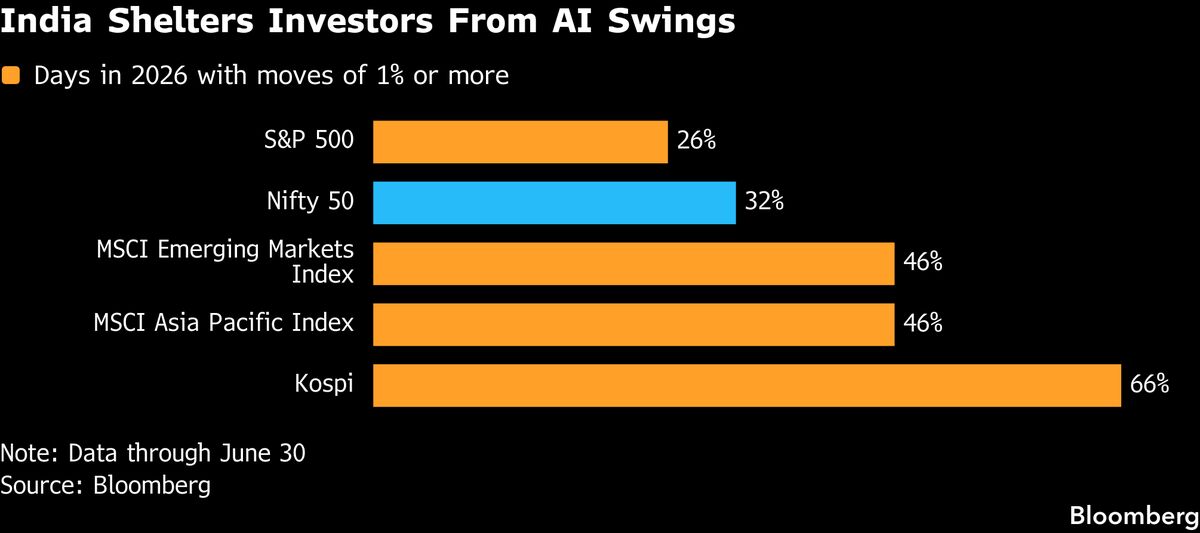
Investors Looking for Shelter From AI Storm Are Turning to India
Bloomberg