Times of Israel
Iranian diplomat says country will ‘definitely’ collect Hormuz fees, defying US
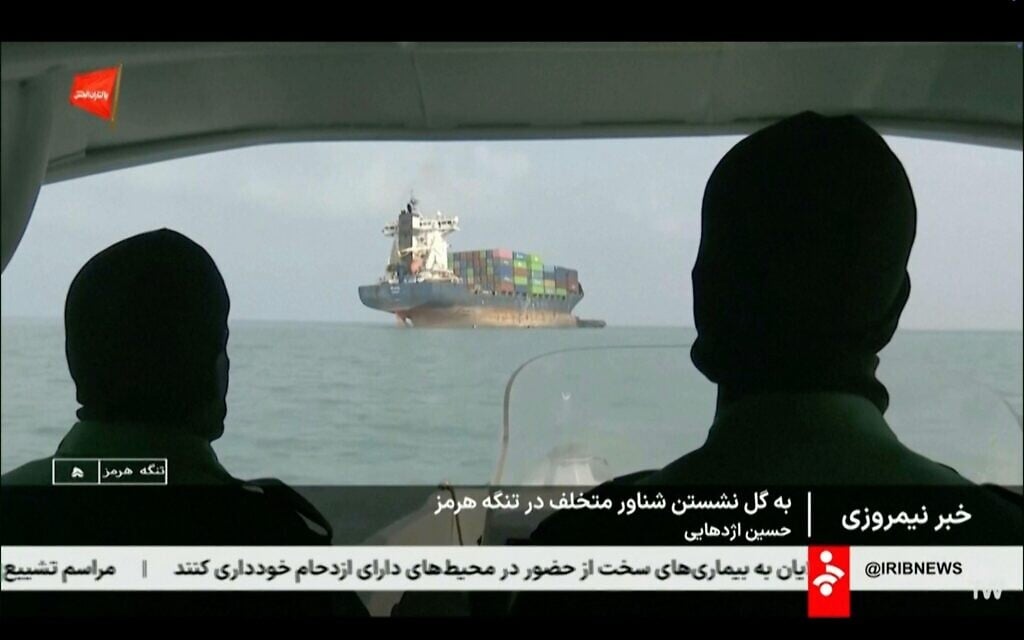
Iran’s ambassador to China insisted Saturday that new fees would be charged to ships transiting the Strait of Hormuz — an idea strongly rejected by Washington — while adding that “friendly” nations could receive special treatment.
The initial deal struck between Iran and the United States to end their war stipulated that commercial ships would transit the strait free of charge for 60 days, but it remains unclear what will be in place after that period.
Iranian Ambassador Abdolreza Rahmani Fazli told the World Peace Forum in Beijing that his country was working in “collaboration and cooperation” with Oman on “new arrangements” for the vital waterway.
“As a country where the Hormuz is part of its territorial waters, we will definitely charge service fees,” Azli said in translated remarks, while insisting such fees would not be a “toll.”
“These new arrangements will be concerning guaranteeing the security of passage through the Straits of Hormuz, supervision of the passage of the vessels… and also guaranteeing and dealing with the environmental consequences of the massive number of ships,” he said.
Get The Times of Israel's Daily Edition
by email and never miss our top stories
By signing up, you agree to the terms
“We will definitely consider special treatment for the countries that were friendly to us and specially stood by us during the hard times,” he added.
US Secretary of State Marco Rubio, in contrast, has said any final deal will bar Iran from charging any sort of fee for passage in the waterway, casting the difference between service fees and tolls as mere semantics.
The strait normally carries one-fifth of the world’s crude oil and liquefied natural gas, but it was all but closed by Iran during its war with the US and Israel, sending energy prices soaring.
Iran lifted its blockade of Hormuz after it struck an initial deal with the US to end the war, and negotiations on a permanent settlement of the conflict are ongoing.
The US and Israel launched the war on Iran in late February in a bid to destabilize its leadership and destroy its ballistic missile and nuclear programs. The fighting entered a truce on April 8, and the US and Iran are engaged in peace talks based on the memorandum of understanding they reached last month.
Israel is not a party to the memorandum or the talks, and Israeli officials have criticized the document for failing to secure a concrete concession from Iran on its nuclear program.
‘Divine retribution’
Meanwhile, as Iran was orchestrating mass, multi-day funeral events for slain supreme leader Ali Khamenei, the chief of Iran’s Islamic Revolution Guards Corps (IRGC) Navy warned that “divine retribution” against the US and Israel was “not far away.”
Just in:
IRGC Appoints New Navy Commander
Brigadier Admiral Ali Ozmaei has been named the new commander of the IRGC Navy. pic.twitter.com/i683v8GCWO
— Alireza Akbari (@itsalireza_akb) July 4, 2026
“We are confident that divine retribution against the terrorist US and the illegitimate Zionist regime is not far away, and that the banner of truth will remain raised at the summit of dignity and power,” said Rear Admiral Ali Ozmaei in a statement to mark Khamenei’s funeral, according to Iranian state media.
“Those who committed this crime believed they could halt the path of truth, but instead they exposed themselves to history’s condemnation and to the wrath and severe retribution of this nation,” he added, referring to Khamenei’s killing in the US-Israeli strikes that opened the war.
Ozmaei appears to be the replacement for Alireza Tangsiri, who was killed in an Israeli airstrike in March.
View original source — Times of Israel ↗
Related stories

Indian Express
TechnologyJul 5, 2026 · 1 min
Weather Today Live Updates: IMD issues red alert in Mumbai after torrential rain leaves city waterlogged
Indian Express

The New York Times
TechnologyJul 5, 2026 · 1 min
Rebel Catholics Defy Vatican’s Calls to Return to Mainstream Church
The New York Times

South China Morning Post
TechnologyJul 5, 2026 · 1 min
Chinese AI chip start-up exits stealth mode, bets on 3D stacking to bypass US controls
South China Morning Post

TechRadar
TechnologyJul 5, 2026 · 1 min
I compared the AirPods Max 2 vs the Sony WH-1000XM6 for hours, and it's a really close contest with some clear…
TechRadar