OnlineKhabar
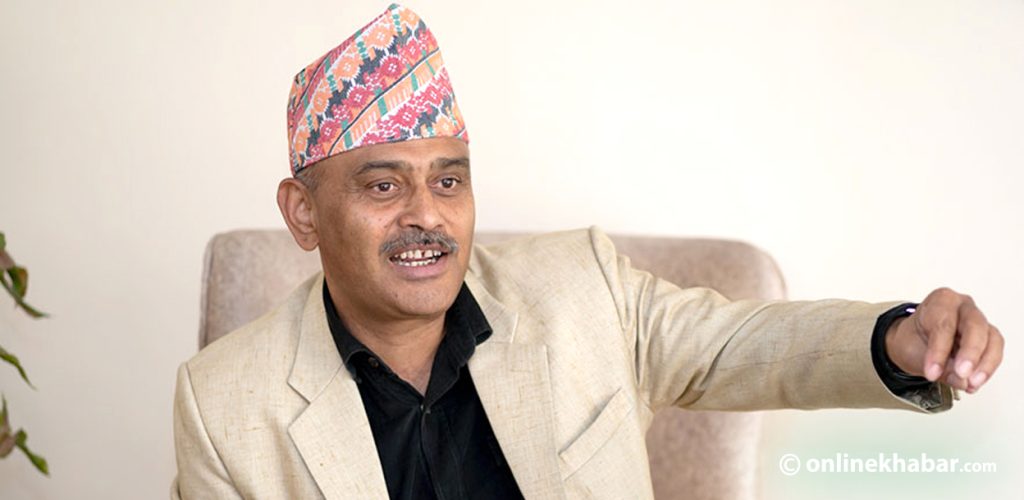
Bhola Thapa’s next challenge after KU success is fixing Tribhuvan University
Professor Bhola Thapa, PhD, has been appointed Vice Chancellor of Tribhuvan University, the largest university of Nepal. Thapa, who previously served as Vice Chancellor of Kathmandu University, has now taken on the responsibility of reforming TU. Active in engineering education, hydropower technology, and energy research, he has been entrusted with improving the university.
After completing his bachelor’s degree in engineering, Thapa began working in a government job. But one day he came across a notice inviting applications for an assistant professor position at Kathmandu University (KU). He applied, and his name was selected.
After joining KU, he completed both his master’s and PhD there. Having done his bachelor’s in mechanical engineering, his master’s research focused on turbine runners, and his PhD examined sand-particle erosion in hydraulic machinery.
Thapa completed his proficiency certificate level from Amrit Science Campus and his school education from Laboratory School, Kirtipur.
Journey at KU
Thapa joined KU as an assistant professor through open competition. As he continued his studies, he rose steadily through the ranks at KU, becoming a professor, assistant dean, executive dean, and registrar. He was appointed Vice Chancellor of KU in January 2021, serving through the COVID-19 period.
As KU’s Vice Chancellor, he emphasised incorporating Nepal’s traditional and ancestral knowledge and skills into higher education alongside modern science. He said prioritising plans to bring traditional knowledge, skills, and heritage into higher education had been one of his goals.
Recognising a shortage of qualified schoolteachers, his tenure saw the start of teacher training programs, aimed at producing technical teachers and building instructor capacity.
During his time as KU Vice Chancellor, yoga was introduced as an undergraduate subject, and a Bachelor’s in Craft and Design was launched as an alternative to engineering. He explained that since many traditional idol-making artisans had migrated away and the skill was being lost, the university started the course to help preserve it. He added that given Nepal’s wealth of heritage sites, monasteries, temples, and palaces, they launched a Bachelor’s in Heritage program as well.
He also worked to attract foreign students and take KU’s courses international. During his tenure, a yogic science program began in Tirupati, India, and KU ran a joint program with IIT Madras where students studied one year in Nepal and the next year in India.
Thapa has worked in the education sector for more than three decades and has experience leading higher-education development through international partnerships.
As KU Vice Chancellor, he emphasised academic development, research, and international collaboration; under his leadership, KU’s engineering faculty received Quality Assurance and Accreditation (QAA) from the University Grants Commission. He believes Nepal has the potential to become an education hub.
Focus on research
His research spans hydropower, hydraulic turbines, sediment-induced erosion in rivers, energy systems, green hydrogen, energy conservation, and hydro-mechanical systems, and he has contributed to advancing hydropower technology research internationally. The turbine testing laboratory built at KU was developed under his leadership.
He remains active in policy-making, education, and research roles at national and international institutions, having served as a member of the Medical Education Commission, a senate member of Far Western University, a member of the Nepal Academy of Science and Technology, a member of Guru Kashi University (India), and chairperson of the management committee of Ullens School, Khumaltar.
He has played leadership roles in international projects, authored three books, and published over 100 international journal and conference papers along with 30 articles. He has received national and international honours.
Challenges at TU
Thapa plans to bring his accumulated experience to bear on developing TU, though TU presents far greater challenges than KU did. More than 75% of the country’s higher education students study at TU, the nation’s oldest and largest university.
Frequently disrupted by strikes and closures, TU poses a challenge for the newly appointed Vice Chancellor in working together with students, faculty, and staff.
Implementing the academic calendar, holding exams on time, and publishing results promptly will be challenges for him. The government has already stated that the new Vice Chancellor’s priority should be recovering funds from professors who misused land allocations and study leave.
View original source — OnlineKhabar ↗
Related stories
Times of Israel
PoliticsJul 5, 2026 · 1 min
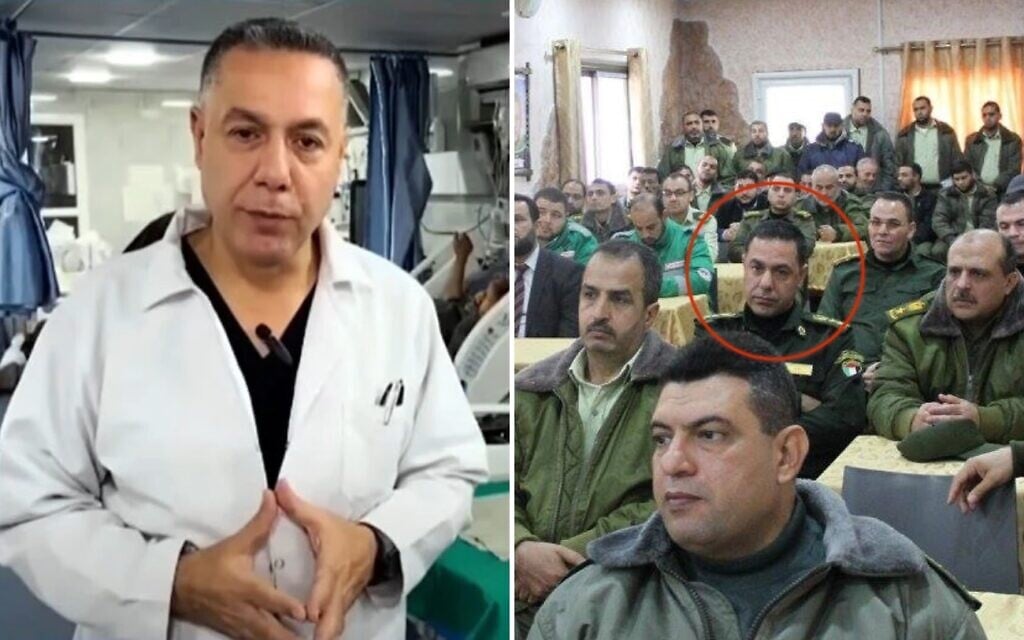
Life of detained Gaza hospital chief/Hamas officer at immediate risk, lawyer says
Times of Israel

France 24
PoliticsJul 5, 2026 · 1 min
Live: Putin and Zelensky speak to Trump ahead of NATO summit in Turkey
France 24

South China Morning Post
PoliticsJul 5, 2026 · 1 min
First money, now ‘loyalty’: Trump’s demands test Nato chief’s flattery tactics
South China Morning Post

Rio Times
PoliticsJul 5, 2026 · 1 min
Peru’s Transition Begins: Fujimori Opens Her Office as the Opposition Digs In
Rio Times