Indian Express
Timeless Tales: The poster about life’s true purpose on my father’s wall
4 min readChandigarhJul 5, 2026 01:04 PM IST
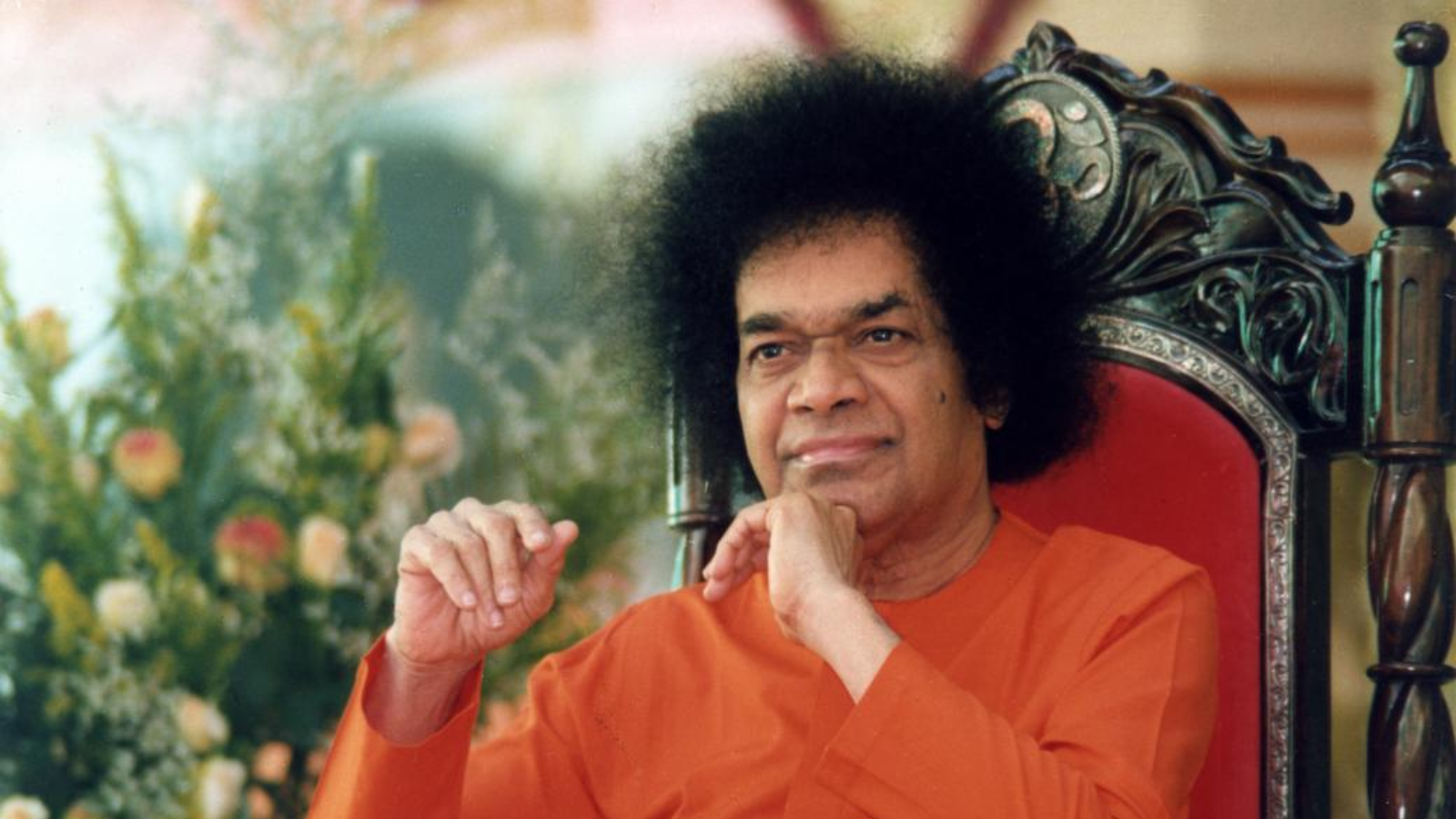
Sri Sathya Sai Baba offered a more inward interpretation of dharma, artha, kama, and moksha.(File Photo)
Written by Priya S Tandon
There are some lessons that arrive long before we are ready to understand them.
One of mine hung quietly on the wall of the office of my late father, Chief Justice of India M M Punchhi. It was an ordinary poster, its edges curling with age, carrying Sri Sathya Sai Baba’s interpretation of the four Purusharthas—the four goals of human life.
As a child, I would read it mechanically whenever I visited him. The words meant little then.
Follow the master.
Face the devil.
Fight to the end.
Finish the game.
Like many things we inherit from our parents, the poster remained in my memory long after the office was gone. Only much later did I realise that it was offering not instructions, but a way of looking at life.
Indian philosophy speaks of four purusharthas: dharma, artha, kama, and moksha. They are traditionally understood as righteousness, material well-being, desire, and liberation. Sri Sathya Sai Baba offered a more inward interpretation, one that has stayed with me over the years.
Story continues below this ad
Dharma, he said, is not confined to religion or ritual. It is the eternal principle that resides within us as conscience, quietly distinguishing right from wrong. It is that inner voice which reminds us that our actions matter because we are all connected in ways we often fail to recognise.
Artha is commonly understood as wealth. There is nothing wrong with earning wealth; indeed, it is essential for a secure and dignified life. Yet wealth, by itself, cannot become life’s destination. Sai Baba suggested that the higher form of artha is the wealth of God-awareness—the ability to live with gratitude and humility, and with the awareness that material success alone can never satisfy the human spirit.
Kama, too, acquires a different meaning. It is usually associated with worldly desires and pleasures. In this interpretation, however, it becomes the aspiration to overcome those very desires that bind us, directing our energies towards something higher.
And then comes moksha—the ultimate freedom, where one transcends the endless cycle of birth and death and experiences oneness with the divine.
Story continues below this ad
Adi Shankaracharya captured the longing for that freedom in a verse that has echoed across centuries: “There is an endless cycle of birth and death. Again and again one returns to the mother’s womb. This ocean of worldly existence is difficult to cross. O Lord, protect me and save me through Your grace.”
As I have grown older, I have often found myself returning to that forgotten poster.
Modern life encourages us to measure success through possessions, professional achievements, and social recognition. We spend years accumulating, striving, and competing. Yet despite unprecedented prosperity, many people continue searching for something that remains elusive.
Perhaps the purusharthas were never meant to reject the material world. They simply remind us that wealth and desire are valuable only when guided by dharma. Without that moral compass, success can become restless and abundance strangely empty.
Story continues below this ad
Our scriptures distinguish between preyas—the immediately pleasurable—and shreyas—the truly beneficial. The former delights the senses; the latter nourishes the soul. The challenge of every generation is to enjoy the first without losing sight of the second.
Sri Sathya Sai Baba expressed this beautifully when he said that together with earning, there should also be the yearning for shreyas. Without that higher aspiration, worldly gains alone can never bring fulfilment.
Whenever I think of my father now, I remember that modest office and the fading poster that watched silently over the room. It asked for no attention and offered no sermons. It simply waited for the day when experience would teach what childhood could not.
Perhaps that is how timeless wisdom works. It does not insist on being understood immediately. It patiently accompanies us through life until, almost unexpectedly, we discover that the answers we have been searching for were hanging quietly on a wall all along.
(Priya S Tandon writes a daily blog on spirituality)
View original source — Indian Express ↗
Related stories

The Punch
WorldJul 5, 2026 · 1 min
NDLEA arrests Nigerian-British grandma with 13kg cocaine hidden in plantain peels
The Punch

South China Morning Post
WorldJul 5, 2026 · 1 min
Russian warships dock in Chinese port ahead of Joint Sea exercises
South China Morning Post

Euronews
WorldJul 5, 2026 · 1 min
England’s Lake District unveils €47 unlimited travel pass for visitors
Euronews
The Punch
WorldJul 5, 2026 · 1 min
Explain ₦1.3bn allocation to ‘fictitious’ presidential council, SERAP tells Akpabio, Abbas
The Punch