
BBC
I watched grooming victims 'disappear', says social worker
Every afternoon, as a Bradford social worker drove past a secondary school, she noticed the same thing.
Taxis waiting outside. Girls leaving school, climbing into the back seats and disappearing.
"They weren't sitting normally," she recalls. "They were trying not to be seen."
This was during the 1980s and 1990s - long before organised child sexual exploitation became a national scandal, before public inquiries, court cases and political arguments.
The worker, who asked not to be identified, said she raised her concerns with the school and through all the proper channels because, she says, "it clearly worried me".
Now, four decades later, many of the questions she was asking are finally at the heart of Baroness Anne Longfield's statutory inquiry into grooming gangs.
Her memories offer a reminder that, for some professionals, the warning signs were never invisible.
As a social worker, she says many of the girls she came across genuinely believed they had been loved.
"They didn't understand what they had experienced was abuse. We had to help them unravel that," she told BBC Politics North.
Many were escaping difficult lives at home, she says. What looked like freedom, affection or independence was instead exploitation.
Today, she still works with many women living with the consequences, both physical and psychological, of those experiences.
Some are now in their 50s, she says, and have never received the support they needed.
While the criminal justice system has made significant progress in recent years in prosecuting and jailing criminal groomers, she believes convictions alone cannot answer the deeper questions now facing the inquiry.
West Yorkshire Police says that, as of June this year, 242 defendants have been jailed following investigations into non-recent group-based child sexual exploitation over the last decade.
Fifty-seven investigations remain ongoing across the force area, including 24 in Bradford and Keighley.
However the effectiveness of those sentences has come under increased scrutiny this week as it emerged one former gang ringleader in Rochdale had been released early.
But the former social worker believes true accountability extends far beyond the courts and prison system.
"There has to be an acknowledgement that this was happening and nobody picked it up.
"When girls disappeared, why didn't anybody ask where they'd gone? Why weren't those questions asked?"
Like victims and survivors, the worker expresses frustration that, after decades of investigations and political debate, many of the fundamental questions remain unanswered.
Her reflections also challenge the way the public and political conversation has evolved.
"It wasn't only white girls who were abused. Asian girls were abused too," she says.
Many, she believes, never disclosed what had happened because of shame, honour and fear of bringing disgrace on their families.
"As time has gone on, the public narrative has become focused in one direction, but victims came from different backgrounds. At the heart of all this, victims and survivors still aren't talked about enough."
She also rejects the suggestion that nobody tried to raise concerns.
"There were people within the community trying to raise concerns. We needed support, protection and investment to do that safely. We didn't have it."
Those reflections raise a broader question about what Baroness Longfield's inquiry is really there to achieve.
It is not simply about establishing who failed decades ago.
It is about understanding why warning signs went unheeded, why some victims were apparently heard, albeit belatedly, while others were not, and whether the institutions responsible for protecting vulnerable children are now capable of doing that job.
The inquiry has promised to place victims and survivors at the centre of its work.
For the "disappeared" victims this former social worker still supports decades later, and for the brave survivors still campaigning for justice, that promise is about more than accountability.
It is about finally being seen, believed and heard.
"There will be women watching this inquiry unfold now on the news and they'll be thinking 'that happened to me too, but nobody's asking me how I feel'," she says.
For this former social worker, that is now the question that matters most.
Whether Baroness Longfield's inquiry can finally give a voice not only to those whose experiences came to define this scandal, but also to those whose stories were never heard.
Related stories

The Punch
WorldJul 5, 2026 · 1 min
Real Madrid sign Dutch defender Dumfries from Inter Milan
The Punch
The Punch
WorldJul 5, 2026 · 1 min
FG denies spending ₦8tn outside budget, says IMF report misrepresented
The Punch
The Punch
WorldJul 5, 2026 · 1 min
Bauchi gov mourns aide, ex-deputy governor’s children killed in car crash
The Punch
South China Morning Post
WorldJul 5, 2026 · 1 min
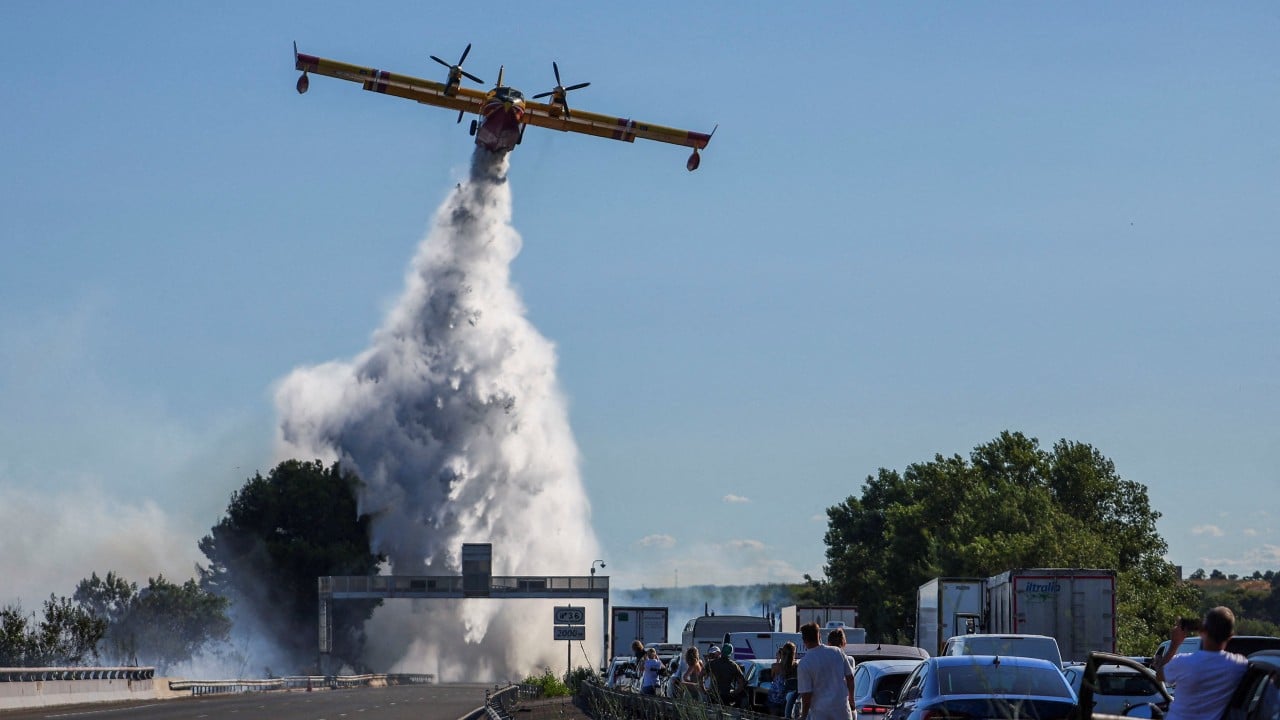
Fires ravage France, Spain, Portugal forests as Europe’s temperatures rise again
South China Morning Post