Indian Express
From farms to factories, why Punjab’s urea diversion case matters nationally
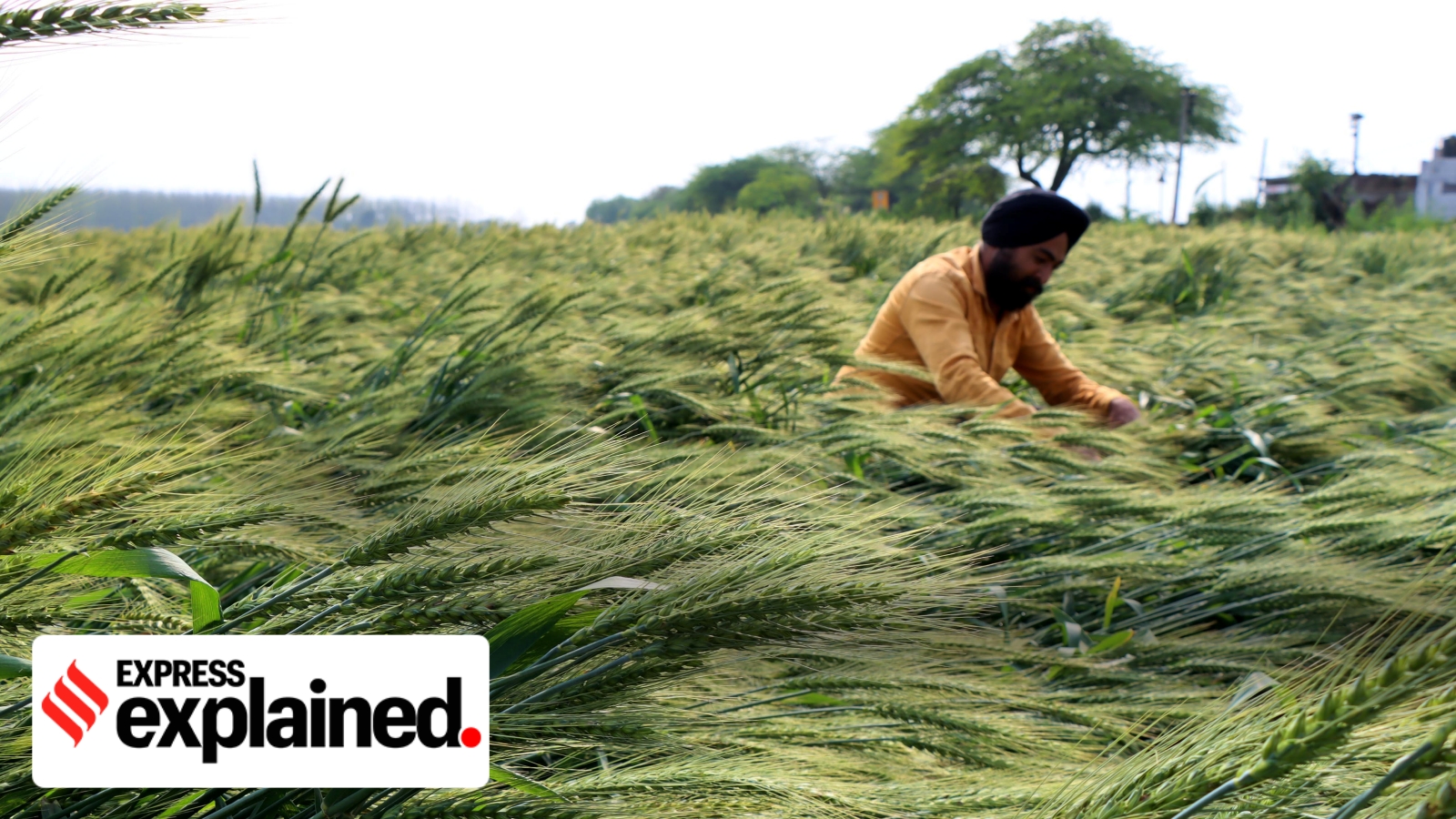
The Punjab government recently took action against seven officials of Markfed and Milkfed, the state’s marketing and milk producers’ cooperatives respectively, along with the registration of multiple FIRs over the alleged diversion of subsidised agricultural urea for industrial use.
Investigators allege that neem-coated agricultural urea was diverted from the farm supply chain, repackaged, and passed off as technical-grade urea for industrial and commercial use. This has revived a longstanding national concern: why does fertiliser meant exclusively for farmers continue to find its way into factories and cattle-feed plants illegally?
While the latest case has put Punjab in the spotlight, the issue itself is far from new. Over the years, several states have reported similar instances of subsidised urea being diverted despite mandatory neem coating, digital tracking, and repeated enforcement drives by the Centre.
The case once again raises questions about the economics behind such diversion, the science separating agricultural and industrial urea, and the implications for farmers, industry, and the country’s fertiliser subsidy programme.
Why the case became a national story
Although the issue is not confined to Punjab, the latest case has become a window into a much larger question: how can India protect one of the world’s largest fertiliser subsidy programmes while ensuring that industry receives legitimate raw material through legal channels?
The case has become significant because it involves cooperative institutions that are closely linked to the state’s agricultural economy. Punjab authorities have chargesheeted officials of Markfed and Milkfed, and police have registered FIRs against cooperative officers and private suppliers after laboratory testing reportedly found that material labelled as technical-grade urea was actually subsidised agricultural-grade urea. The investigation suggests that fertiliser meant for farmers may have been routed to cattle-feed plants and other non-agricultural uses.
The case challenges the assumption that mandatory neem coating has fully solved the diversion problem. When the Centre introduced 100% neem coating, the objective was not only to improve nitrogen-use efficiency in fields but also to make fertiliser unsuitable for industrial consumption. The Punjab investigation indicates that diversion networks may still be finding ways to bypass those safeguards.
Story continues below this ad
Agricultural urea vs industrial urea
Both products contain the same basic chemical compound — urea — but they are sold for different purposes and under different regulatory regimes. Agricultural urea is a fertiliser used to supply nitrogen to crops. It is heavily subsidised, neem coated, and regulated under the Fertiliser Control Order. Industrial or technical-grade urea is used in products such as resins, plywood adhesives, melamine, textiles, dyes, moulding compounds, and some cattle-feed formulations. It is sold at market price without subsidy.
The difference is visible even in the packaging. Agricultural urea is generally supplied in yellow bags carrying mandatory fertiliser markings and a neem-coating declaration, while technical-grade urea is typically sold in plain white bags carrying industrial specifications. Investigators in Punjab have treated this packaging distinction as an important piece of evidence while tracing the movement of diverted material.
Why diversion continues
The economics behind the alleged diversion are striking. A 45-kg bag of agricultural urea is sold to farmers for ₹266.50, or about ₹5.92 per kilogram, because the Union government bears most of the cost through subsidy. Technical-grade urea used by industries is not subsidised and generally sells for ₹55-65 per kg, (Rs 2,700-3,000 per bag) with Punjab investigators themselves citing a market price of around ₹61 per kilogram.
That enormous price gap creates a powerful incentive for diversion. The subsidy, therefore, creates a massive arbitrage opportunity for anyone willing to divert fertiliser from farms to factories. According to investigators, even with the extra step of removing neem oil, it remains cheaper to buy and process subsidised fertilisers.
Story continues below this ad
The country uses roughly 35-38 million tonnes of urea annually, and almost all of it is intended for agriculture. Industrial demand is much smaller — around 15-16 lakh tonnes — yet even a small diversion from the agricultural pool can represent a significant loss because the subsidy component is so large.
“For a manufacturer, illegally obtaining subsidised agricultural urea can reduce raw-material costs dramatically. Even after the expense of transport, repackaging or de-coating, the material may still be far cheaper than legally procured technical-grade urea. This is why enforcement agencies have repeatedly found diverted fertiliser reaching sectors such as plywood, resin manufacturing, textiles and cattle-feed processing,” said a senior officer in Markfed.
“The existence of legal industrial supply does not eliminate the incentive for diversion. Instead, the huge gap between subsidised and market prices creates a parallel economy in which middlemen can earn large margins simply by moving fertiliser from the agricultural distribution chain into industrial channels,” a police officer told The Indian Express.
During a crackdown in 2022, government estimates suggested that 10-12 lakh tonnes of subsidised urea were being diverted every year, leading to subsidy leakage of roughly Rs 6,000 crore annually. The Department of Fertilisers responded by creating special Flying Squads empowered to inspect warehouses, transport vehicles, retail outlets, and industrial units across states. Those inspections uncovered illegal stockpiles, repackaging operations, and movement of agricultural urea into non-farm sectors.
Story continues below this ad
The Centre also urged states to strengthen monitoring under the Essential Commodities Act and the Fertiliser Control Order. The Punjab investigation has now become one of the most prominent recent examples involving cooperative institutions — Markfed and Milkfed — rather than private traders alone.
What this means for farmers, industry, and taxpayers
For farmers, diversion can mean delayed supplies during sowing seasons, local shortages, and black marketing. Even temporary disruptions in fertiliser availability can affect planting decisions and crop productivity. When subsidised stock is diverted away from villages, farmers may be forced to travel farther or purchase material at inflated prices.
For legitimate industry, diversion creates unfair competition. Companies that import or purchase technical-grade urea legally must compete with operators obtaining subsidised material through illegal channels. This distorts pricing, encourages tax evasion, and undermines investment in formal supply chains.
For taxpayers, the loss is direct. The fertiliser subsidy is intended to support agricultural production, not reduce industrial input costs. Every bag diverted to a factory represents public money that has failed to reach its intended beneficiary. The environmental cost is also significant because additional fertiliser production may be required to replace material lost from the farm sector.
Story continues below this ad
The larger lesson from Punjab is that technology alone cannot solve the diversion problem. Neem coating, digital tracking, and QR coding have made diversion more difficult, but not impossible. Effective enforcement, transparent procurement, real-time movement tracking, and strict penalties remain essential if India is to protect one of the world’s largest fertiliser subsidy programmes while ensuring that industry receives technical-grade urea through legitimate markets.
View original source — Indian Express ↗
Related stories
Indian Express
TechnologyJul 5, 2026 · 1 min
Hindus will not spare anyone who loots a temple by misusing Hindutva, says Uddhav Thackeray
Indian Express
TechRadar
TechnologyJul 5, 2026 · 1 min
'Future medicines may be designed much like software'
TechRadar

TechRadar
TechnologyJul 5, 2026 · 1 min
How to watch England vs Australia: Live stream ICC Women's T20 World Cup 2026 final for FREE
TechRadar

CNET
TechnologyJul 5, 2026 · 1 min
NotebookLM Alternatives: Which Similar AI Tools Are Worth Your Time?
CNET