Ars Technica
Chemical accidents rise as Trump administration proposes weakening safety rules
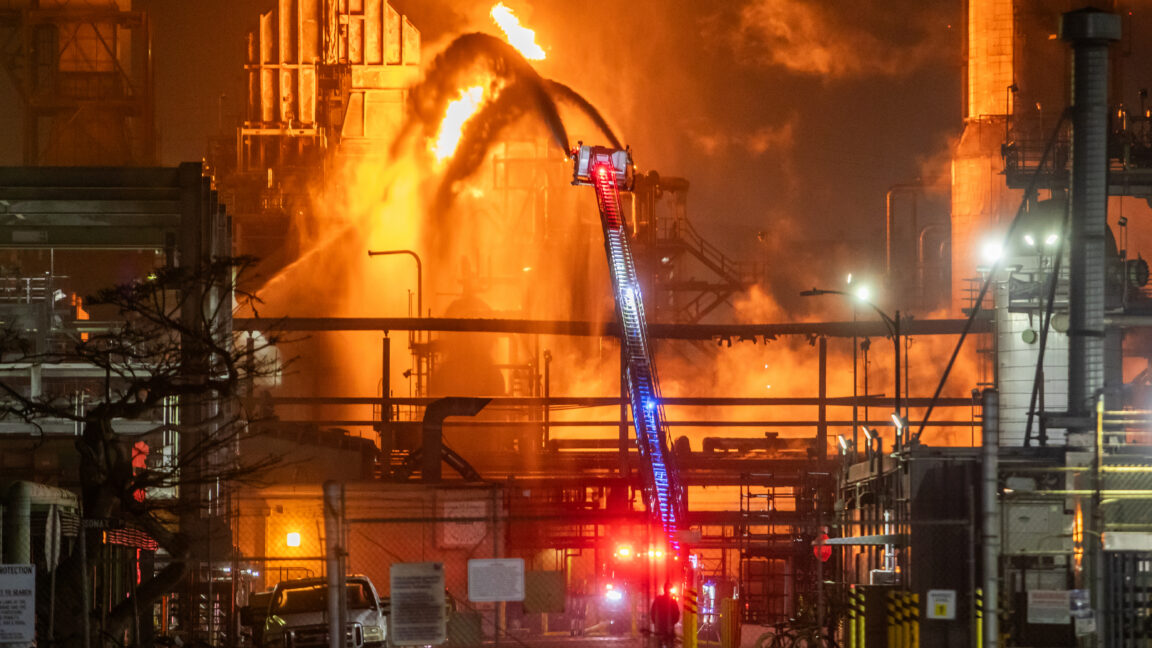
Physicist Ronald Koopman appeared at a Southern California Air District meeting in 2018 to talk about what seemed like an arcane scientific topic: hydrofluoric acid dispersion and water mitigation testing. Hydrofluoric acid, also known as hydrogen fluoride or HF, is used to manufacture a range of materials, including refrigerants, gasoline, fluorine-based pesticides and fluoropolymers like those used to make Teflon. It’s also one of the most corrosive and dangerous chemicals known. Koopman conducted experiments with the chemical in the 1980s that warned about the potential of deadly accidents at facilities that use the hazardous materials. With the Trump administration poised to roll back rules intended to protect workers and communities from catastrophic industrial chemical releases, and a new analysis showing rising rates of chemical accidents, Koopman’s presentation on highly hazardous materials has taken on a new urgency. Read full article Comments
View original source — Ars Technica ↗
Related stories

TechCrunch
TechnologyJul 5, 2026 · 1 min
Almost 90 new unicorns have been minted so far this year — here they are
TechCrunch

Indian Express
TechnologyJul 5, 2026 · 1 min
As monsoon batters Garib Nagar, only 16 families to get rehab homes this week
Indian Express

Indian Express
TechnologyJul 5, 2026 · 1 min
Hindus will not spare anyone who loots a temple by misusing Hindutva, says Uddhav Thackeray
Indian Express

TechRadar
TechnologyJul 5, 2026 · 1 min
'Future medicines may be designed much like software'
TechRadar