Indian Express
Spike in tree-fall deaths raise questions over Mumbai’s road concretisation drive
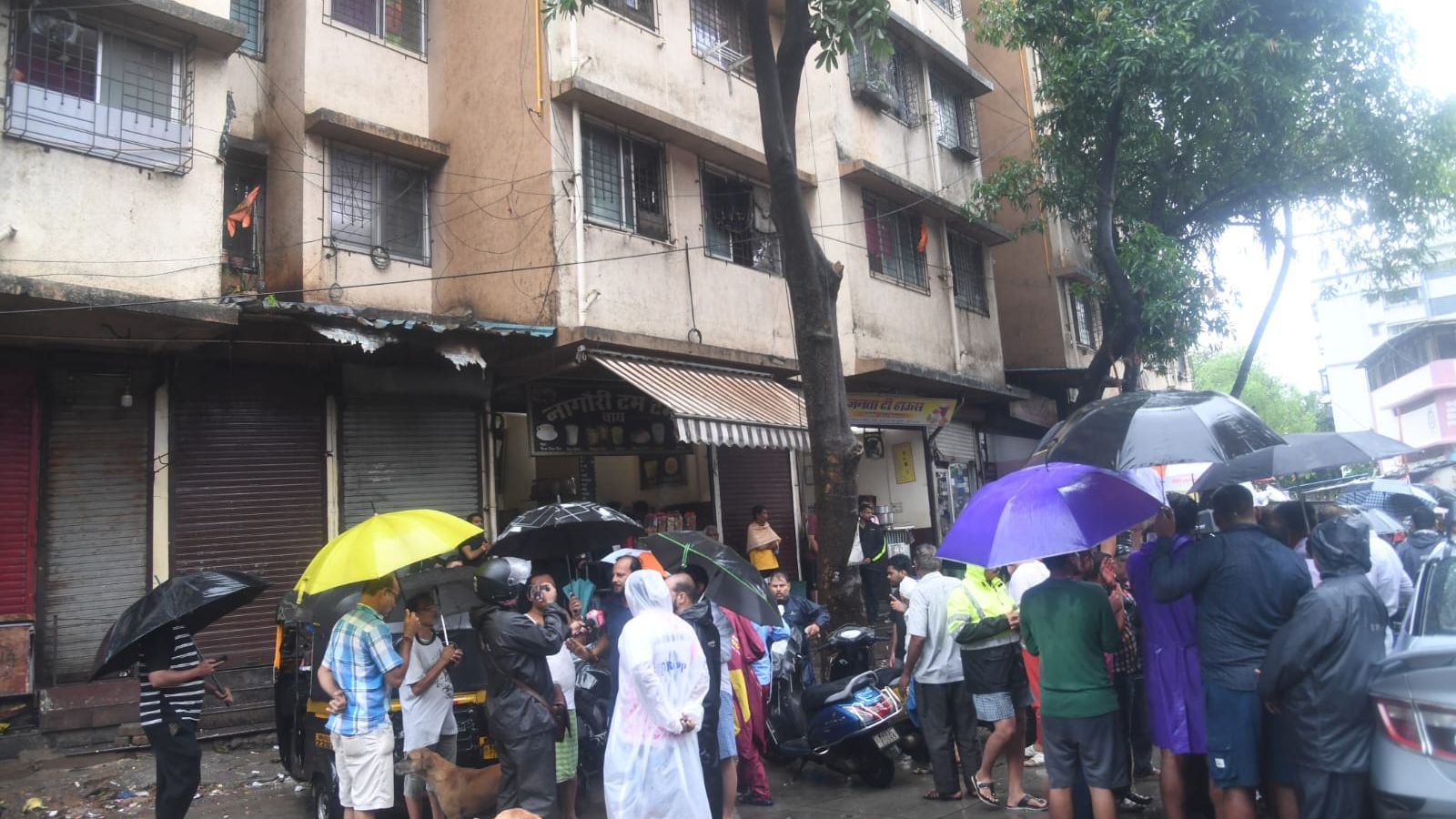
At least 203 tree-fall incidents were reported across the island city and the eastern and western suburbs, as heavy rain continued to lash Mumbai on Sunday. The incidents claimed the life of 63-year-old Yunus Kundawala, who was killed after a tree branch collapsed on him in Kurla on Sunday morning, taking the toll from tree-collapse incidents in the city to three within the past week.
The Brihanmumbai Municipal Corporation (BMC) attributed the unusually high number of tree-fall incidents to high winds, which blew at speeds of 72-79 kmph on Sunday—more than three times the average wind speeds typically experienced during the monsoon.
However, the recent spate of tree collapses has also brought the BMC’s ambitious road concretisation project under renewed scrutiny. Records show that two of the three fatal tree-collapse incidents reported over the past week occurred along roads that had recently undergone concretisation, raising fresh questions over whether the project may have compromised the stability of roadside trees.
Civic records further indicate a rise in both tree-fall incidents and fatalities since the road concretisation project was launched in 2023. A brainchild of Deputy Chief Minister Eknath Shinde, the project was announced in January 2023 after Prime Minister Narendra Modi performed its groundbreaking ceremony.
BMC data shows that tree-fall incidents have remained consistently high since then, with 687 incidents reported in 2023, 653 in 2024 and 855 in 2025. Between 2023 and July 5, 2026, at least 11 people lost their lives in tree-collapse incidents, compared with four deaths recorded between 2020 and 2022.
Environmentalists have questioned whether widespread concretisation around tree bases has contributed to the increase in such incidents.
“These kinds of incidents happen only in Mumbai because no other city concretises tree basins. As a result, trees are left with barely two square metres of exposed soil and their base gradually weakens. The roots cannot expand, soil moisture reduces and the trees become dehydrated internally. They lose their structural balance and collapse at the first spell of heavy rain,” said Stalin D, environmentalist and director of NGO Vanashakti.
Story continues below this ad
Following the June 30 incident in Chembur, in which 11-year-old Vihaan Srivastava was killed after a peepal tree collapsed on his school bus, Municipal Commissioner Ashwini Bhide directed that concrete slabs around the base of all trees in Mumbai be removed.
Stalin, however, cautioned against carrying out the exercise during the monsoon.
“What remains beneath these trees is only shallow soil, which cannot adequately support fully grown trees. At present, the concrete itself is holding the base together. If the slabs are removed now, many trees could become even more vulnerable to collapse. The safest course would be to wait until the monsoon is over before beginning the work,” he said.
The concerns also revive questions over compliance with existing environmental safeguards.
Story continues below this ad
In 2013, the National Green Tribunal directed that a one-metre buffer be maintained around the base of every tree to facilitate root growth and water percolation. Subsequently, the BMC’s Deputy Municipal Commissioner (Disaster Management) issued mandatory guidelines requiring adequate protection for trees during road concretisation, excavation, trenching and other infrastructure works. In 2019, the Union Ministry of Environment, Forest and Climate Change further directed urban local bodies to maintain a non-concretised six-metre-by-six-metre area around trees in public spaces to ensure healthy root growth and rainwater percolation.
Data accessed by The Indian Express shows that between October 2023 and March 2026, Mumbai’s Tree Authority issued 428 notices to the BMC’s Roads Department and utility agencies for damaging tree roots during infrastructure works. During the same period, the roots of 2,615 trees were found to have been damaged during road concretisation and related excavation.
Officials from the BMC’s Tree Authority admitted that these norms are frequently violated, with concrete often being laid right up to the tree trunk, restricting aeration and water absorption while weakening the tree’s structural stability.
Civic officials told The Indian Express that contractors executing road concretisation projects often lack adequate understanding of how tree basins should be protected during excavation. They added that the Tree Authority is frequently not consulted before road-digging work begins.
Story continues below this ad
“Tree roots need to firmly anchor themselves to the soil. When the root zone is covered with concrete, the roots gradually lose their grip and the tree’s foundation weakens. As a result, trees can collapse even after a short spell of heavy rain,” a Tree Authority official said.
Donna Sequeira, a Mumbai-based wildlife biologist, said unscientific road widening and concretisation can severely affect tree stability.
“During road works, a significant portion of a tree’s root system is often cut without any scientific assessment of its above- and below-ground spread. Such indiscriminate damage weakens the tree and makes it far more susceptible to environmental stresses such as strong winds and heavy rainfall, ultimately leading to large-scale tree falls,” she said.
View original source — Indian Express ↗
Related stories
South China Morning Post
TechnologyJul 6, 2026 · 1 min
China’s EV deliveries remain stuck in downward spiral, exacerbating industry worries
South China Morning Post

CNA
TechnologyJul 6, 2026 · 1 min
Hit anime film Demon Slayer: Infinity Castle arrives on certain streaming platforms on Jul 28
CNA

TechPana
TechnologyJul 6, 2026 · 1 min
Bara Police Arrest One After 13-Year-Old Girl Dies by Suicide Following Viral Video
TechPana
Indian Express
TechnologyJul 6, 2026 · 1 min
Mumbai Weather Today Live Updates: City on red alert as torrential rain triggers flood threat, travel disruptions
Indian Express