The Guardian
Here is a police statement: we are not woke or anti-woke, or fighting a culture war. We just strive to be fair | Matt…
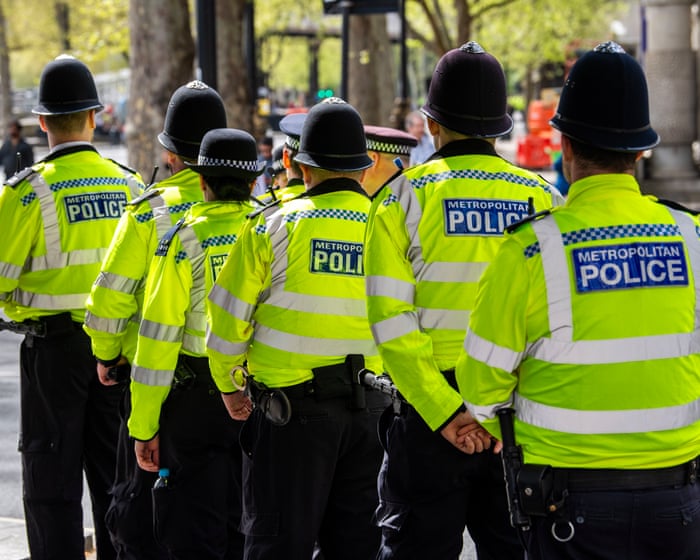
It has become almost impossible to discuss policing today without someone trying to place it on one side of a political argument or another. Depending on who is speaking, policing is either “too woke” or not progressive enough. Police leaders are criticised for doing too much, then criticised for doing too little.
This can become a distraction from the question that really matters: are we building a police service capable of protecting the public, treating people fairly and keeping communities safe?
Today, the police leadership commission publishes its review covering England and Wales. After hearing from thousands of officers, staff and members of the public, it reached a stark conclusion: leadership in policing is not consistently of a high enough standard to deliver the service the public deserves. That is not a conclusion reached lightly, and it will make uncomfortable reading for many of us who have dedicated our careers to leading police forces across the country.
Throughout the commission’s work, we saw remarkable examples of leadership at every level. We met officers and staff making difficult decisions under intense pressure, protecting vulnerable people, disrupting criminals and serving communities with extraordinary professionalism and commitment.
But we found that the way policing selects, develops and promotes leaders is fragmented and inconsistent. Crime is becoming more complex, more digital and more international. Organised criminal networks, terrorism and hostile state activity increasingly overlap. Technology is transforming both crime and crime fighting, while public expectations continue to rise.
Too much of police leadership, and too much of policing itself, remains a postcode lottery. Standards, performance and opportunities vary too widely. The quality of leadership available to officers and communities should not depend on where someone happens to live or serve. Crime does not stop at force boundaries. Increasingly, neither can policing.
That is why the commission’s recommendations sit alongside wider police reform. There is growing recognition that we need a more coherent system – strong nationally where consistency and very specialist skills matter – but also a system that protects local policing by removing duplication and inefficiency.
The commission also heard a clear message from officers and staff: policing has never lacked talent, but it has lacked a sustained and systematic approach to developing and supporting future leaders. That challenge is particularly acute on the frontline. More than 22,000 sergeants are responsible for supervising officers, and many told us they had not been properly prepared to lead. More than one in five newly promoted sergeants and inspectors responding to our survey reported receiving no formal leadership training more than two years after promotion.
For too long, leadership development has been underinvested in by forces under strain and by successive governments. The commission’s conclusion is simple: police leadership development must become a properly funded national priority.
That is why we recommend a national academy of police leadership, stronger development for frontline supervisors, reforms to promotion processes and a new leadership fast-stream to identify and prepare future leaders.
Yet perhaps the most striking evidence we heard was not about training programmes or promotion systems. It was about the environment in which police leaders now operate. Complex, rapidly changing and polarised.
Increasingly, public debate demands that policing chooses a side, and yet the role of police leadership is not to participate in the culture wars. It is to uphold the law impartially, maintain public confidence and focus relentlessly on preventing crime, protecting victims and bringing offenders to justice.
The choice facing policing is not between being “woke” or “anti woke”. Those labels are imposed from outside. The real question is whether policing is effective, fair and trusted. As leaders, we have not been sure-footed enough to convince the public that we have upheld vital principles of impartiality and legitimacy – rigorously understanding the case for inclusion and acting when trust is damaged, without being drawn into responses that are confusing or look ideological.
The commission’s report is deliberately practical rather than sensational across these themes. It is based on evidence, not anecdotes. It reflects what we heard from thousands of people across policing and beyond: that the service’s greatest asset is its people, but that those people deserve a better, more consistent and more inclusive system for developing and supporting leaders.
And in an age when so many want policing to choose a side, the most important thing police leaders can do is remain firmly focused on the public we serve.
Matt Jukes is deputy commissioner of the Metropolitan police
View original source — The Guardian ↗
Related stories
OnlineKhabar
PoliticsJul 6, 2026 · 1 min
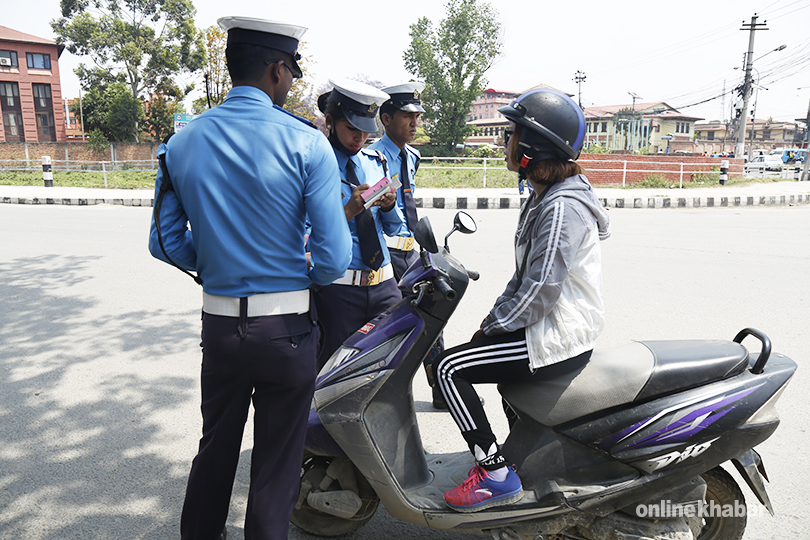
Over 2,000 vehicles fined for violating traffic rules in 24 hours
OnlineKhabar

OnlineKhabar
PoliticsJul 6, 2026 · 1 min
Rhododendron saplings planted in Mundum trekking route
OnlineKhabar
OnlineKhabar
PoliticsJul 6, 2026 · 1 min
Valley Police calls for unified efforts against narcotic drugs, human trafficking
OnlineKhabar

TASS
PoliticsJul 6, 2026 · 1 min
Trump’s call with Putin shows Russia-US dialogue maintained, lawmaker argues
TASS