OnlineKhabar
A hundred days on, Nepal’s sports minister has little to show
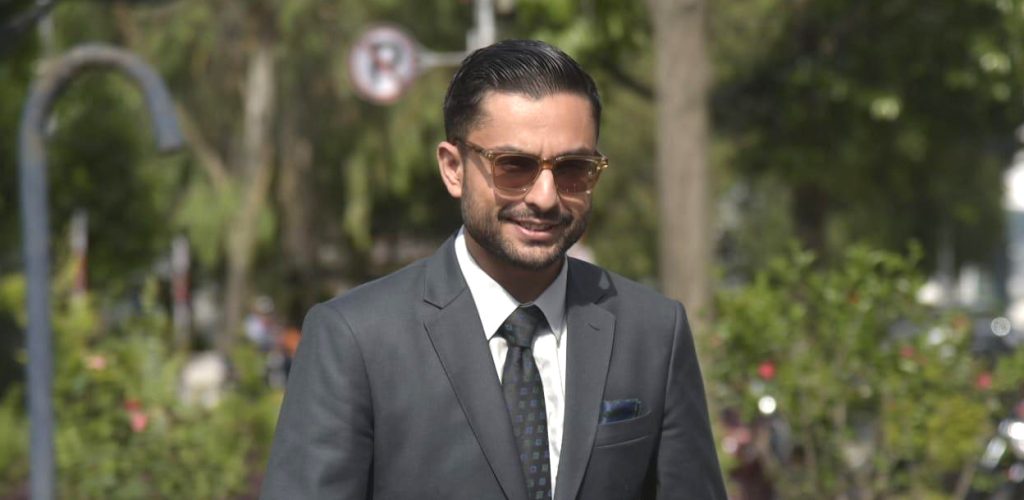
Education and Sports Minister Sasmit Pokharel recently released a public account of his ministry’s work over its first hundred days. In that account, the minister even counted the CAVA Women’s National League, an event organised by the Nepal Volleyball Association, at which he had simply appeared as a guest, as one of his ministry’s achievements.
Minister Pokharel, who has repeatedly faced accusations of failing to prioritise sports, listed just 8 of his 42 stated accomplishments under sports. Among these “achievements”, he counted the CAVA league and the annual President’s Running Shield, which runs every year regardless of the ministry’s involvement.
The hundred-day tally also includes coach training for 60 people and treatment recommendations arranged for 27 athletes, family members, and staff. Additionally, the Mission 2026 special training program, which had been halted since the second week of February, resumed on May 15.
That resumption came only about two months after Pokharel’s appointment as minister, yet it, too, is listed as one of his achievements. Also counted: sports-science training for 13 people aimed at boosting athletes’ performance, national competitions run by sports associations, and Nepali athletes’ participation in competitions abroad.
Despite repeated policy and legal commitments to link sports with education, Minister Pokharel has not taken any concrete steps in his first hundred days to actually connect the two and this is nowhere to be found in his self-reported achievements either.
Former National Sports Council (NSC) executive member Kamal Bhattarai remarked that, aside from deciding which teams to send to the Asian Games, he sees no solid work done by the sports minister in these hundred days. He said programs like the President’s Cup and CAVA volleyball listed among the minister’s achievements are simply regular annual events that predate this government, and that no new policy on how to advance sports is visible.
Former NSC member-secretary Yubaraj Lama echoes this, saying no work has happened beyond infrastructure development. He argued there’s no concrete movement toward amending the Sports Act or introducing a new action plan, and suggested that because the minister oversees both education and sports, his attention appears tilted more toward education. Lama, who also heads the Nepal Karate Federation, further alleged that the government has repeated its old pattern of budget allocation, denying funds to an authentic body like the Karate Federation while distributing crores of rupees to private clubs based on personal access.
Former NSC vice-chair Dhruba Acharya is likewise disappointed, saying there’s no sign of new work or new policy giving sports momentum. He called the budget allocated for the 10th National Games inadequate, noting that while 60–65 crore rupees had previously been set aside for the National Games.
“Only 45 crore has now been allocated is impractical and insufficient, ” he says, adding that holding the Games within the first trimester isn’t feasible and that the budgeting was done carelessly.
Minister Pokharel has appointed Siddhi Byanjankar as his chief advisor, an elder brother of Kumar Ben, chief advisor to Prime Minister Balendra Shah. Sports-association officials say that despite being “only” an advisor, Siddhi has come to dominate most of the ministry’s affairs, showing up from inaugurations to farewells; one official said most people who came seeking budget ended up meeting Siddhi himself, who would send them off with assurances.
During this period, Minister Pokharel did visit Surkhet stadium as part of monitoring efforts, but has failed to take any concrete initiative on fixing a date for the repeatedly postponed 10th National Games. Originally, after the 9th National Games in Gandaki Province in Ashoj-Kartik 2079, the 10th Games were slated for Karnali Province in Mangsir 2081 BS, but after repeated postponements, no date has been finalised.
It has now been over four months since the Nepali national cricket team returned from the T20 World Cup, yet players still haven’t received the prize money promised for qualifying.
The minister also took on the All Nepal Football Association (ANFA) but did not succeed there either; Nepali football is now largely at a standstill after FIFA suspended it, citing government interference.
Pokharel, who also serves as government spokesperson, publicly announced that the TU cricket ground lease agreement with the Cricket Association of Nepal (CAN) would be extended. Nearly two months after the lease expired, that extension still hasn’t happened.
Sports also failed to make it into the new government’s hundred-point governance reform agenda. The resulting policies and programs shrank sports funding compared to the previous fiscal year; aside from the budget allocated toward sports infrastructure, Minister Pokharel has made little other financial commitment to sports activities.
After becoming minister, Pokharel did push forward investigations into old cases involving both CAN and ANFA, though little came of these either. After the government voided old political appointments, he appointed a vice-chair and three other members to fill vacancies at the NSC but faced criticism for appointing people without administrative experience.
A committee was also formed to resolve problems within sports associations, but with the 20th Asian Games approaching, the issues remain unresolved, resulting in two separate associations selecting athletes for the same sport.
Ghanashyam Bista, deputy chief of the ruling Rastriya Swatantra Party’s Youth and Sports Department, said some positive efforts have come from the government in the hundred days, citing the organizing of some competitions, athlete encouragement, and preparation for international participation, but added that these alone aren’t enough, and what Nepali sports really needs is long-term policy, institutional reform, and clear, good-governance leadership.
View original source — OnlineKhabar ↗
Related stories
ABC News
PoliticsJul 6, 2026 · 1 min
'We're behind': Calls to overhaul ACT's school language education pathways
ABC News

The New York Times
PoliticsJul 6, 2026 · 1 min
As Trump Cools on NATO, Turkey Hosts Summit Meeting
The New York Times

The New York Times
PoliticsJul 6, 2026 · 1 min
Zyn’s Popularity Has Tobacco Companies Racing to Cash In
The New York Times

The New York Times
PoliticsJul 6, 2026 · 1 min
Erdogan-Trump Friendship Can Help NATO, Turkey’s Foreign Minister Says
The New York Times