Indian Express
Explained: The Mumbai-Pune Expressway Missing Link and why its first monsoon closure matters
5 min readUpdated: Jul 6, 2026 01:40 PM IST
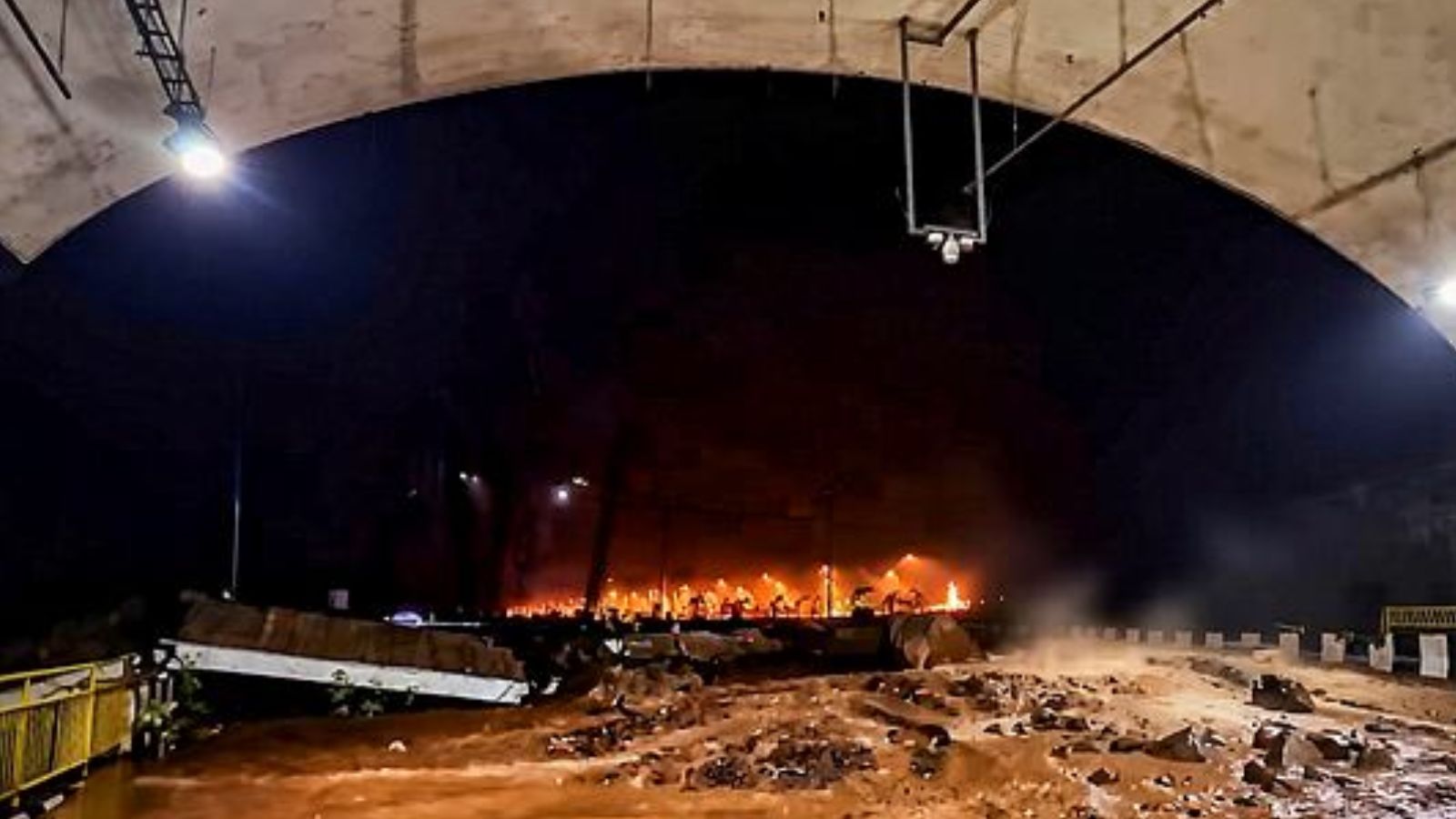
A view of the damaged section of the Missing Link on the Mumbai-Pune Expressway following heavy rainfall, in Pune. (PTI Photo)
Barely nine weeks after Chief Minister Devendra Fadnavis inaugurated the Rs 6,695-crore Mumbai-Pune Expressway Missing Link as a permanent solution to the expressway’s worst traffic bottleneck, a monsoon-triggered landslide has partially shut the corridor, forcing traffic back onto the old Mumbai-Pune Highway it was built to bypass.
The disruption marks the first major monsoon test for one of Maharashtra’s most ambitious infrastructure projects, raising questions about the structural readiness of a corridor that was projected as a safer, faster and more reliable alternative to the accident-prone Khandala ghat section.
What is the Missing Link?
The Missing Link is a 13.3-km stretch built to bypass the 19.8-km Khandala ghat section between Khopoli and Sinhgad Institute. For years, traffic on the Mumbai-Pune Expressway was forced to converge on this six-lane stretch, negotiating steep gradients, hairpin bends and sharp curves that frequently witnessed crippling traffic jams and accidents.
The new alignment shortened the journey by nearly 6 km, reducing travel time between Mumbai and Pune by 20 to 30 minutes, with a speed limit of up to 100 kmph.
Why was it considered an engineering marvel?
Spread across 13.3 km, the Missing Link comprises two twin tunnels measuring 1.6 km and 8.9 km, two high-speed viaducts and a 183-metre cable-stayed bridge soaring above Tiger Valley, making it the tallest bridge of its kind in the country.
The 8.9-km main tunnel, excavated nearly 180 metres below Lonavala Lake using the New Austrian Tunnelling Method, is among the widest road tunnels in the world. Engineers also had to construct temporary access passages through the Sahyadri hills. Designed to withstand the region’s high winds, dense fog and intense monsoon rainfall, the project took nearly three decades to materialise.
Why did it take so long?
The need for an alternative to the accident-prone ghat section was first identified by RITES in 1995, even before the Mumbai-Pune Expressway was built.
Story continues below this ad
The Maharashtra Cabinet approved the project in 2017, construction began in 2019 and was subsequently delayed by the Covid-19 pandemic, difficult geological conditions and the engineering challenges of tunnelling through the Western Ghats.
At its inauguration on May 1, Fadnavis described the Missing Link as Maharashtra’s new “connecting link”, while the Maharashtra State Road Development Corporation (MSRDC) projected it as a permanent solution to congestion and accidents on the ghat section. MSRDC Managing Director Anilkumar Gaikwad had said the project would make travel between Mumbai and Pune “quicker and more reliable” by eliminating one of the busiest chokepoints on the expressway.
What happened on Monday?
The Missing Link suffered its first major disruption barely nine weeks after it was opened to traffic, after a landslide and damage to a retaining wall forced authorities to suspend vehicular movement through the stretch. The landslide resulted in a heavy flow of water on the Pune-to-Mumbai carriageway.
According to the State Highway Police, the incident occurred in the early hours of Monday following continuous heavy rainfall. Officials said a landslide took place near the end of the first tunnel on the Pune-to-Mumbai carriageway of the Missing Link, damaging a retaining wall and rendering the route unsafe for traffic.
Story continues below this ad
The Pune-to-Mumbai carriageway was immediately closed. Authorities initially suspended traffic in both directions, but around 10 am reopened the Mumbai-to-Pune carriageway while the Pune-to-Mumbai corridor remained shut. Since both the Missing Link and the adjoining flyover remained closed for Mumbai-bound traffic, vehicles travelling from Pune were diverted through the old Mumbai-Pune Highway (NH-48), with traffic being restored in phases.
The disruption came at a time when the old Pune-Mumbai Highway was also shut after a tree collapsed onto a power line, while heavy rainfall led to water accumulation at several locations. With both routes affected simultaneously, authorities appealed to motorists to postpone travel between Pune and Mumbai and follow official traffic advisories.
The closure comes barely nine weeks after the project’s inauguration, when it was showcased as the biggest upgrade to the region’s infrastructure since the country’s first access-controlled expressway opened in 2002.
Its closure after the landslide is the first major disruption on the corridor during the monsoon. It also underlines the challenge of building transport infrastructure through the Sahyadris, where heavy rainfall and unstable slopes continue to test even the state’s most ambitious engineering projects. Ironically, the road conceived to free motorists from monsoon disruptions on the old ghat section ended up sending them back to that very route within its first rainy season.
View original source — Indian Express ↗
Related stories

Euronews
TechnologyJul 6, 2026 · 1 min
South Korea to funnel AI chip tax windfall into public investment, housing and jobs
Euronews

TechSathi
TechnologyJul 6, 2026 · 1 min
OPPO A6s Pro Price in Nepal: Specifications, Features & Availability
TechSathi

Rio Times
TechnologyJul 6, 2026 · 1 min
Bitcoin Holds Above $63,000 as the July Rebound Extends
Rio Times

TechRadar
TechnologyJul 6, 2026 · 1 min
'We’re seeing a clear divide': Many business leaders admit they only have a 'limited understanding' of AI budgets
TechRadar