Philippine Daily Inquirer
PH's upper-middle income status won't raise loan costs yet, Palace says
MANILA, Philippines — Malacañang on Monday sought to ease concerns that the Philippines’ transition to upper middle-income country status could immediately raise government borrowing costs, saying any impact on loans from multilateral development institutions would likely be delayed and minimal.
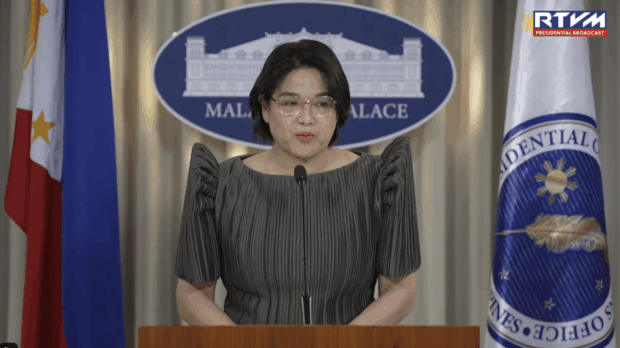
Citing Finance Secretary Frederick Go, Palace press officer Claire Castro said changes in loan terms tied to the country’s economic classification would not immediately affect government financing plans.
“The effect on multilateral loans will not take effect immediately,” Castro quoted Go as saying.
Article continues after this advertisement
READ: Go welcomes Philippines’ upper middle-income status
FEATURED STORIES
BUSINESS
BUSINESS
BUSINESS
According to Castro, most multilateral institutions monitor whether a country maintains its income classification for about 3 years before any adjustments to lending rates are considered.
She said any potential impact would be “very minimal,” and “only affects very few [loans].”
“So, for 2026 or 2027, there will be no effect, and if ever there is, it will be very minimal,” Castro added.
Asked whether specific grants currently received or being sought by the Philippines could be affected by the country’s new economic status, Castro said the Department of Finance had yet to provide details.
Article continues after this advertisement
Meanwhile, Castro said the government’s financing strategy for the 2026 budget and preparations for the 2027 National Expenditure Program would remain unchanged.
“For now, there is no effect because, as we said, this will be evaluated over a three-year period, so the 2027 budget will not be affected,” she said.
Article continues after this advertisement
Malacañang’s clarification came after President Ferdinand Marcos Jr. earlier raised the possibility that the country’s elevated income status could influence access to certain grants and financing arrangements.
The World Bank recently upgraded the Philippines to upper-middle income economy status after the country’s gross national income (GNI) per capita reached $4,850 in 2025, surpassing the threshold of $4,636.
The Philippines has remained in the lower-middle-income category since 1987.
The government acknowledged that with the new income status, the country may begin losing access to official development assistance (ODA), such as concessional loans, subsidized loans, and grants from the usual development partners like the World Bank and the Asian Development Bank.
To prepare for the reduced access to ODA, Department of Economy, Planning, and Development Secretary Arsenio Balisacan said the government is working on making the public-private partnership (PPP) system “more robust.”
It may also need to rely more on bond markets and standard loans to finance its big-ticket infrastructure and development projects.
Your subscription could not be saved. Please try again.
Your subscription has been successful.
The government expects that these losses will be offset by greater access to private capital markets. /mr
View original source — Philippine Daily Inquirer ↗
Related stories

The Punch
WorldJul 6, 2026 · 1 min
INEC partners NGO to boost voter registration awareness in Ondo
The Punch
The Punch
WorldJul 6, 2026 · 1 min
VIDEO: I was the olodo, now I feed them all, Portable recounts family, education struggles
The Punch
The Punch
WorldJul 6, 2026 · 1 min
Masquerade kills 24-year-old in Oyo, suspect arrested
The Punch
The Punch
WorldJul 6, 2026 · 1 min
Video of ‘fake’ agency DG confronting Gbajabiamila resurfaces
The Punch