OnlineKhabar
The digital pulse and the structural fracture: 100 days of Balen government
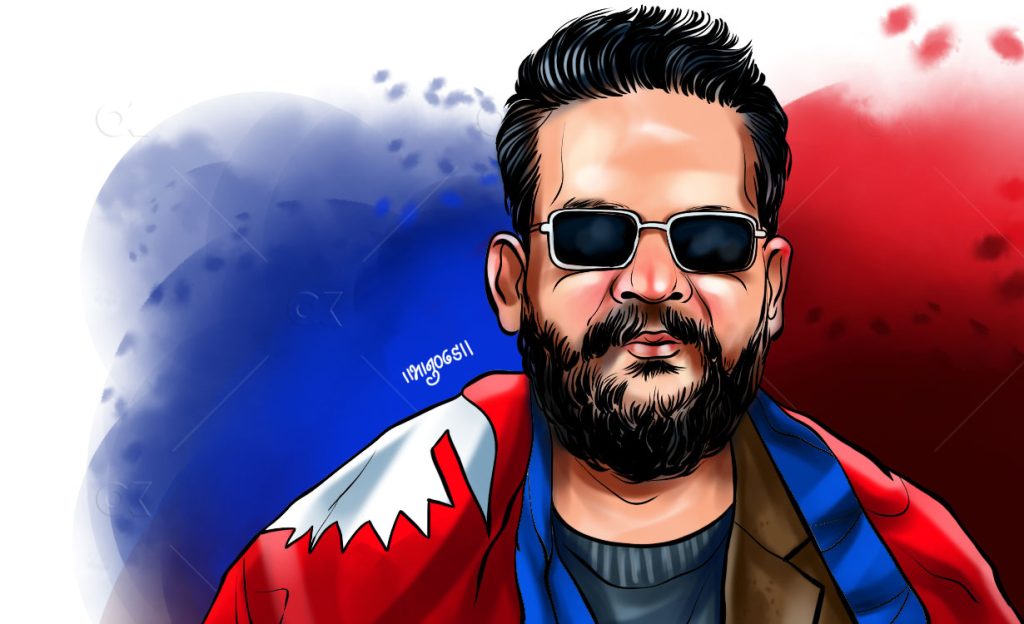
On July 4, 2026, the administration of Prime Minister Balendra “Balen” Shah marked its first 100 days in office. For a nation historically governed by a revolving door of traditional political elites, the rise of the 36-year-old structural engineer, former Kathmandu mayor, and rapper turned Prime Minister represents a tectonic shift in South Asian politics. Propelled to power by the sweeping “Gen Z protests” of late 2025 and a decisive electoral mandate that secured 182 seats for the Rastriya Swatantra Party (RSP), Shah’s honeymoon period has closed with the release of an ambitious 100-point progress report card.
Presented at Singha Durbar by Government Spokesperson and Education Minister Sasmit Pokharel, the administration claims an overall execution rate of 87.2 per cent. While the headline-grabbing accomplishments feature a sharp reduction of federal ministries from bloated numbers down to 18 (saving an estimated Rs 20 billion annually), the dissolution of party-affiliated student and trade unions, and aggressive anti-corruption crackdowns, the true test of this populist-technocratic experiment lies within a sector that directly dictates the mortality of the population: healthcare.
As a physician who has spent over two decades navigating both the clinical frontlines and the journalistic trenches of Nepal, I approach this 100-day milestone with a mixture of cautious optimism and systemic weariness. The Shah administration has successfully utilised digital disruption to cure superficial bureaucratic inertia. Yet, the deep-seated structural fractures of the Nepali healthcare system, a flawed national insurance model, a massive brain drain fueled by the overproduction and underpayment of doctors, stagnant research infrastructure, and regressive medical education policies, remain largely unaddressed.
Part I: The 100-day healthcare diagnostic – tech over clout
For decades, public health governance in Nepal was characterised by systemic opaqueness. A prime example was the long-ignored statutory mandate requiring all hospitals to allocate 10 per cent of their beds free of charge to impoverished and marginalised patients. Historically, these beds were distributed via political nepotism, verbal chicanery, or hidden behind a veil of administrative obfuscation.
The Shah administration’s response was characteristically technocratic. Within its first 20 days, the Ministry of Health and Food Hygiene launched the Free Health Portal, digitising real-time bed occupancy across the country.
Free Health Portal Integration
Real-Time Bed Tracking (Available vs. Occupied Free Beds)
213+ Connected Hospitals (Federal & Provincial)
QR-Code Driven Public Grievance Architecture
According to ministry data, over 213 hospitals have uploaded their operational matrices to the portal, and more than 2,262 historically disenfranchised patients have accessed free inpatient care without needing political leverage. By shifting the locus of control from hospital administrators to an open-access public dashboard, the government has achieved a rare feat in Nepali public administration: immediate accountability.
Simultaneously, the administration initiated electronic health record (EHR) pilots and digital dashboards at five cornerstone federal institutions: Bir Hospital, the National Trauma Centre, Kanti Children’s Hospital, Pokhara Academy of Health Sciences, and Bharatpur Hospital. To combat the notoriously dismal sanitary standards of public wards, the government enforced the Hospital Service Improvement Procedure, 2082, completing cleanliness audits across federal health institutions and subjecting hundreds of personnel to rigorous soft-skills training. In remote, topography-challenged regions where a simple obstetric complication translates to a death sentence, the rollout of subsidised air ambulance protocols via agreements with helicopter firms has established a vital safety net.
These are commendable victories. They prove that when executive will is married to digital systems, the logistical operational friction of hospitals decreases. However, as any clinician knows, treating symptoms with a digital analgesic does not cure a systemic, malignant pathology.
Part II: The chronic pathologies of Nepali healthcare policy
To understand why the medical community remains deeply anxious despite the shiny 100-day report card, one must diagnose the structural crises crippling our healthcare ecosystem.
1. The broken conduit of national health insurance
Nepal’s National Health Insurance Program was introduced with great even-handed rhetoric, but it has become a struggling sham. The model is woefully underfunded, beset with huge reimbursement delays to hospitals and stifled by a bureaucratic structure that discourages private health care providers. Patients are forced to pay out of pocket at private pharmacies because public hospitals are always short on essential medicines due to delayed payments from the state insurance system that is supposed to pay hospital dues on time. Due to administrative paralysis, a policy which was intended to prevent medical bankruptcies is instead accelerating them.
2. The great medical exodus: Overproduction, exploitation, and low salaries
Nepal is currently trapped in a bizarre medical paradox: we are overproducing doctors relative to our domestic capacity to employ them, yet our rural sectors remain desperately under-doctored. The unregulated expansion of medical colleges has turned medical education into a commercial enterprise. Every year, thousands of new medical graduates enter the market, only to find an economy incapable of absorbing them into dignified, secure positions.
The baseline salary for a medical officer in Nepal is an insult to the years of gruelling academic and emotional labour required to earn an MBBS. Many young doctors work in private clinics or corporate hospitals under exploitative contracts, earning less than delivery drivers or entry-level corporate clerks. This economic asphyxiation, combined with the lack of clear pathways for professional growth and institutionalised specialisation, has triggered a devastating brain drain. We are subsidising the healthcare systems of the US, UK, Australia, and the Middle East with our finest young minds, leaving our own infrastructure hollowed out.
3. The rote cage of medical education and stagnant infrastructure
The teaching methods within our medical profession are still in the middle of the 20th century. It is overly focused on rote learning in pursuit of standardised tests, divorced from contemporary research-based medical teaching. Public hospitals can nurture academic excellence only with superior diagnostic infrastructure, clinical trial frameworks, and a subspecialisation pipeline. There is a lack of institutional support in Nepal for a young physician planning to specialise in advanced gene therapy, interventional radiology or translational medical research.
4. Punitive and redundant regulations: The CEE post-graduate conflict
Perhaps the most glaring policy failure, and a point of profound frustration among young physicians, is the heavy-handed regulatory framework enforced by the Medical Education Commission (MEC). Currently, the state mandates that any Nepali doctor who wishes to pursue postgraduate (PG) training or a residency abroad must return to Nepal to sit for the domestic Common Entrance Examination (CEE) simply to obtain an eligibility certificate or a “No Objection Certificate” (NOC) for foreign departure.
This regulation is logically flawed, legally punitive, and redundant. If a doctor passes an incredibly competitive global exam, such as the USMLE (USA), PLAB/UKMLA (UK), or AMC (Australia), and secures a residency spot in a world-class international teaching hospital, forcing them to return to sit for a domestic exam designed for local placement is an exercise in bureaucratic vanity.
The rationale often given by regulators is “quality control.” But this completely ignores the fact that the Nepal Medical Council (NMC) already possesses a robust, non-negotiable licensing and screening mechanism. When these doctors return to Nepal after completing their foreign PGs, they must pass the NMC licensing examination to be registered and practice as a consultant in the country. Duplicating this gatekeeping mechanism before they leave only serves to frustrate young doctors, trap them in administrative limbo, and permanently alienate them from ever returning to serve their homeland.
Part III: The prescription – A strategic policy roadmap for the Shah administration
If Prime Minister Balen Shah wants his legacy to extend beyond electronic dashboards and into the foundational renewal of the republic, his administration must transition from tactical governance to structural statesmanship. Here is the multi-pronged policy prescription required to salvage Nepali healthcare:
I. Structural Overhaul of Medical Migration and Regulatory Freedom
Abolish the CEE Requirement for Foreign PG Aspirants: The government must immediately amend the Medical Education Act to remove the mandatory CEE requirement for doctors who have successfully secured accredited postgraduate training or residencies abroad.
Strengthen Post-Return NMC Screening: Shift the entire weight of state oversight to the back end. Allow doctors to freely acquire global skills, but enforce an uncompromising, transparent, and rigorous evaluation by the Nepal Medical Council (NMC) upon their return before granting them consultant status.
Brain Gain Incentives: Create a specialised “Lateral Entry and Re-integration” pathway for foreign-trained Nepali specialists. Provide them with tax exemptions on medical equipment imports if they establish advanced sub-speciality clinics outside the Kathmandu Valley, transforming brain drain into brain circulation.
II. Economic Modernisation of the Medical Workforce
Establish a National Medical Minimum Wage: Legislate a strict, non-negotiable minimum wage scale for medical officers and residents across both public and private sectors, pegged realistically to inflation and the cost of living.
Mandatory Rural Service with Dignity: Instead of using rural placement as a punitive tool, restructure it as a high-reward professional milestone. Doctors deployed to rural zones should receive triple the base salary, fully subsidised housing, accelerated points for domestic postgraduate selection, and fully funded fellowships upon completion of their tenure.
III. Radical Financial Restructuring of National Health Insurance
Adopt Single-Payer Capitation Model: Shift from the less efficient fee-for-service approach, which leads to chronic reimbursement delays. Adopt an automated digital escrow system to enable hospital reimbursements to be paid to public and private hospitals within 14 business days after claims are made, with blockchain verification.
Expand the Essential Drug List and Local Production: Leverage Nepal’s domestic pharmaceutical sector to manufacture 100% of the essential medicines mandated under the insurance scheme, cutting dependency on volatile cross-border supply chains.
IV. Evolution Towards Research-Driven Medical Education
National Institute of Medical Research (NIMR): Provide a specific fraction of the national health budget for clinical and epidemiological studies. Link postgraduate progression in residency to publications based on peer-reviewed literature and original research in the field, not only to retaining a textbook.
Decentralised Super-Specialty Hubs: End hyper-concentration in the medical sector in Kathmandu. The government should establish and properly equip super-speciality hospitals (such as Oncology, Cardiology, Trauma centres) in all seven provinces, to overcome the sad situation where citizens are forced to carry their seriously ill patients to the capital on long and expensive journeys.
Beyond the 100 Days
The scepticism of the older school of political ideology has been dispelled by Prime Minister Balen Shah’s demonstration of administrative courage in breaking the rut of old-guard politics. In his first 100 days, he has brought clear transparency to hospital beds, discipline to institutional corridors, and hope to the cynical public.
However, a young doctor cannot be stopped from packing his bags for Europe, a QR code complaint system cannot replace an oncology ward in Karnali, and a self-proclamatory entrance exam cannot serve as a substitute for the lack of a research laboratory.
The digital diagnostics are complete, and the immediate symptoms have been stabilised. Now, Prime Minister Shah must pick up the scalpel of structural policy reform and perform the deep, uncomfortable surgery required to heal the systemic fractures of the Nepali healthcare system. The health of the nation depends on it.
View original source — OnlineKhabar ↗
Related stories

TASS
PoliticsJul 6, 2026 · 1 min
US-Iran talks may be held in Islamabad, final decision pending — newspaper
TASS

The Hill
PoliticsJul 6, 2026 · 1 min
Trump says he overruled recommendation to cancel July 4 event on the National Mall
The Hill

TASS
PoliticsJul 6, 2026 · 1 min
Russia-China joint naval drills not aimed against anyone — Kremlin
TASS

TASS
PoliticsJul 6, 2026 · 1 min
Kremlin spokesman comments on Putin-Trump call, Russia-China drills
TASS