Indian Express
IIT Gandhinagar’s new initiative lets BTech students swap a full semester of classes for industry exposure
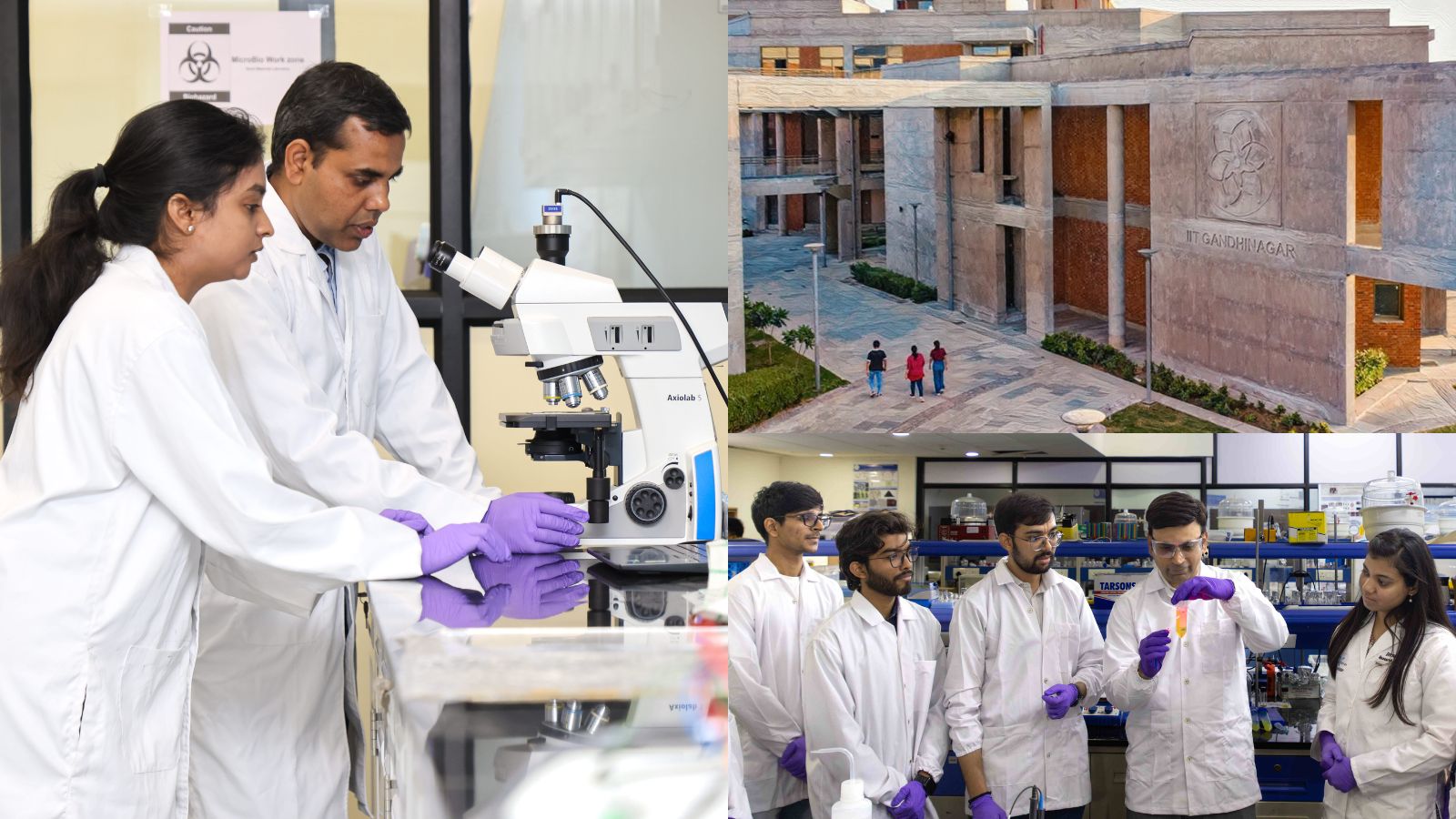
The Indian Institute of Technology (IIT) Gandhinagar has introduced a credit-bearing semester-long external exposure programme that allows BTech students to spend their seventh semester working in companies, research laboratories, academic institutions or startups instead of attending regular classes on campus. The work completed during the semester counts towards their degree, making professional experience a formal part of the undergraduate curriculum rather than an internship taken alongside academic requirements.
The programme is offered through the course ‘IN 498 – External Exposure’. It is available as an elective for undergraduate students pursuing their BTech in any branch, who can either opt for the external exposure route or continue with the conventional semester on campus. Students who choose the programme can earn up to 16 academic credits that are counted towards their graduation requirements.
Unlike conventional summer internships that typically last a few weeks, the initiative allows students to spend an entire academic semester at an external organisation, IIT Gandhinagar said. These placements can be in industries, research and development laboratories, academic institutions, startups or recognised incubation centres. The idea, according to the institute, is to give students enough time to work on long-term projects, understand workplace practices and contribute to ongoing engineering or research work while remaining on track academically.
According to the institute, 18 students have participated in the programme since it was launched. They have worked with organisations including Qualcomm, Samsung R&D, Oracle, California Institute of Technology, Indian Institute of Science, Tower Research Capital, Solar Defence and Aerospace Limited and startup HapiHygi Innovations, among others.
Explaining the objective behind the initiative, Prof Bhaskar Datta, Dean of Academic Affairs at IIT Gandhinagar, said, “The semester-long external exposure programme is part of IIT Gandhinagar’s commitment to nurturing future-ready students who are capable of contributing to a technology-driven economy.”
Students’ work during the semester is assessed through a formal academic process. The host organisation provides feedback on the student’s performance, while the relevant academic department at IIT Gandhinagar conducts periodic reviews to ensure the work meets the institute’s academic standards.
Sharing a testimonial, the institute in its statement shared that one of the students who completed the programme, Bhoumik Patidar from the BTech Computer Science and Engineering batch of 2026, spent his external exposure semester at Qualcomm, an American multinational corporation that designs and manufactures semiconductors, software for wireless technology. Reflecting on the experience, the student shared, “Working on a production-grade open-source project has definitely sharpened my problem-solving skills and reinforced my passion for systems programming and building the foundational software that modern computing relies on.”
Story continues below this ad
Another participant, Tejas Zunjare, a BTech Electrical Engineering student, worked as an Electronics Engineering Intern at HapiHygi Innovations. His work involved embedded systems, electronic circuit design, battery charging and management circuits, PCB design, sensor integration, circuit simulation, component testing and hardware troubleshooting. Describing the experience, he said, “The internship helped me see how the stuff you learn in a classroom can be applied to solve real engineering problems.” He added that the experience increased his interest in embedded systems and hardware design while giving him greater confidence to work on real engineering projects.
The institute said the programme builds on its existing summer internship model but differs in one significant way.
Instead of treating industry exposure as an additional activity outside the curriculum, it formally incorporates a full semester of external work into the academic framework. Students are therefore able to take up substantial projects without delaying graduation or compromising on academic credit requirements.
With the programme remaining optional, students retain the flexibility to decide whether they want to pursue a semester of external exposure or continue with regular classroom instruction, depending on their academic interests and career plans.
View original source — Indian Express ↗
Related stories

The Punch
WorldJul 6, 2026 · 1 min
Security foundation of a prosperous society, Fubara asserts
The Punch

South China Morning Post
WorldJul 6, 2026 · 1 min
Is Beijing preparing for submarine action with maritime survey east of Taiwan?
South China Morning Post

AllAfrica
WorldJul 6, 2026 · 1 min
Namibia: VIP Protection Chief Removed After State House Security Breach
AllAfrica

Times of India
WorldJul 6, 2026 · 1 min
'Fresh Paneer' to 'vegan': FSSAI issues notices to multiple brands over misleading claims
Times of India