Indian Express
‘Zinc phosphide smelly, bitter’: Court rules out bride’s ‘forced’ poisoning by husband
5 min readNew DelhiJul 6, 2026 04:12 PM IST
The viscera report confirmed the presence of Zinc phosphide poison in the stomach and internal organs, indicating death caused by poisoning.
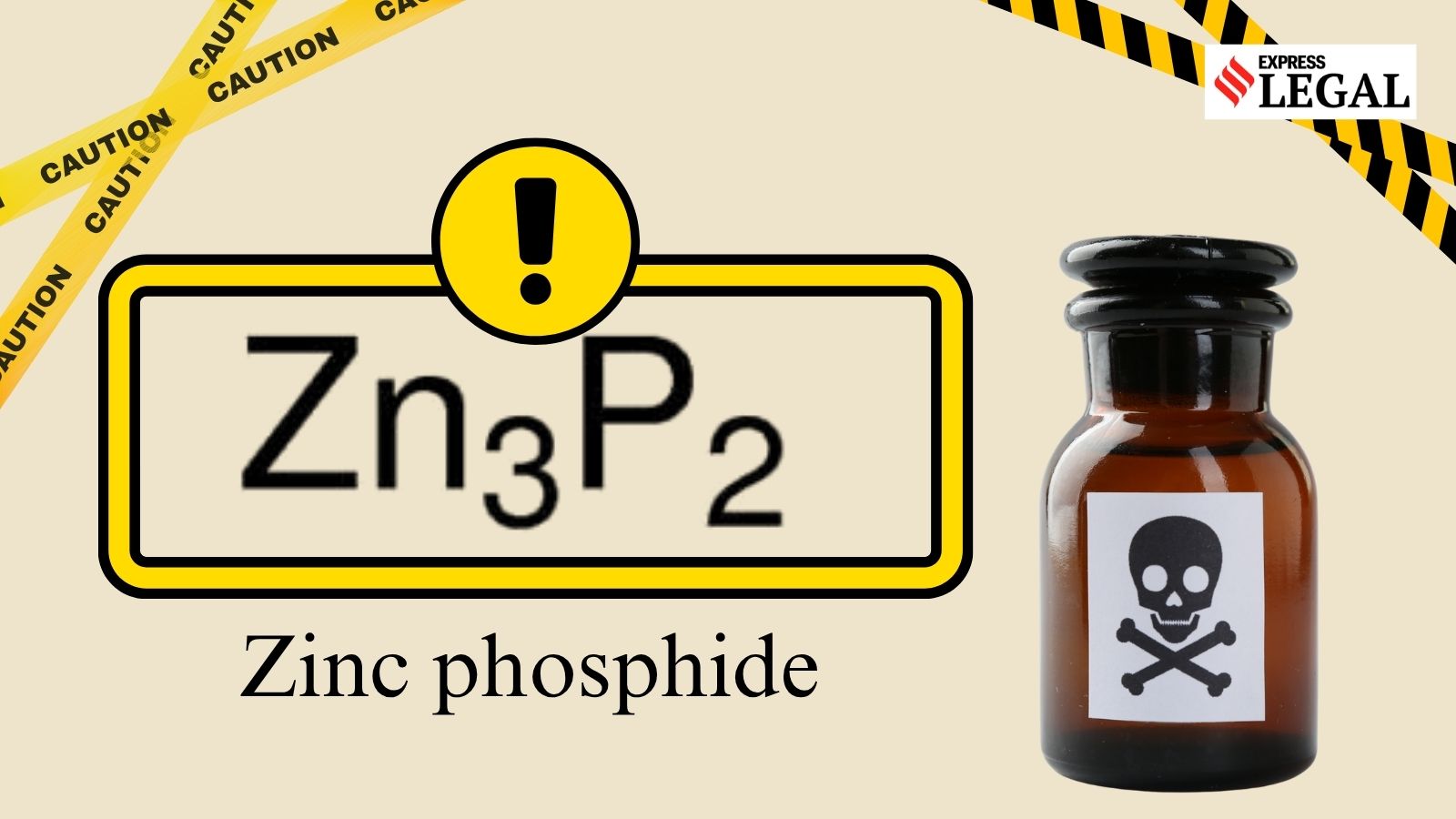
Four decades after a young married woman’s death, the Allahabad High Court has acquitted her husband and in-laws accused of poisoning her, holding that “zinc phosphide” is not a poison that can be administered slyly due to its bitter taste and bad smell, and that there were no signs of resistance consistent with forced poisoning.
A bench of Justices Siddhartha Varma and Jai Krishna Upadhyay observed that the prosecution failed to prove that any forensic laboratory was examined to confirm if the viscera report was received in a sealed condition, property recorded, and safely stored without tampering.
“Also, we find that the poison “zinc phosphide” is not such a poison which can be administered on the sly. It tastes bitter and has a very bad smell. Thus, if a person who is hale and hearty is administered that poison, then he or she would resist to the administration of the same and would get injuries on his or her body, and if he or she would resist powerfully, then the person who was administering would also get injured,” the July 3 order said.
The criminal appeal arose from a judgment dated December 7, 1989, passed by the Additional District and Session Judge, Kanpur Nagar; the case involves a woman who married a man in 1984. Her family alleged that after marriage she was subjected to continuous cruelty and harassment by her husband and in-laws.
Justices Siddhartha Varma and Jai Krishna Upadhyay acquitted the husband and in-laws in a forced poisoning case.
Married woman’s death and trial
The family also alleged that the woman was being beaten up and ill-treated in her matrimonial home, which was witnessed by her nephew. On January 13, 1986, the woman had indicated to the nephew that she was fed something after which she was feeling unwell.
The same day, she was taken to Kanpur by her family members, and she died. Subsequently, her family lodged an FIR alleging cruelty and murder.
Following the investigation, the viscera report confirmed the presence of Zinc phosphide poison in the stomach and internal organs, indicating death caused by poisoning. The nephew was also medically examined and was found to have sustained some injury, proving allegations of assault.
Story continues below this ad
The accused were framed under Section 302 (punishment for murder) and 498A (cruelty by husband or relatives) IPC, and under Section 323 (voluntarily causing hurt) IPC for causing hurt to the nephew. The trial court, after examining the witnesses, convicted the appellants, which has now been challenged through the appeal.
Advocates Vikas Sharma and Kunwar Bhaskar, appearing for the appellants, submitted that there was absolutely no eyewitness to the fact that any poison was administered to the woman, and added that since the woman was not happy in her matrimonial life, she had herself consumed poison.
It was stated that the injuries, as had been opined by the doctor who had conducted the post-mortem, were also not the injuries which were a result of beating, but she got injured by the tempo on which she was being carried to the hospital.
Amit Sinha, Additional Government Advocate, appearing for the state, opposing the appeal submitted that the witnesses were reliable eye-witnesses and that the late woman had stated in the presence of the witnesses that poison was administered to her; then it could not be in any way doubted.
Story continues below this ad
‘Accused acquitted ‘
In the view of material on record, the court observed that no reliance could be placed on the viscera report, as it alone was a conclusive piece of evidence which would have gone to show that murder was done by the accused persons by administering poison and since the viscera report itself now becomes such an evidence which as per us cannot be read in evidence, the appeal should be allowed and the accused be acquitted.
The court said that so far as the injury on the body of the nephew was concerned, his case also was not very reliable as he himself had stated that he had intermittently gone out of the house and had dealt with shopkeepers, and the injuries could have been self-inflicted only to make out a case.
The court acquitted all the appellants of the charges, allowed the appeal, and set aside the additional district and session judge’s order convicting them for the death of the woman.
© IE Online Media Services Pvt Ltd
Somya Panwar works with the Legal Desk at The Indian Express, where she covers the various High Courts across the country and the Supreme Court of India. Her writing is driven by a deep interest in how law influences society, particularly in areas of gender, feminism, and women’s rights.
She is especially drawn to stories that examine questions of equality, autonomy, and social justice through the lens of the courts. Her work aims to make complex legal developments accessible, contextual, and relevant to everyday readers, with a focus on explaining what court decisions mean beyond legal jargon and how they shape public life.
Alongside reporting, she manages the social media presence for Indian Express Legal, where she designs and curates posts using her understanding of digital trends, audience behaviour, and visual communication. Combining legal insight with strategic content design, she works on building engagement and expanding the desk’s digital reach.
Somya holds a B.A. LL.B and a Master’s degree in Journalism. Before moving fully into media, she gained experience in litigation and briefly worked in corporate, giving her reporting a strong foundation. ... Read More
Tags:
allahabad high court
death
poison
View original source — Indian Express ↗
Related stories

The Punch
WorldJul 6, 2026 · 1 min
Security foundation of a prosperous society, Fubara asserts
The Punch

South China Morning Post
WorldJul 6, 2026 · 1 min
Is Beijing preparing for submarine action with maritime survey east of Taiwan?
South China Morning Post

AllAfrica
WorldJul 6, 2026 · 1 min
Namibia: VIP Protection Chief Removed After State House Security Breach
AllAfrica
Dawn
WorldJul 6, 2026 · 1 min
Rain, thunderstorms forecast for northern, central parts of country: PMD
Dawn