Indian Express
India’s forgotten soldiers of the First World War: 9,909 names recovered after a century through UKPHA research
Manjinder Nagra, the first Sikh woman to play rugby for England, spent years not knowing that her own great-grandfather died fighting in the First World War, because, for over a century, nobody recorded it.
Jagat Singh, of the 34th (Reserve) Mountain Battery, was the only man from his village, Lallian in Jalandhar, to lose his life in the war.
He is one among the 9,909 Indian Army soldiers whose names are being formally added to the official war dead record today by the Commonwealth War Graves Commission (CWGC), the largest single addition since the Second World War.
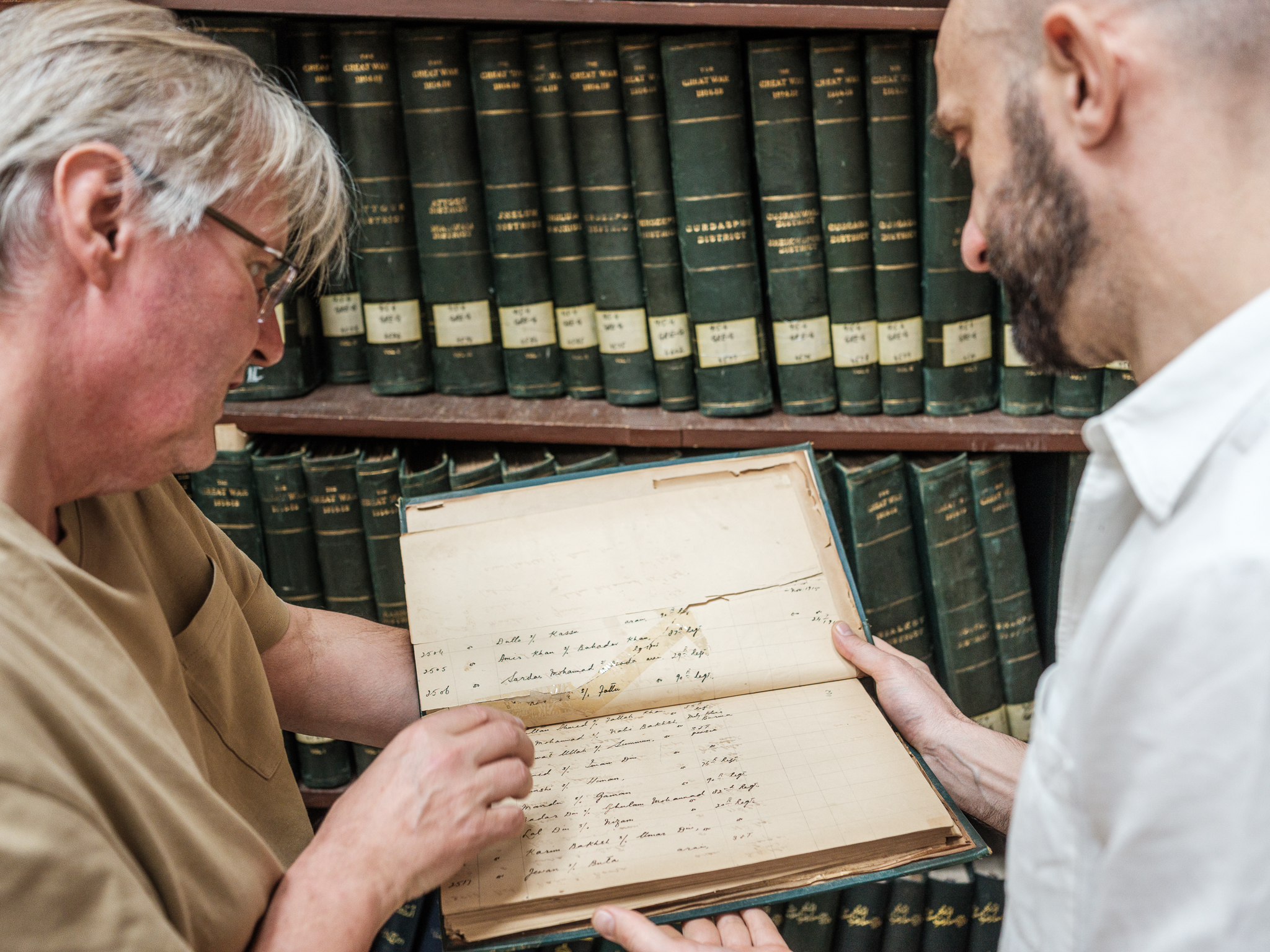
The names were recovered from the Punjab Registers, found at the Lahore Museum in 2014 by the UK Punjab Heritage Association (UKPHA), which digitised them in partnership with the University of Greenwich. The Commonwealth War Graves Commission (CWGC) later joined the project, working with UKPHA volunteers to verify the findings against its own casualty records.
The announcement comes during Britain’s South Asian Heritage Month (July 1-31, 2026), which marks the shared history of the UK and South Asia. This year’s theme, “Unity in Diversity”, is echoed directly by what the registers themselves reveal: Sikh, Hindu, Muslim and Christian soldiers from villages now spread across Punjab, Haryana, Himachal Pradesh, in addition to West Punjab, are being recognised together in the same record for the first time.
More than 1.4 million men from the Indian Army served on every major front of the First World War. One in six soldiers fighting for Britain came from pre-Partition India, with close to half a million from Punjab alone. Until now, thousands of these men’s deaths had never been recorded.
In a statement issued from London and shared with The Indian Express via email, Amandeep Madra, chair, UKPHA, said: “These men were never commemorated , not because they didn’t serve, but because a decision made a century ago excluded their sacrifice from the record. UKPHA recovered the Punjab Registers in 2014, and for the past decade our volunteers and colleagues at the Commonwealth War Graves Commission and the University of Greenwich have worked through them, name by name, to recover this lost history. Putting the record right means giving families across India their history back, and properly and equally commemorating the men who died. This has only been possible because the Lahore Museum kept these fragile records safe for a hundred years, because CWGC and the University of Greenwich took this archive seriously enough to build a research programme around it, and because volunteers around the world gave their time to recover, name by name, this previously lost history.”
Story continues below this ad
A CWGC 2021 Special Committee report found that decisions affecting India were underpinned by the “entrenched prejudices, preconceptions and pervasive racism of contemporary imperial attitudes”, and that Indian Army casualty lists themselves “appear to have been flawed” and were never fully sought out.
In some instances, the missing men died away from the front line, within India, during and shortly after the war, some during the influenza pandemic of 1918-19, which the conflict itself helped spread around the world. Historical rulings made by the British Indian Government at the time meant these deaths were not granted war graves status, and the men’s names were never passed on for commemoration in the same way as other such cases in the British Army. The Punjab Registers project has now overturned that decision.
Of the 9,909 men identified, detailed classification by UKPHA and the University of Greenwich found approximately 2,480 (25%) were Sikh, 2,540 (26%) were Hindu, 4,020 (41%) were Muslim and around 80 (under 1%) were Christian, with the religious background of the remaining 8% still under review. Their home villages are spread across present-day Punjab, Haryana, Himachal Pradesh and Pakistani Punjab.
Three families, three stories
Nagra’s discovery came after Dr Tejpal Ralmill, a UKPHA volunteer who has led much of the project’s UK-based research, traced the connection through the registers. Jagat Singh died in service in Mesopotamia in January 1918.
Story continues below this ad
Also among the men now being recognised is Kesar Singh of Abul Khair village in Gurdaspur, Punjab — another case researched by Ralmill. His great-grandson, Dr Inder Singh Palahey, a dentist in Leicester, spent years trying to piece together what had happened to him and has now learned the regiment his ancestor served in and the circumstances of his death.
A third story belongs to Sepoy Hazari, a Hindu soldier from the village of Gannaur in Rohtak district, now in Haryana. The son of Ramji Lal, Hazari survived the fighting itself only to die at home in June 1919, one of many casualties of the influenza pandemic that followed the war.
The UKPHA is appealing directly to families across India: if your family history includes a First World War soldier from a village in what was once undivided Punjab, including present-day Haryana, Himachal Pradesh or Punjab, please get in touch. Share what you know: your ancestor’s name, your ancestor’s father’s name, and the name of the village by emailing [email protected].
View original source — Indian Express ↗
Related stories

The Punch
PoliticsJul 6, 2026 · 1 min
VIDEO: Man calls for state of emergency on child abuse after Abia incident
The Punch

The Hill
PoliticsJul 6, 2026 · 1 min
Do democratic socialists really want socialism? If so, they have no place in America
The Hill

AllAfrica
PoliticsJul 6, 2026 · 1 min
Somalia: Somali President Arrives in Baidoa for South West State Leadership Inauguration
AllAfrica

AllAfrica
PoliticsJul 6, 2026 · 1 min
Nigeria: Oyo Abduction - 'Makinde Told Me He Never Called,' Peter Obi Restates Call for Tinubu's Resignation
AllAfrica