Philippine Daily Inquirer
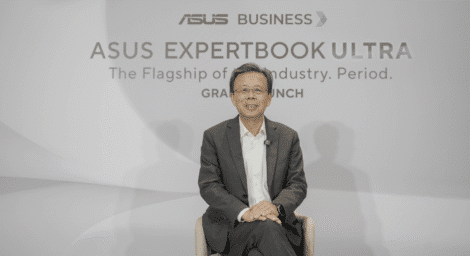
Samson Hu, Co-CEO of ASUS, guides business leaders in AI adoption
Written by: Jayvee Fernandez
In the rapidly evolving landscape of global technology, the Philippines is emerging as a critical focal point for digital innovation. During a recent visit to the country, Samson Hu, Co-CEO of ASUS Global, shared his strategic vision for the region, describing the Philippines as Southeast Asia’s next digital powerhouse. Hu joined ASUS as an engineer and he fondly recalls his ‘best hits’ including the ASUS EeePC, which brought about the ‘netbook’ category and the ASUS Transformer Pad, the very first tablet with a detachable keyboard.
With this background, Hu’s perspective combines a deep technical understanding with an authoritative, global B2B outlook. Under his leadership, ASUS is committed to be a long-term partner in the country’s digital journey, delivering cutting-edge solutions to support local enterprises.
What does digital transformation really mean?
For many business leaders, the phrase “digital transformation” remains vague and highly aspirational. However, Hu offers a refreshingly simple definition: it is not about merely accumulating a massive amount of technology, but about fundamentally improving how work gets done. According to Hu, a digital transformation is truly successful when decision-making becomes faster and employees work more productively, allowing organizations to dedicate more of their valuable time to creativity, business growth, and customer engagement. In this framework, AI serves as the key enabler by automating routine operations and freeing professionals to focus on judgment and creative tasks.
Man and machine, together
This shift in how work is executed is particularly relevant to the Philippines, which boasts a prominent Business Process Outsourcing (BPO) sector. While fears of AI replacing human labor persist, Hu views the technology as a powerful upskilling tool rather than a threat to employment. He explains that AI changes tasks rather than eliminating entire jobs. By automating repetitive workflows, AI allows employees to transition to more meaningful, high-value responsibilities. Addressing the common industry narrative, Hu notes, “AI will not replace people, but people who do not use AI will be replaced by people who utilize AI”. Consequently, the real challenge for modern leadership is not managing job loss, but learning how to help people adopt, grow, and succeed alongside AI.
Hu’s confidence in the Philippine market is driven by the workforce’s unique characteristics. He identifies a powerful combination of rapid digital adoption, exceptional workforce mobility where in his own words, “work happens everywhere,” and a strong collective business ambition as the defining traits of the local landscape. These factors make the local market uniquely primed to adopt both cloud-based AI workflows and secure on-device AI capabilities.
The AI roadmap for decision makers
To navigate this digital shift, Hu advises enterprise executives to take a practical approach to their AI investment journey. Instead of launching complex technology projects, businesses should start directly within their business departments. Leadership should identify where teams are losing the most time, where workflows remain highly manual, and where insights and decisions can be accelerated. Once AI is successfully integrated into daily operations, organizations can then transition to investing in AI-ready hardware to further optimize performance.
Measuring the ROI of these investments is equally straightforward: if employees are working smarter, decisions are being made sooner, and the organization is refocused on growth, then the investment has already successfully paid off.
AI as an environmental solution
Hu was not blind to the concerns about AI and environmental impact, especially with the country having the second most expensive electricity costs in the region next to Singapore. Addressing the environmental concerns surrounding AI’s energy consumption, Hu acknowledges that the industry has a serious responsibility to manage its footprint. However, he suggests a shift in perspective, proposing that AI can actively serve as part of the solution rather than just the challenge. By optimizing operations, improving resource utilization, and reducing waste, AI can drive significant efficiency gains. At ASUS, sustainability remains a core priority, integrating climate action, the circular economy, and AI-powered ESG solutions to ensure that technological progress and environmental responsibility advance hand in hand.
The way forward
Samson Hu’s visit to the Philippines marks a significant milestone as ASUS announced an 85% growth in their commercial business in the Philippines. The Co-CEO’s personal visit is an indicator of renewed focus and expansion towards AI-ready businesses in the Philippines with the launch of the new ASUS ExpertBook Ultra, the best flagship device for an AI-ready Philippines.
View original source — Philippine Daily Inquirer ↗
Related stories

Philippine Daily Inquirer
BusinessJul 7, 2026 · 1 min
OIL PRICE WATCH as of July 7, 2026
Philippine Daily Inquirer

CNA
BusinessJul 7, 2026 · 1 min
Stocks ease despite upbeat Samsung forecast, yen languishes
CNA

Japan Times
BusinessJul 7, 2026 · 1 min
Keisei to introduce new rail service linking Haneda and Narita airports
Japan Times

Times of India
BusinessJul 7, 2026 · 1 min
Oil prices inch higher as focus shifts to supply, demand and Hormuz shipments
Times of India