Indian Express
Hormuz ceasefire on edge as Iran resumes attacks on ships, US says
News
World
Hormuz ceasefire on edge as Iran resumes attacks on ships, US says
A tanker traveling near Oman's coast was hit by an unknown projectile and caught fire, according to the UK Maritime Trade Operations agency.
4 min readJul 7, 2026 07:50 AM IST
First published on: Jul 7, 2026 at 07:39 AM IST
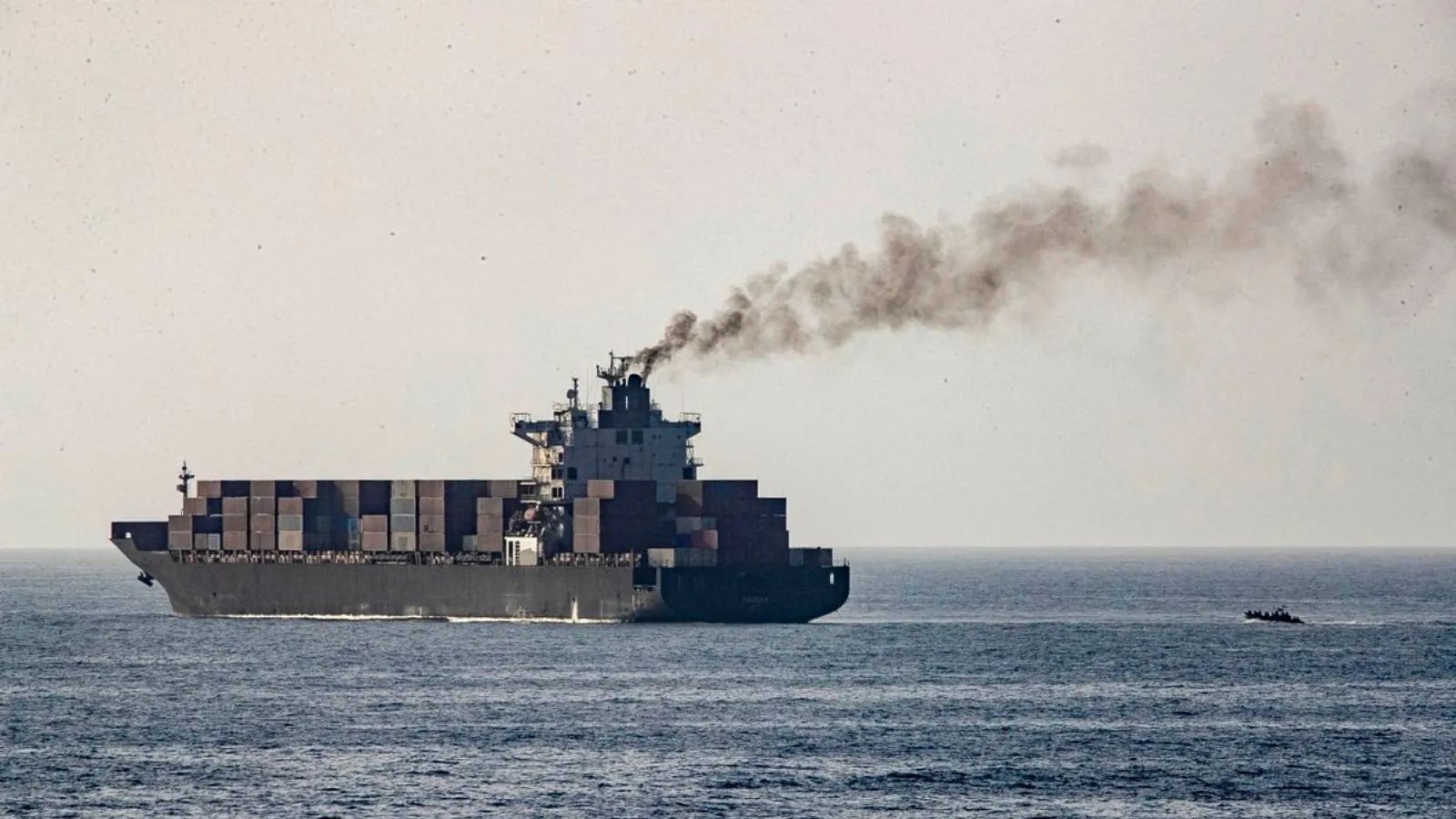
Cargo ships near the Strait of Hormuz. (File Photo)
Iran’s military fired at least two missiles at commercial ships transiting the Strait of Hormuz on Monday night, according to two US officials cited by Axios. The reported attack came after a one-week agreement between the US and Iran on halting strikes in the strait had expired, putting a fragile memorandum of understanding at risk of collapse.
A tanker traveling near Oman’s coast was hit by an unknown projectile and caught fire, according to the UK Maritime Trade Operations agency. A separate commercial vessel was also struck by an Iranian missile, a US official told Axios. Both ships suffered damage, though no casualties were reported in either incident. The renewed attacks come just weeks after Washington and Tehran signed a 14-point agreement meant to de-escalate tensions in the region.
What happened in the Strait Of Hormuz?
The UK Maritime Trade Operations agency (UKMTO) said a tanker was hit by an unknown projectile on its port side while traveling south about 8 nautical miles east of Oman’s Limah, causing a fire, Reuters reported. UKMTO said no casualties or environmental impact had been reported.
A US official told Axios that a separate commercial ship was hit by an Iranian missile. Both vessels suffered damage, but there were no casualties, the official said. Iran’s Revolutionary Guards fired at least two missiles at commercial ships in the strait.
The attack came after a one-week agreement between the US and Iran on halting strikes in the strait had expired. The resumption of Iranian attacks puts the memorandum of understanding signed less than three weeks ago at risk of unraveling.
Story continues below this ad
A US official told Axios that the US is likely to respond with strikes against Iranian targets.
What led up to this?
Axios reported that a round of indirect talks between the US and Iran in Doha last week ended without progress on the Strait of Hormuz issue.
CNN reported that Iran has used the strait as leverage since US and Israeli strikes on Tehran triggered retaliatory Iranian strikes and wider regional conflict. Tehran and Washington exchanged strikes even after signing the 14-point agreement in June, according to CNN. Iran has also said crew members must obtain permission to pass through routes approved by its officials.
On Sunday, Iran’s Islamic Revolutionary Guard Corps said its navy had deployed patrol boats to block the “Omani route,” according to Iranian state media and a Telegram channel affiliated with the IRGC.
Story continues below this ad
How are ships moving through the Strait?
Citing tracking data from MarineTraffic, CNN reported that nearly a third of vessels that crossed the strait between Friday and Sunday used a route along the coast of Oman. MarineTraffic said 108 boats crossed the strait during that period, of which 30 including crude and LPG tankers took the Omani route.
Traffic through the strait, which carries about one-fifth of global oil and liquefied gas supplies, was highest on Friday with 43 crossings, followed by 34 on Saturday and 31 on Sunday, according to MarineTraffic data cited by CNN. MarineTraffic described the activity as “operational but fragmented,” noting it should be read alongside the ongoing security and diplomatic situation.
The Express Global Desk at indianexpress.com which delivers authoritative, verified, and context-driven coverage of key international developments shaping global politics, policy, and migration trends. The desk focuses on stories with direct relevance for Indian and global audiences, combining breaking news with in-depth explainers and analysis.
A major focus area of the desk is US immigration and visa policy, including developments related to student visas, work permits, permanent residency pathways, executive actions, and court rulings. The Global Desk also closely tracks Canada’s immigration, visa, and study policies, covering changes to study permits, post-study work options, permanent residence programmes, and regulatory updates affecting migrants and international students.
All reporting from the Global Desk adheres to The Indian Express’ editorial standards, relying on official data, government notifications, court documents, and on-record sources. The desk prioritises clarity, accuracy, and accountability, ensuring readers can navigate complex global systems with confidence.
Core Team
The Express Global Desk is led by a team of experienced journalists and editors with deep expertise in international affairs and migration policy:
Aniruddha Dhar – Senior Assistant Editor with extensive experience in global affairs, international politics, and editorial leadership.
Nischai Vats – Deputy Copy Editor specialising in US politics, US visa and immigration policy, and policy-driven international coverage.
Mashkoora Khan – Sub-editor focusing on global developments, with a strong emphasis on Canada visa, immigration, and study-related policy coverage. ... Read More
© IE Online Media Services Pvt Ltd
# Strait of Hormuz
Loading Recommendations...
01
02
03
04
05
Live Blog
View original source — Indian Express ↗
Related stories

Euronews
PoliticsJul 7, 2026 · 1 min
Macron arrives in Syria for first post-Assad visit by western European leader
Euronews

Dawn
PoliticsJul 7, 2026 · 1 min
India charges alleged Pahalgam ‘mastermind’
Dawn

Dawn
PoliticsJul 7, 2026 · 1 min
No relief for citizens as transport fares remain high despite lower fuel prices in Karachi
Dawn

The Hill
PoliticsJul 7, 2026 · 1 min
Michael Cohen says he reconciled with Trump
The Hill