BBC
Slug sleuths on the trail of gorging gastropods
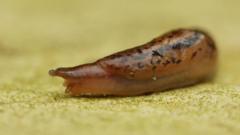
Arable farmers may soon be able to stop slugs eating their crops thanks to research by a Shropshire-based university and the work of "slug sleuth" farmers.
Data collected by 28 "slug sleuths" has helped researchers from Harper Adams University find environmentally friendly slug control methods in the form of "prediction maps".
It is part of a three-year, £2.6 million research programme that was funded by the Department for Environment, Food and Rural Affairs (Defra).
Researchers hope the maps could lead to "more precise control of slugs in arable fields" and reduce using pesticides.
The model is one of the many projects done by the "Strategies Leading to Improved Management and Enhanced Resilience to Slugs" (SLIMERS).
Professor Keith Walters from the university said the research suggested where slugs were more likely to show up, in particular how slug clusters re-established themselves after soil was waterlogged.
"We have now confirmed that patches reform temporarily in places we wouldn't expect in normal conditions and then quickly return to their predicted areas once more typical soil conditions return," Walters added.
"Despite low slug numbers over the testing period we have sufficient data to prove that the model works, and perhaps most importantly, that farmers are happy to use it and it fits in with modern commercial equipment."
Related stories

Arab News
TechnologyJul 7, 2026 · 1 min
US cyber agency is using Anthropic’s Mythos to audit government code, sources say
Arab News

AllAfrica
TechnologyJul 7, 2026 · 1 min
Egypt: Refugees, Asylum Seekers Arrested, Deported
AllAfrica

The Guardian
TechnologyJul 7, 2026 · 1 min
Wildfires in southern Europe wreak havoc – in pictures
The Guardian

South China Morning Post
TechnologyJul 7, 2026 · 1 min
Zhipu AI, MiniMax shares to provide gut check for Hong Kong investors as lock-ups end
South China Morning Post